

Start here
This Terrifying Underwater Disaster sent Eleven Men to their Graves...

Coffeehouse Crime's 27-minute breakdown, the fullest single telling on file.
Watch on YouTubeSolved case · 2010
Also known as Deepwater Horizon oil spill · 2010 Gulf of Mexico oil spill
 BP’s Deepwater Horizon rig on fire in the Gulf of Mexico. (15010938489)Credit: USEPA Environmental-Protection-AgencyPublic domainSource
The short answer
An explosion aboard the Deepwater Horizon drilling rig in the Gulf of Mexico killed 11 workers on 20 April 2010, triggering the largest marine oil spill in history and a later federal court finding of gross negligence against BP.
This Terrifying Underwater Disaster sent Eleven Men to their Graves...Coffeehouse Crime · 27 min1 piece from 1 creator: ranked, with duplicates removed and short clips set aside.
Start here
Coffeehouse Crime's 27-minute breakdown, the fullest single telling on file.
Watch on YouTubeTitles and descriptions are the creators’ own and may not reflect current legal status. The sourced facts are in the file below. Players load only when you press play. Suggest coverage we’re missing.
Deepwater Horizon was an ultra-deepwater, dynamically positioned, semi-submersible drilling rig owned by Transocean and operated under lease by BP in the Gulf of Mexico. On the evening of 20 April 2010, at 7:45 p.m. CDT, while the rig was completing an exploratory well at the Macondo Prospect (Mississippi Canyon Block 252), about 41 miles off the coast of Louisiana, a blowout at the wellhead sent a geyser of seawater, and then a mixture of drilling mud, methane gas, and water, erupting onto the rig. The gas ignited into a series of explosions and a fire visible from 40 miles away. Crew attempted to activate the blowout preventer and, as a final safeguard, a device known as a blind shear ram, but both failed to seal the well.
Eleven rig workers were killed. Ten men — Jason Anderson, 35, of Midfield, Texas; Donald Clark, 49, of Newellton, Louisiana; Stephen Ray Curtis, 40, of Georgetown, Louisiana; Gordon Jones, 28, of Baton Rouge, Louisiana; Roy Wyatt Kemp, 27, of Jonesville, Louisiana; Karl Kleppinger Jr., 38, of Natchez, Mississippi; Keith Blair Manuel, 56, of Gonzales, Louisiana; Dewey Revette, 48, of State Line, Mississippi; Shane Roshto, 22, of Liberty, Mississippi; and Adam Weise, 24, of Yorktown, Texas — were presumed killed by the initial explosion. An eleventh worker, crane operator Aaron Dale Burkeen, 37, of Philadelphia, Mississippi, died in the fire that followed. Of 115 survivors, 17 were injured; the rig was evacuated and injured workers were airlifted to medical care.
The fire could not be extinguished. After burning for roughly 36 hours, Deepwater Horizon sank on 22 April 2010, coming to rest on the seafloor about 1,500 metres deep and roughly 400 metres northwest of the well. With the rig gone, the well continued releasing oil at the seabed, producing what has been recorded as the largest marine oil spill in history and 40 miles of coastal pollution. The spill was not closed by a cap until 15 July 2010, and the well was declared "effectively dead" on 19 September 2010 after relief wells permanently sealed it. NOAA subsequently established the Gulf Spill Restoration project to help restore the affected coastline.
Investigations into the explosion focused in part on decisions about cementing the well's final casing, including the OptiCem cement-modelling system Halliburton used in April 2010. In January 2013, Transocean agreed to pay US$1.4 billion for violations of the U.S. Clean Water Act; BP separately agreed to pay $2.4 billion, with additional potential penalties estimated at $5 billion to $20 billion. In September 2014, Halliburton agreed to pay $1.1 billion into a trust to settle a large share of the legal claims against it. On 4 September 2014, U.S. District Judge Carl Barbier ruled that BP was guilty of gross negligence and willful misconduct under the Clean Water Act, calling BP's conduct "reckless" and Transocean's and Halliburton's conduct "negligent"; he apportioned 67 percent of the blame for the spill to BP, 30 percent to Transocean, and 3 percent to Halliburton. BP said it would appeal. On 8 December 2014, the U.S. Supreme Court rejected BP's challenge to the compensation settlement for spill victims, initially estimated by BP at about $7.8 billion; by 2018, roughly 390,000 claims had been filed, with about $65 billion paid in settlements and further claims still outstanding. The spill has since been cited by lawyers, academics, and journalists as an example of ecocide.
Construction of Deepwater Horizon began at Hyundai Heavy Industries in Ulsan, South Korea, for original owner R&B Falcon.
The rig's keel was laid.
Deepwater Horizon was delivered to Transocean, which had acquired R&B Falcon, and leased to BP for operations in the Gulf of Mexico.
Deepwater Horizon drilled the deepest oil well in history to that point, in the Tiber Oil Field, reaching a vertical depth of 35,050 feet below 4,132 feet of water.
Deepwater Horizon began drilling an exploratory well at the Macondo Prospect (Mississippi Canyon Block 252), about 41 miles off the coast of Louisiana.
A blowout at the Macondo well triggered a geyser of seawater and drilling mud, then a series of explosions and a fire aboard Deepwater Horizon; the blowout preventer and blind shear ram both failed to seal the well. Eleven rig workers were killed and 17 of 115 survivors were injured.
After burning for roughly 36 hours, Deepwater Horizon sank, coming to rest on the seafloor about 1,500 metres deep near the well site.
Transocean received an early partial insurance settlement of about US$401 million for the loss of the rig.
The Macondo well spill was closed by a cap after nearly three months of release into the Gulf of Mexico.
Relief wells permanently sealed the Macondo well, which was declared "effectively dead."
Transocean agreed to pay US$1.4 billion for violations of the U.S. Clean Water Act.
Halliburton agreed to pay US$1.1 billion into a trust to settle a large share of the legal claims against it.
U.S. District Judge Carl Barbier ruled BP guilty of gross negligence and willful misconduct under the Clean Water Act, apportioning 67% of the blame for the spill to BP, 30% to Transocean, and 3% to Halliburton.
The U.S. Supreme Court rejected BP's legal challenge to the compensation settlement for spill victims.
Approximately 390,000 compensation claims had been filed, with about US$65 billion paid in settlements and further claims still outstanding.
Victims first. Every legal label is set from public records and court outcomes, not from the prose.
Age 37, of Philadelphia, Mississippi; crane operator who died in the fire that followed the initial explosion aboard Deepwater Horizon on 20 April 2010.[3]
Age 24, of Yorktown, Texas; among the ten rig workers presumed killed by the initial explosion aboard Deepwater Horizon on 20 April 2010.[3]
Age 48, of State Line, Mississippi; among the ten rig workers presumed killed by the initial explosion aboard Deepwater Horizon on 20 April 2010.[3]
Age 49, of Newellton, Louisiana; among the ten rig workers presumed killed by the initial explosion aboard Deepwater Horizon on 20 April 2010.[3]
Age 28, of Baton Rouge, Louisiana; among the ten rig workers presumed killed by the initial explosion aboard Deepwater Horizon on 20 April 2010.[3]
Age 35, of Midfield, Texas; among the ten rig workers presumed killed by the initial explosion aboard Deepwater Horizon on 20 April 2010.[3]
Age 38, of Natchez, Mississippi; among the ten rig workers presumed killed by the initial explosion aboard Deepwater Horizon on 20 April 2010.[3]
Age 56, of Gonzales, Louisiana; among the ten rig workers presumed killed by the initial explosion aboard Deepwater Horizon on 20 April 2010.[3]
Age 27, of Jonesville, Louisiana; among the ten rig workers presumed killed by the initial explosion aboard Deepwater Horizon on 20 April 2010.[3]
Age 22, of Liberty, Mississippi; among the ten rig workers presumed killed by the initial explosion aboard Deepwater Horizon on 20 April 2010.[3]
Age 40, of Georgetown, Louisiana; among the ten rig workers presumed killed by the initial explosion aboard Deepwater Horizon on 20 April 2010.[3]
Ruled guilty of gross negligence and willful misconduct under the U.S. Clean Water Act by U.S. District Judge Carl Barbier on 4 September 2014, and apportioned 67% of the blame for the Deepwater Horizon oil spill.[3]
From the record
Coverage is not a source: every fact in this file rests on the records below.
Are you family of someone named in this file? Corrections and removal requests from victims’ families are prioritized.
 Credit: Family/Instagram photograph, widely distributed in press coverageEditorial useSourceSOLVEDListen
Moscow, Idaho · 2022
Four University of Idaho students—Madison Mogen, Kaylee Goncalves, Ethan Chapin, and Xana Kernodle—were fatally stabbed inside an off-campus house in Moscow, Idaho, in the early morning hours of November 13, 2022. Bryan Kohberger, a criminology PhD student at nearby Washington State University, was arrested that December and pleaded guilty in 2025, receiving four consecutive life sentences.
 Credit: Mona EshaikerCC BY-SA 3.0SourceSOLVEDListen
Holmby Hills, Los Angeles, California · 2009
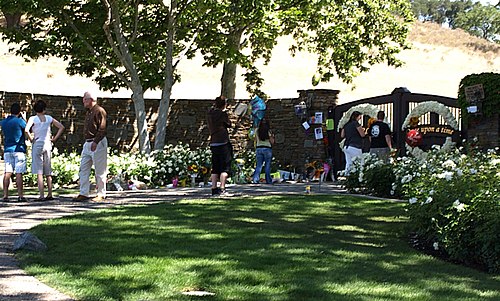
Singer Michael Jackson died on June 25, 2009, in Los Angeles from acute propofol intoxication administered by his personal physician, Conrad Murray. The Los Angeles County coroner ruled the death a homicide, and Murray was convicted of involuntary manslaughter in November 2011.
 Credit: RaptacCC BY-SA 4.0SourceSOLVEDListen
Bardstown, Kentucky · 2015
Crystal Rogers, a 35-year-old Bardstown, Kentucky, mother of five, disappeared in July 2015 and has never been found; in 2025, her former boyfriend, Brooks Houck, was found guilty of her murder, and two other men were convicted of related conspiracy and evidence-tampering charges.
 Credit: FBIPublic domainSourceONGOINGListen
Orlando, Florida, United States · 2006
Jennifer Joyce Kesse, a 24-year-old finance manager, disappeared from her home in Orlando, Florida, between January 23 and 24, 2006; her car was found abandoned about a mile away two days later, and she has never been found.
 Credit: Santa Barbara County Sheriff’s OfficePublic domainSourceSOLVEDListen
Sacramento, California (crimes spanned multiple California counties) · 1970s
Across California between 1974 and 1986, at least 13 people were murdered in a crime series that also included more than 50 rapes, burglaries, kidnappings, and assaults. Forensic genetic genealogy identified former police officer Joseph James DeAngelo in 2018; he pleaded guilty in 2020 to murder and kidnapping charges.
 Credit: Family of Celeste Rivas HernandezEditorial useSourceONGOINGListen
Hollywood Hills, Los Angeles, California · 2025
On September 8, 2025, the decomposed remains of 14-year-old Celeste Rivas Hernandez were discovered in the front trunk of an impounded Tesla registered to musician David Burke, known professionally as D4vd; prosecutors allege the two had a sexual relationship beginning when Rivas was 13. Burke was arrested in April 2026 and charged with first-degree murder, continuous sexual abuse of a child under 14, and unlawful mutilation of human remains.
 Credit: CBS News / Travis Alexander (personal photo)Editorial useSourceSOLVEDListen
Mesa, Arizona, United States · 2000s
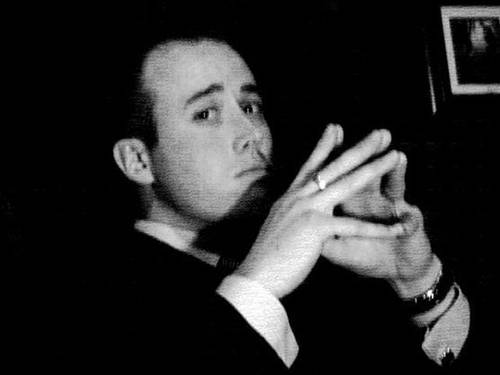
Travis Alexander, 30, was stabbed, slashed, and shot to death in his Mesa, Arizona home on June 4, 2008. His ex-girlfriend, Jodi Arias, was convicted of first-degree murder in 2013 and sentenced to life without parole in 2015 after two juries deadlocked on the death penalty.
Credit: Family/Instagram photograph, widely distributed in press coverageEditorial useSourceSOLVEDListenMoscow, Idaho · 2022
Four University of Idaho students—Madison Mogen, Kaylee Goncalves, Ethan Chapin, and Xana Kernodle—were fatally stabbed inside an off-campus house in Moscow, Idaho, in the early morning hours of November 13, 2022. Bryan Kohberger, a criminology PhD student at nearby Washington State University, was arrested that December and pleaded guilty in 2025, receiving four consecutive life sentences.
 Image recordEditorial useSourceSOLVEDListen
Austin, Texas · 2022
Moriah Wilson, a 25-year-old professional cyclist, was shot and killed at a friend's residence in Austin, Texas, on May 11, 2022, and Kaitlin Armstrong was later convicted and sentenced to 90 years in prison for the killing.
 Credit: Wikimedia Commons, photo by Glenn Francis (PacificProDigital.com)Editorial useSourceSOLVEDListen
Hollywood Hills, Los Angeles, California · 2014
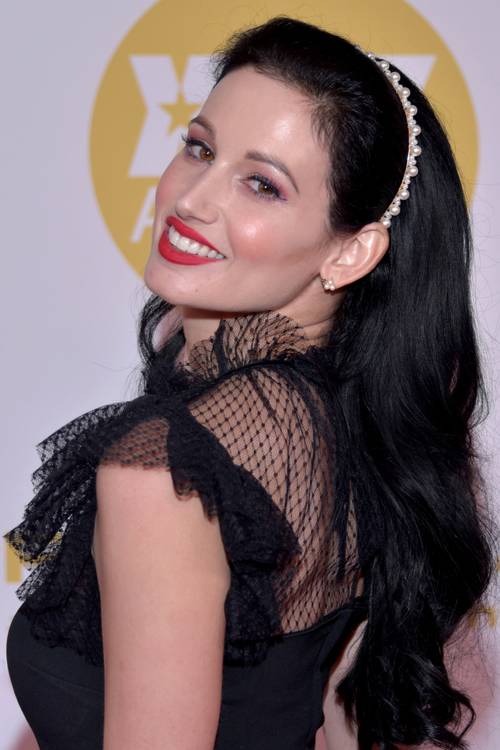
Amie Harwick, a Los Angeles marriage and family therapist and author, was strangled and thrown from her third-floor Hollywood Hills balcony on February 15, 2020, by an ex-boyfriend who had a history of stalking her. He was convicted of first-degree murder in 2023 and sentenced to life without parole.
 Credit: BKA Germany/ Federal Criminal Police Office (Germany)Public domainSourceUNSOLVEDListen
Varna Airport, Varna, Bulgaria · 2014
German tourist Lars Mittank vanished after fleeing Varna Airport in Bulgaria on 8 July 2014 and has not been seen since.
 Credit: Haley AndersonEditorial useSourceSOLVEDListen
Oak Street, West Side, Binghamton, New York · 2018
Haley Anderson, a 22-year-old nursing student at Binghamton University, was strangled to death on March 8, 2018, by fellow student Orlando Tercero at his off-campus apartment. Tercero fled to Nicaragua, was captured days later, and was convicted of femicide there, receiving a 30-year sentence.