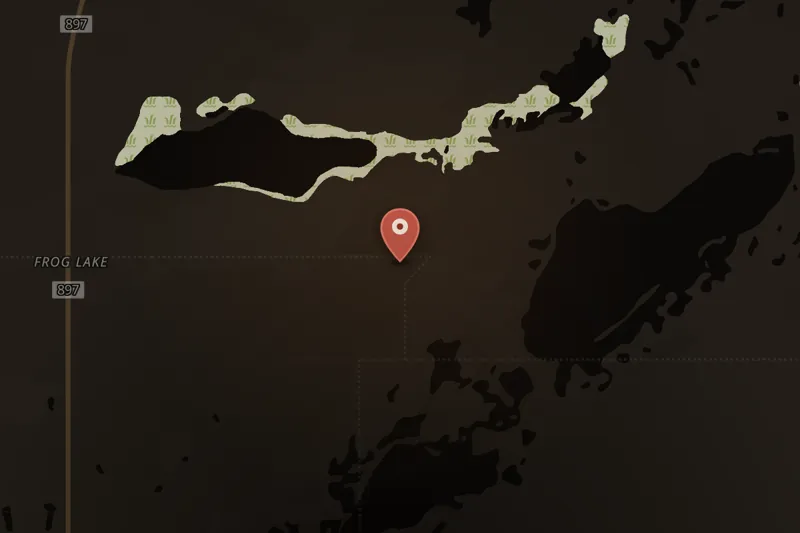
The Frog Lake Massacre occurred on April 2, 1885, in the small settlement of Frog Lake, then part of the District of Saskatchewan in the North-West Territories (now in Alberta), roughly 200 km east of Edmonton. The killings took place during the Cree uprising that accompanied the broader North-West Rebellion, a conflict involving Métis and First Nations resistance to Canadian government policy.
Chief Big Bear and his band had settled near Frog Lake in late 1884 after signing Treaty 6 in 1882. Grievances over the terms of the treaty, the collapse of the buffalo population, and resulting starvation among the Cree fueled unrest. On March 28, 1885, people at Frog Lake learned of the Métis victory at the Battle of Duck Lake and Poundmaker's looting of Battleford, along with rumours that Canadian soldiers were coming to kill Indigenous people in the area. In response, Wandering Spirit assumed the role of war chief for Big Bear's band and began gathering arms and supplies. Indian Agent Thomas Quinn, who controlled rations that kept the Cree in a state of near-starvation, was viewed as both a source of local anger and an obstacle to Wandering Spirit's plans.
On the morning of April 2, armed Cree men took Quinn hostage and took control of the settlement, looting stores. After Catholic mass concluded around 11:00 a.m., Wandering Spirit ordered the white settlers to relocate to a nearby Native encampment. When Quinn refused to move, Wandering Spirit shot and killed him. Despite Big Bear's attempt to intervene, Wandering Spirit's group then killed eight more unarmed people: Catholic priests Leon Fafard and Felix Marchand, lay assistant John Williscroft, and settlers John Gowanlock, John Delaney, William Gilchrist, George Dill, and Charles Gouin. Hudson's Bay Company clerk William Bleasdell Cameron escaped with the help of sympathetic Cree.
Following the killings, approximately 70 hostages were taken, including the widows Theresa Gowanlock and Theresa Delaney and their children, along with several Métis men who later assisted in moving some victims' bodies to safekeeping in cellars. The settlement's buildings, including the church, were burned on April 4, 1885. Troops arrived on June 14, 1885, and buried the victims.
Following the suppression of the rebellion, Wandering Spirit and seven others — Little Bear, Walking the Sky, Bad Arrow, Miserable Man, Iron Body, Ika, and Man Without Blood — were tried without legal counsel for murders at Frog Lake and Battleford. Judge Charles Rouleau sentenced all to death; the eight were hanged on November 27, 1885, in what is recorded as the largest mass hanging in Canadian history. Big Bear, though he had opposed the attack, was convicted of treason for organizing Cree resistance and served part of a three-year sentence before his death in 1888.
The site was designated the Frog Lake National Historic Site in 1923, with a cairn and federal plaque erected in 1924.

Key facts
- Victims
- Felix Marchand, John Williscroft, Thomas Quinn, Charles Gouin, William Gilchrist, John Delaney, George Dill, Leon Fafard, John Gowanlock
- Date
- 1885
- Location
- Frog Lake National Historic Site
- Case status
- solved
Case timeline
1882
Chief Big Bear signs Treaty 6.
1884
Big Bear and his band settle near Frog Lake in late 1884.
1885-03-28
Frog Lake residents learn of the Métis victory at the Battle of Duck Lake and Poundmaker's looting of Battleford; Wandering Spirit becomes war chief of Big Bear's band.
1885-04-02
Armed Cree men led by Wandering Spirit take Thomas Quinn hostage; after mass, Quinn is shot and killed when he refuses to move, followed by the killing of eight more unarmed settlers and clergy.
1885-04-04
The church, rectory, and remaining buildings of Frog Lake settlement are burned.
1885-06-14
The Midland Battalion arrives at Frog Lake and buries the massacre victims in the cemetery.
1885-11-27
Wandering Spirit and seven others are hanged for murders committed at Frog Lake and Battleford, the largest mass hanging in Canadian history.
1888
Big Bear dies after serving part of a three-year sentence for treason.
1923
The site is designated the Frog Lake National Historic Site.
1924
A stone cairn and federal plaque are erected at the site.
Best coverage
No approved coverage links are attached yet.
People
Felix Marchand
VICTIMCatholic priest killed during the massacre.
Miserable Man
CONVICTEDConvicted for murders committed at Frog Lake and Battleford; sentenced to death and hanged November 27, 1885.
Ika
CONVICTEDConvicted for murders committed at Frog Lake and Battleford; sentenced to death and hanged November 27, 1885.
John Williscroft
VICTIMLay assistant to Father Fafard, killed during the massacre.
Thomas Quinn
VICTIMIndian Agent, shot and killed by Wandering Spirit on April 2, 1885 after refusing to be moved.
Charles Gouin
VICTIMSettler killed during the massacre.
Wandering Spirit
CONVICTEDPlains Cree war chief who led the killings; convicted and sentenced to death by hanging, executed November 27, 1885.
William Gilchrist
VICTIMSettler killed during the massacre.
Bad Arrow
CONVICTEDConvicted for murders committed at Frog Lake and Battleford; sentenced to death and hanged November 27, 1885.
John Delaney
VICTIMSettler killed during the massacre; husband of Theresa Delaney.
George Dill
VICTIMStorekeeper killed during the massacre.
Big Bear
CONVICTEDCree chief who opposed the attack but was convicted of treason for organizing Cree resistance; served part of a three-year sentence in Manitoba Penitentiary, died 1888.
Walking the Sky
CONVICTEDConvicted for murders committed at Frog Lake and Battleford; sentenced to death and hanged November 27, 1885.
Little Bear
CONVICTEDConvicted for murders committed at Frog Lake and Battleford; sentenced to death and hanged November 27, 1885.
Leon Fafard
VICTIMCatholic priest killed during the massacre.
Iron Body
CONVICTEDConvicted for murders committed at Frog Lake and Battleford; sentenced to death and hanged November 27, 1885.
John Gowanlock
VICTIMSettler killed during the massacre; husband of Theresa Gowanlock.
Man Without Blood
CONVICTEDConvicted for murders committed at Frog Lake and Battleford; sentenced to death and hanged November 27, 1885.
Roles reflect public records and court outcomes at the time of writing — supporting citations are on file under Sources.
Places
Common questions
- What happened to the victim?
- On April 2, 1885, during the North-West Rebellion, Cree men led by war chief Wandering Spirit killed nine officials, clergy and settlers at the Frog Lake settlement in the North-West Territories (now Alberta), amid tensions over enforced starvation, treaty grievances, and rumors of impending violence from Canadian soldiers.
- Where did the massacre happen?
- Frog Lake National Historic Site.
- Who was convicted?
- Miserable Man (Convicted for murders committed at Frog Lake and Battleford; sentenced to death and hanged November 27, 1885.), Ika (Convicted for murders committed at Frog Lake and Battleford; sentenced to death and hanged November 27, 1885.), Wandering Spirit (Plains Cree war chief who led the killings; convicted and sentenced to death by hanging, executed November 27, 1885.), Bad Arrow (Convicted for murders committed at Frog Lake and Battleford; sentenced to death and hanged November 27, 1885.), Big Bear (Cree chief who opposed the attack but was convicted of treason for organizing Cree resistance; served part of a three-year sentence in Manitoba Penitentiary, died 1888.), Walking the Sky (Convicted for murders committed at Frog Lake and Battleford; sentenced to death and hanged November 27, 1885.), Little Bear (Convicted for murders committed at Frog Lake and Battleford; sentenced to death and hanged November 27, 1885.), Iron Body (Convicted for murders committed at Frog Lake and Battleford; sentenced to death and hanged November 27, 1885.), and Man Without Blood (Convicted for murders committed at Frog Lake and Battleford; sentenced to death and hanged November 27, 1885.).
- What is the current status of the case?
- Status: solved.
Sources
- Frog Lake Massacrewikipedia · Wikipedia · 2026-07-07
- Frog Lake National Historic Sitenews · pc.gc.ca · 2026-07-07
- Contemporaneous coverage — collectionscanada.gc.canews · collectionscanada.gc.ca · 2026-07-07