Casepin
Back to cases

Active case

Marias Massacre

COLD1870Marias River, near Dunkirk, Montana Territory3 SOURCESUPDATED JUL 2026
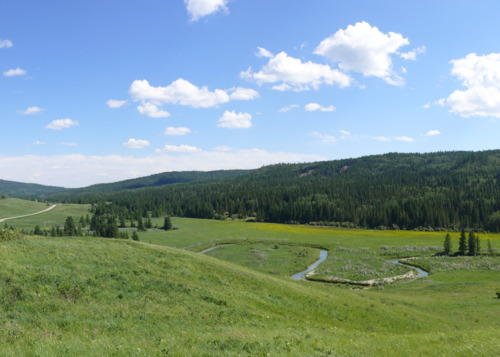
Illustrative

On January 23, 1870, United States Army forces under Major Eugene Mortimer Baker attacked a Piegan Blackfeet camp on the Marias River in Montana Territory, killing approximately 200 Native people, most of whom were women, children, and older men. The attack was intended to punish Mountain Chief's band of Piegan Blackfeet, but the soldiers instead struck a different band led by Chief Heavy Runner, whom the U.S. government had previously promised protection.

The events leading to the massacre began with the murder of rancher Malcolm Clarke on August 17, 1869, by Owl Child, a young Piegan warrior, and his companions. The killing followed a prior dispute in which Clarke and his son Horace had beaten and humiliated Owl Child, and accounts from Blackfeet sources describe Clarke assaulting Owl Child's wife. After Clarke's death, the U.S. Army demanded that the Blackfoot Confederacy execute Owl Child within two weeks; when this deadline passed, General Philip Sheridan ordered Major Baker to "strike them hard" against Mountain Chief's band.

Baker's command, comprising four companies of the 2nd U.S. Cavalry and a mounted detachment of the 13th U.S. Infantry, left Fort Ellis on January 6, 1870, and moved north from Fort Shaw on January 19 in search of Mountain Chief. On January 22, they captured a small camp whose occupants directed them to nearby camps. Baker's forces located a camp of 32 lodges and positioned themselves on high ground before dawn on January 23. Scout Joe Kipp identified the camp as belonging to Heavy Runner, a chief considered peaceful, but Baker ordered the attack regardless, reportedly threatening to have Kipp shot if he warned the camp. Heavy Runner was shot and killed while approaching the soldiers holding a safe-conduct paper. Soldiers then fired into lodges, killed occupants, and burned the camp, according to survivor accounts including those of Spear Woman, Buffalo Trail Woman, Long Time Calf, and Bear Head.

Casualty counts varied significantly among sources. Baker's men reported approximately 173 dead; scout Joe Kipp later reported 217 dead; and Blackfeet agent William B. Pease, after interviewing officers and survivors, reported a breakdown of eighteen older men, ninety women, fifty children, and fifteen young men killed. Pease's report, publicized via a letter from Vincent Colyer of the Board of Indian Commissioners that was published by The New York Times and read in the House of Representatives, sparked national outrage. Military officials, including Colonel Philippe Régis de Trobriand and Major General Winfield Scott Hancock, defended the attack and disputed the proportion of non-combatant casualties. No formal military investigation was conducted, and Baker's reports became the official record. Baker continued his military career, later commanding Fort Ellis and leading Yellowstone survey expeditions, before his 1872 arrest for drunkenness; he died in 1884.

The massacre contributed to a shift in federal policy, as President Ulysses S. Grant moved toward a "Peace Policy" and appointed Indian agents recommended by religious organizations. The Blackfeet Reservation was subsequently reduced through executive orders in 1872 and 1873 and further diminished by the 1887 Dawes Act. A memorial has been held annually at the site since organized by Blackfeet Community College, and the Baker Massacre Memorial was erected in 2010.


Key facts

Victims
Malcolm Clarke, Fair Singing Woman, Chief Heavy Runner
Date
1870
Location
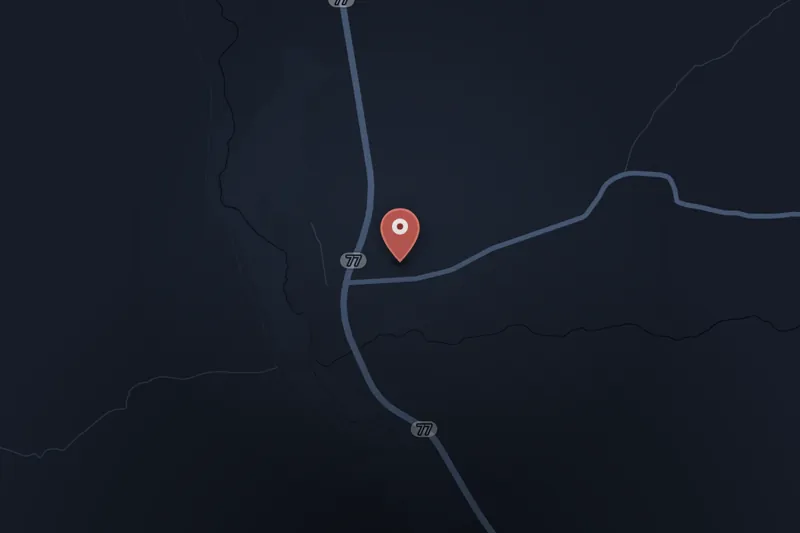
Marias River, near Dunkirk, Montana Territory
Case status
cold

Case timeline

  1. 1869-08-17

    Rancher Malcolm Clarke is killed at his ranch by Owl Child and companions, an act cited as the inciting incident for the subsequent military campaign.

  2. 1870-01-06

    Major Eugene M. Baker's command departs Fort Ellis.

  3. 1870-01-13

    Colonel James A. Hardie's report leads General Philip Sheridan to order Baker to 'strike them hard.'

  4. 1870-01-19

    Baker's command moves north from Fort Shaw searching for Mountain Chief's band.

  5. 1870-01-22

    Baker's forces capture a small Piegan camp and learn of nearby camps.

  6. 1870-01-23

    U.S. Army forces under Major Baker attack Chief Heavy Runner's camp on the Marias River, killing approximately 200 Piegan Blackfeet people.

  7. 1870-01-29

    General Sheridan receives Colonel de Trobriand's initial report on the expedition.

  8. 1870-01-30

    Blackfeet agent William B. Pease reports the massacre to his superior, Alfred Sully, after interviewing officers.

  9. 1870-02-18

    Major Baker files his official report on the operation.

  10. 1872-08-14

    Baker's forces skirmish with warriors led by Sitting Bull at Pryor's Creek during a Yellowstone survey expedition.

  11. 1872-09-19

    Nathan Clarke, son of Malcolm Clarke, is killed by James Swan in Deep Creek, Montana.

  12. 1872-10

    Baker is arrested by General Winfield Scott Hancock for drunkenness; he is not charged.

  13. 1884-12-19

    Eugene M. Baker dies at Fort Walla Walla, Washington.

  14. 2010

    The Baker Massacre Memorial is erected at the site.

Best coverage

No approved coverage links are attached yet.

People

  • Malcolm Clarke

    VICTIM

    Rancher and fur trader killed on August 17, 1869 by Owl Child and companions; his death was the inciting incident cited for the military campaign that led to the massacre.

  • Fair Singing Woman

    VICTIM

    Mother of survivor Bear Head; killed along with her husband's three other wives and four daughters when soldiers collapsed and burned their lodge.

  • Chief Heavy Runner

    VICTIM

    Piegan Blackfeet chief killed while approaching U.S. troops holding a government safe-conduct paper; his band, previously promised protection, was the one attacked.

  • Eugene Mortimer Baker

    LAW ENFORCEMENT

    U.S. Army major who commanded the military force that carried out the attack on Heavy Runner's camp; not charged, and no formal investigation was conducted into his conduct.

Roles reflect public records and court outcomes at the time of writing — supporting citations are on file under Sources.

Places

Common questions

What happened to the victim?
On January 23, 1870, U.S. Army cavalry under Major Eugene M. Baker attacked a peaceful Piegan Blackfeet camp led by Chief Heavy Runner on the Marias River in Montana Territory, killing approximately 200 people, most of them women, children, and the elderly.
Where did the massacre happen?
Marias River, near Dunkirk, Montana Territory.
What is the current status of the case?
Status: cold.

Sources

  1. Marias Massacrewikipedia · Wikipedia · 2026-07-07
  2. Contemporaneous coverage — Historynews · History · 2026-07-07
  3. Contemporaneous coverage — mhs.mt.govnews · mhs.mt.gov · 2026-07-07