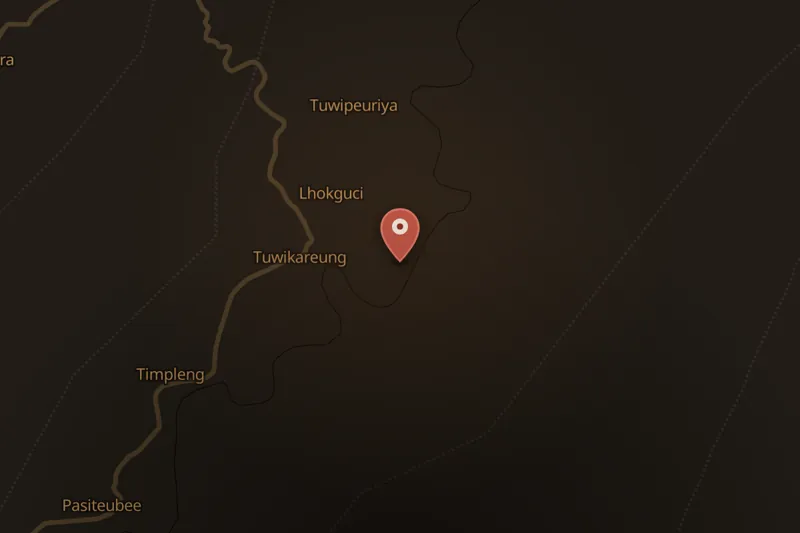
The Nisero Incident began on 8 November 1883, when the British cargo ship Nisero, en route from Surabaya, Java, to Marseille with a cargo of sugar, ran aground off the west coast of Aceh, Sumatra. The vessel's 28 crew members, led by Captain W.S. Woodhouse, rowed ashore and set up a camp on the beach. The following day they were met by a local chief, the Raja of Tenom, and a group of armed followers, who took them into captivity.
During their captivity the men were held in leaky huts inside a fenced enclosure guarded by the Raja's men. They were given limited food, typically two bowls of rice a day, and endured harsh conditions that, combined with disease, led to the deaths of seven captives from cholera or malnutrition. The Raja reportedly warned the men that they would be killed if his demands were not met.
Captain Woodhouse attempted to mediate a settlement in December 1883 by requesting to board a nearby Dutch warship to meet with the Dutch consul, but was prevented by Dutch officials from returning to his men as he had promised the Raja. Woodhouse and Second Engineer Alex Kydd, who was released due to illness, were the only two of the original 28 crew to leave captivity outside the final release.
An initial rescue attempt was made by force: the British ship Pegasus bombarded Tenom and Dutch troops were landed, but they met strong resistance, suffered several deaths, were unable to locate the captives (who had been moved inland), and withdrew. What followed were prolonged negotiations, complicated by the fact that the Raja was simultaneously at war with the Dutch during the Aceh War, and by his fluctuating demands, which included a ransom payment and the reopening of ports then blockaded by the Dutch. The affair caused public anger in Britain over the government's perceived inaction and strained Anglo-Dutch relations.
In September 1884, after ten months in captivity, the Raja agreed to release the remaining 19 captives, reportedly influenced by his mother. William Edward Maxwell, Colonial Secretary of the Straits Settlements, delivered a ransom—said to be 40,000 Straits Dollars along with agreement to open ports—to the Raja on the beach, and the captives were taken aboard the Pegasus. They were treated at the General Hospital in Penang before sailing for Liverpool aboard the cargo ship Ajax on 22 September 1884.
In the aftermath, Maxwell was praised by the Governor of the Straits Settlements, Frederick Weld, for his role in securing the release. Maxwell and Captain Bickford of the Pegasus were awarded the Companion of the Most Distinguished Order of St. Michael and St. George (CMG) in 1885, though details of the release were never officially published.


 SOLVEDListen


