The Batepá massacre took place beginning 3 February 1953 in the Portuguese colony of São Tomé, where hundreds of forros — native creoles — were killed by the colonial administration, militias of Portuguese colonists, and mobilized African plantation workers. The massacre arose from tensions over forced labor on São Tomé's plantation system (roças), which relied on contract laborers (serviçais) brought from mainland Africa and Cape Verde. Forros had long refused this work, viewing it as equivalent to slave labor.
Governor Carlos Gorgulho, in office since 1945, pursued policies intended to end the colony's dependence on outside contract labor by pressuring forros into plantation work, including banning the sale of locally made alcohol and tripling the poll tax. In 1952 the administration proposed resettling fifteen thousand people from Cape Verde on the island, and by January 1953 rumors circulated that forros' land would be seized and given to the newcomers, with forros then compelled into contract labor. On 2 February 1953, handwritten pamphlets threatened anyone who contracted forros as laborers. The government responded with a public declaration blaming "communists" for spreading the rumors and pledging protection for creoles.
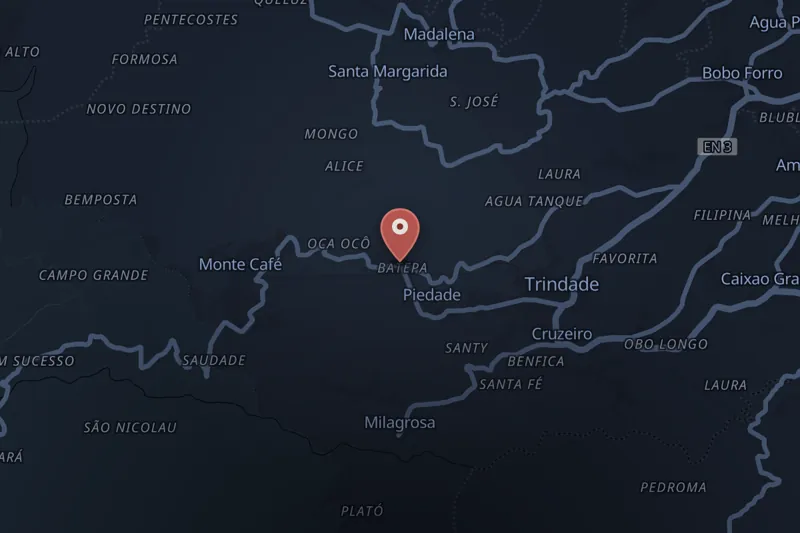
On 3 February, protesting crowds gathered and police killed one protester, Manuel da Conceição Soares, prompting a larger protest the next day in Trindade. Gorgulho then declared that a communist rebellion was underway and called on white colonists to arm themselves. Militias formed rapidly, joined by some Cape Verdians, while planters mobilized Angolan and Mozambican workers. Over the following days, these forces killed hundreds of forros. Twenty-eight people were suffocated in a cell by the Corpo de Polícia Indígena (Indigenous Police Corps), and twenty were burned to death on one estate. Prisoners were tortured with electricity, and many died from beatings, torture, and forced labor. Bodies were reportedly dumped into the sea, with Gorgulho quoted as instructing subordinates to "throw this shit into the sea to avoid troubles."
In March 1953, Portugal's International and State Defense Police investigated the alleged communist conspiracy and found no evidence of one. In April, the Minister of Overseas Territories ordered Gorgulho recalled to Lisbon; he was subsequently promoted to general and praised by the Minister of the Army for his actions. Seven forros were tried and convicted for killing two police officers during the unrest.
The massacre is regarded as a turning point that spurred the rise of the independence movement in São Tomé and Príncipe, and 3 February is commemorated annually as Dia de Mártires da Liberdade (Day of the Martyrs of Freedom), a national holiday.


 Credit: User:Zero0000Public domainSourceSOLVEDListen