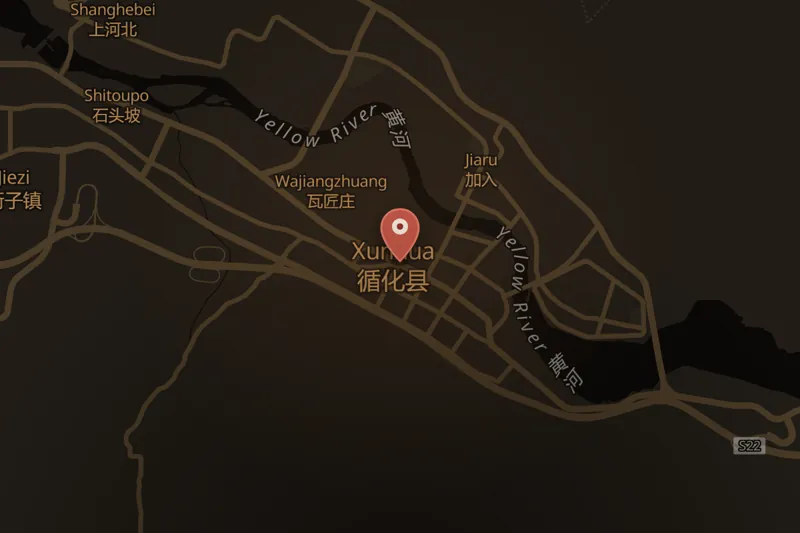
The Xunhua Incident (循化事件) was an uprising of Salar and Tibetan civilians against Chinese Communist Party (CCP) policies in the Xunhua Salar Autonomous County of Qinghai Province, which occurred in April 1958 during the Great Leap Forward. Xunhua was the hometown of the 10th Panchen Lama.
According to background information, in 1957 the CCP under Mao Zedong launched the Anti-rightist Campaign, followed in 1958 by the Great Leap Forward. In March 1958, Zhu Xiafu, vice secretary of the CCP committee in Qinghai, called for rapid socialist transformation of nomadic communities, setting quotas for forcibly establishing animal husbandry cooperatives across different areas. At the same time, local leaders followed central CCP directives intended to "prevent uprising" by using meetings and study sessions to control minority religious leaders. Among those sent for re-education was Jnana Pal Rinpoche, a prestigious monk from Bimdo Monastery who served as a vice administrator of Xunhua County and had reportedly taught the Dalai Lama and Panchen Lama.
The uprising began on April 17, 1958, when civilians from Gangca Town resisted the imposition of socialist cooperatives and demanded the release of Jnana Pal Rinpoche. They detained the local CCP secretary and cut down utility poles. The following day, the protest turned violent, resulting in the death of a CCP task-force team leader. The resistance then grew, joined by local Salar people, and by April 24 more than 4,000 people, led by Salars, besieged Xunhua County, robbing some stores and beating several local officials before the armed resistance dispersed overnight.
On the morning of April 25, 1958, the PLA deployed two regiments to suppress the uprising. Troops opened fire on civilians who were demanding Jnana Pal Rinpoche's release. Within four hours, the PLA reportedly realized most of the civilians were unarmed, but by then 435 people had been killed, out of a total of 719 casualties. That afternoon, 2,499 people were arrested, including 1,581 Salars, 537 Tibetans, 343 Hui people, and 38 Han Chinese. Official sources cited in the record state that 17 PLA soldiers died, alongside an estimated 0.9 million RMB in property losses.
Jnana Pal Rinpoche died by suicide during his "study session" detention after learning of the crackdown; officials subsequently identified him as the organizer of the uprising. Mao Zedong later expressed support for the suppression, stating that the crackdown in Qinghai was "wonderful" and that the decision of the Qinghai CCP committee was "absolutely correct."

 Credit: unknown/desconocidoPublic domainSourceSOLVEDListen


