Solved case
San Juan Hill massacre
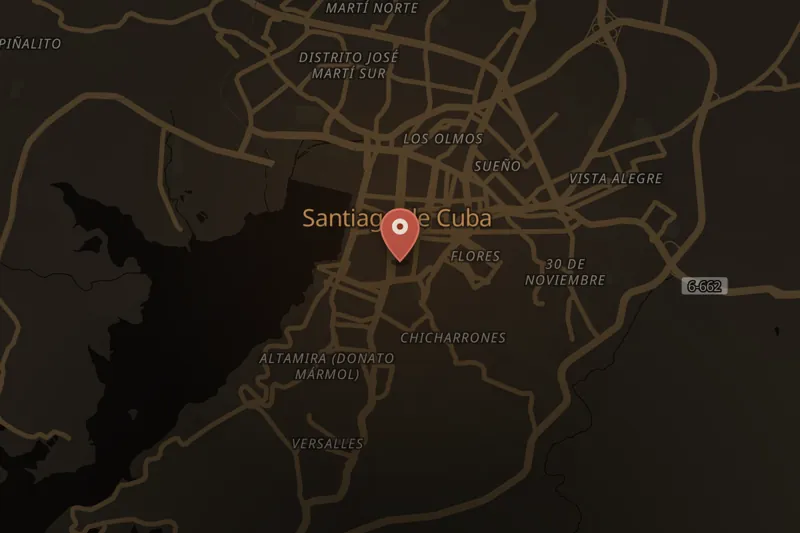
On January 12, 1959, in the aftermath of the Cuban Revolution, between 71 and 73 men accused of collaborating with the ousted Batista government were executed by firing squad at San Juan Hill in Santiago de Cuba after summary revolutionary tribunals, and buried in a mass grave.
Following the final rebel victory in the Cuban Revolution on January 1, 1959, dozens of supporters of ousted president Fulgencio Batista, including members of the armed forces and police, were arrested and accused of war crimes and other abuses committed under the former regime. Time magazine reported that many of the accused were described as having tortured captured rebels, including pulling out fingernails, burning hands and feet in vises, and using castration as an interrogation method. Although the 1940 Cuban constitution had prohibited the death penalty, that constitution had recently been overturned amid the revolutionary transition.
On January 11, 1959, a revolutionary court in Santiago de Cuba conducted a summary trial lasting four hours, at a rate of about four minutes per sentence. The tribunal was directed by Belarmino Castilla Mas, with Jorge Serguera acting as prosecutor. No defense lawyers were present, and no evidence tying the accused to specific prior crimes was introduced. The proceedings were presided over by Rebel Army Commander Raúl Castro, who commanded Oriente province at the time. The court sentenced 68 men to death (in addition to four sentenced the same day), sentenced ten men to ten years in prison, and acquitted 47 others. Prisoners were transported by truck from Boniato prison to a shooting range at San Juan Hill, where a crowd gathered to watch the executions.
The executions began around 2:00 a.m. on January 12, 1959. Men were lined up one by one and shot in front of a 40-meter ditch that had been dug in advance. Between 71 and 73 people were killed and buried in the resulting mass grave. Raúl Castro directed the massacre. Of 72 names on the firing-squad list, one person—a 15-year-old known as "El Fiñe"—reportedly evaded execution, apparently through personal contacts, and three other prisoners held in a separate section of Boniato prison also escaped. A priest, Father Jorge Bez Chabebe, accompanied each victim to execution and stated the shootings continued until 10:00 a.m. A journalist who witnessed the event, Antonio Llano Montes, believed some victims were still alive when shot and died of asphyxiation while attempting to dig their way out of the grave.
The executions were publicized and promoted by the official press at the time, reportedly to satisfy public demand for retribution. International figures, including Uruguay's delegate to the United Nations, the Cuban ambassador to Argentina, U.S. Senator Wayne Morse, and Puerto Rico's governor Luis Muñoz Marín, condemned the killings. Fidel Castro responded that orders had been given to execute "every last one of those murderers," regardless of international opinion.
In 1963, Hurricane Flora unearthed some of the bodies from the mass grave. The government subsequently relocated the remains into concrete tombs and disposed of them in the Cayman Trench.
Key facts
- Victims
- On file
- Date
- 1959
- Location
- San Juan Hill, Santiago de Cuba, Cuba
- Case status
- solved
Case timeline
1959-01-01
Rebel forces achieve final victory in the Cuban Revolution.
1959-01-11
A revolutionary court in Santiago de Cuba, presided over by Raúl Castro, conducts summary trials sentencing dozens of men accused of collaborating with the Batista regime.
1959-01-12
Between 71 and 73 men are executed by firing squad at San Juan Hill beginning around 2:00 a.m. and continuing until roughly 10:00 a.m.; bodies are buried in a mass grave.
1963
Hurricane Flora unearths some of the bodies from the mass grave; the government later relocates remains to concrete tombs disposed of in the Cayman Trench.
Best coverage
No coverage has been attached to this file yet.
People
Belarmino Castilla Mas
LAW ENFORCEMENTDirected the revolutionary court proceedings in Santiago de Cuba on January 11, 1959.
Raúl Castro
LAW ENFORCEMENTRebel Army Commander who presided over the revolutionary tribunal and directed the executions at San Juan Hill.
Jorge Serguera
LAW ENFORCEMENTActed as prosecutor in the revolutionary tribunal that sentenced the accused to death.
Roles reflect public records and court outcomes at the time of writing — supporting citations are on file under Sources.
Places
Common questions
- What happened to the victim?
- On January 12, 1959, in the aftermath of the Cuban Revolution, between 71 and 73 men accused of collaborating with the ousted Batista government were executed by firing squad at San Juan Hill in Santiago de Cuba after summary revolutionary tribunals, and buried in a mass grave.
- Where did the massacre happen?
- San Juan Hill, Santiago de Cuba, Cuba.
- What is the current status of the case?
- Status: solved.
Related cases
View all cases
Sources
- ENCYCLOPEDICSan Juan Hill massacreWikipedia · 2026-07-07
- PRESSContemporaneous coverage — TIMETIME · 2026-07-07
- PRESSContemporaneous coverage — cubanet.orgcubanet.org · 2026-07-07
Record history
- First published
- JUL 07, 2026
When a file you follow changes — a new development, a correction, fresh coverage — the Dispatch is how you hear about it.
The Casepin Dispatch
A calm weekly briefing from the archive — one case worth understanding, meaningful updates to files you follow, and the best new coverage. You’ll also get the one-time note when the apps land. No gore, no rumor, no drip.