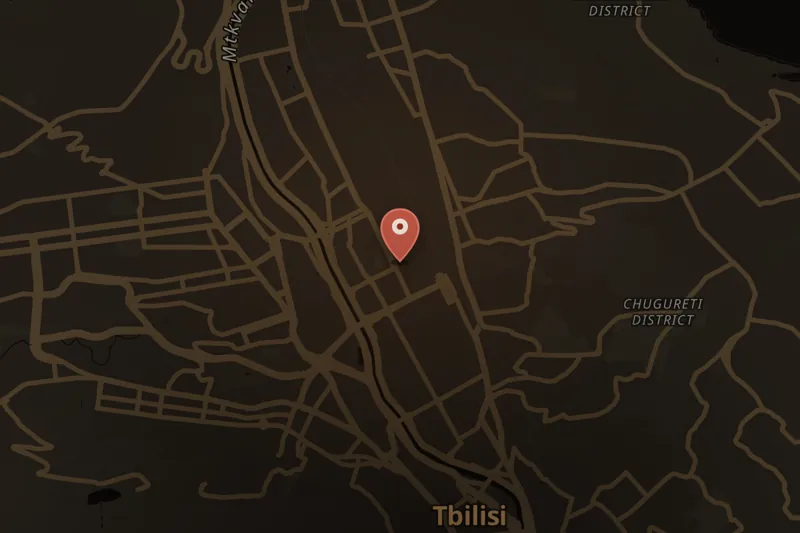
In early March 1956, spontaneous gatherings began in Tbilisi, capital of the Georgian SSR, to mark the third anniversary of the death of Joseph Stalin, who was born in Georgia. The gatherings, composed largely of students, involved laying wreaths and reciting poems at a Stalin monument on the Mtkvari River, echoing similar commemorations in 1954 and 1955. The immediate trigger for the protests' escalation was the circulation of news and rumors about Nikita Khrushchev's "Secret Speech," delivered at the Twentieth Party Congress on 25 February 1956, which denounced Stalin's cult of personality and abuses of power, and specifically criticized events in Georgia.
As news of the speech spread around 5–6 March, the character of the gatherings shifted from memorial commemoration to active demonstration, drawing students, workers, intelligentsia, and some Communist Party and Komsomol members. By 7 March, demonstrations had spread to Rustaveli Avenue, Tbilisi's main thoroughfare, with demands including restoration of Stalin's name in official media and calls for 9 March to be declared a day of mourning.
The situation escalated further on 8 March when thousands of protesters marched on the government residence in Krtsanisi, where visiting Chinese leader Marshal Zhu De was staying, breaking through military cordons. Georgian First Secretary Vasil Mzhavanadze met a delegation and agreed to limited concessions. However, demands radicalized to include the removal of Khrushchev and Anastas Mikoyan, rehabilitation of the executed Lavrentiy Beria, and calls for Georgian independence.
On 9 March, official memorial ceremonies were held, but many protesters refused to disperse afterward. Late that evening, a crowd converged on the Ministry of Communications building on Rustaveli Avenue, then guarded by Soviet Army soldiers, after rumors spread that a protester delegation had been arrested. When protesters attempted to storm the building, soldiers fired warning shots and then fired directly into the crowd. Soviet Army tanks were subsequently deployed on Rustaveli Avenue, and the final dispersal occurred in the early hours of 10 March at the Stalin monument, where soldiers used rifle butts, bayonets, and gunfire against the remaining crowd; some protesters jumped into the Mtkvari River to escape.
Official contemporary reports significantly under-reported casualties; a telegram from Georgian KGB head Aleksi Inauri to Moscow minimized the toll. Later investigations by Georgian authorities established that at least 21 people were killed and 55 wounded, mostly students and young people, with the true number of wounded possibly higher due to fear of seeking official medical treatment. More than 200 people were arrested.
The events fostered lasting anti-Soviet and anti-Russian sentiment in Georgia and are regarded as a catalyst for the later Georgian dissident and independence movement, influencing figures including Zviad Gamsakhurdia and Merab Kostava, who were arrested in December 1956 for distributing anti-Soviet leaflets linking the March crackdown to calls for independence. The crackdown also intensified tensions between the Georgian majority and the Abkhaz minority in subsequent years.


 SOLVEDListen