Case file
Bear River Massacre

Background
Cache Valley, known to the Shoshone as Seuhubeogoi, was a traditional hunting and gathering ground for the Northwestern Shoshone. Beginning in the 1840s and accelerating with the founding of Salt Lake City in 1847 and Mormon settlement of Cache Valley from 1856, white settlement and travel along the California, Oregon, and Montana trails steadily depleted game and food resources the Shoshone depended on. Territorial officials, including Superintendent of Indian Affairs Jacob Forney in 1859 and James Duane Doty in 1862, documented Shoshone starvation and destitution caused by settler encroachment, but federal authorities took no substantive action such as establishing a protective reservation. Facing starvation, some Shoshone raided settler farms and cattle.
Escalating conflict, 1859–1862
A series of violent incidents between 1859 and 1862 heightened tensions in the region, including an 1859 attack near Fort Hall, the 1860 Utter/Van Ornum party attack, the hanging of a young Shoshone man named Pugweenee by a Cache Valley jury, an 1862 skirmish at Providence Canyon in which Chief Bear Hunter was briefly taken prisoner, and the execution of four captured Shoshone men by a U.S. Army firing squad in December 1862. In January 1863, after Shoshone were blamed for the killing of miner John Henry Smith on the Montana Trail, Utah Chief Justice John F. Kinney issued arrest warrants for chiefs Bear Hunter, Sanpitch, and Sagwitch, and Colonel Patrick Edward Connor, commanding the 3rd California Volunteer Infantry, organized a military expedition.
The attack
Connor's combined force of roughly 300 infantry and cavalry left Fort Douglas in two detachments in January 1863, aiming for a surprise attack in extreme cold (reportedly as low as −20°F). At dawn on January 29, 1863, soldiers under Connor and Major Edward McGarry engaged the Shoshone encampment, which had prepared willow screens and rifle pits along Beaver Creek and the Bear River. After an initial frontal assault was repelled, Connor's forces flanked and encircled the village. Fighting lasted about two hours until the Shoshone exhausted their ammunition. Chief Bear Hunter was killed. Contemporary and later accounts, cited by Wikipedia, state that U.S. soldiers raped Shoshone women during the attack.
Casualties and aftermath
The California Volunteers reported 14 soldiers killed and 49 wounded (7 mortally). Connor reported his forces killed more than 224 of an estimated 300 Shoshone warriors, destroyed 70 lodges, and captured 175 horses; settlers in nearby Franklin reported a higher death toll than Connor's official count. Estimates of Shoshone dead range from about 250 (per historian Brigham D. Madsen) to 493 (per an eyewitness count by settler Hans Jasperson). Survivors, including Chief Sagwitch, regrouped and later helped found the town of Washakie, Utah, while others relocated to the Fort Hall and Wind River reservations. Connor was subsequently promoted to brigadier general and later brevetted major general. The site was designated a National Historic Landmark in 1990, and the Northwestern Band of the Shoshone Nation acquired the site in 2018 to preserve it as a burial ground.

Key facts
- Victims
- Beshup Timbimboo (Frank Timbimboo Warner), Sagwitch, Pugweenee, Bear Hunter
- Date
- 1863
- Location
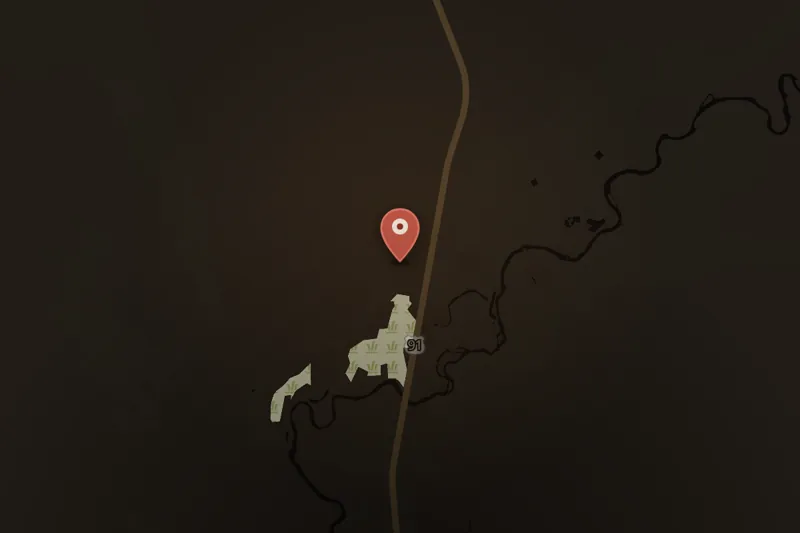
- Bear River Massacre Site, near Preston, Idaho
- Case status
- solved
Case timeline
1847-07-31
A 20-man delegation of Shoshone meets with Mormon settlers to discuss land claims in northern Utah.
1856
European American settlers establish the first permanent settlements and farms in Cache Valley, beginning at Wellsville, Utah.
1859
Superintendent of Indian Affairs Jacob Forney reports Shoshone impoverishment caused by white settlement and recommends a reservation; proposal not acted upon.
1860-09-09
The Utter/Van Ornum emigrant party is attacked on the Oregon Trail; Reuben Van Ornum is later recovered from Shoshone custody after a skirmish involving Chief Bear Hunter and U.S. troops at Providence Canyon.
1862-12-04
Major Edward McGarry's troops execute four captured Shoshone men and dump their bodies in the Bear River after a livestock dispute.
1863-01
Chief Justice John F. Kinney issues arrest warrants for chiefs Bear Hunter, Sanpitch, and Sagwitch following the killing of miner John Henry Smith.
1863-01-22
Captain Samuel W. Hoyt's infantry detachment departs Fort Douglas for Cache Valley.
1863-01-25
Colonel Patrick Edward Connor departs Fort Douglas with 220 cavalry.
1863-01-29
U.S. Army forces under Connor attack the Shoshone winter encampment at Bear River, killing an estimated 250 to 493 Shoshone people and 14 soldiers.
1911
Danish immigrant Hans Jasperson publishes an autobiography stating he counted 493 dead Shoshone at the site.
1918
Survivor Frank Timbimboo Warner (Be-shup), son of Chief Sagwitch, gives an account stating about 156 were killed and half of those present escaped.
1990
The Bear River Massacre Site is designated a National Historic Landmark.
2013
The Smithsonian Institution repatriates the remains of two Shoshone individuals killed in the massacre for burial.
2018
The Northwestern Band of the Shoshone Nation acquires the massacre site to protect it as a sacred burial ground.
Best coverage
No approved coverage links are attached yet.
People
Beshup Timbimboo (Frank Timbimboo Warner)
VICTIMSon of Chief Sagwitch, shot seven times during the massacre but survived; later gave a 1918 account of the attack.
Sagwitch
VICTIMNorthern Shoshone chief wounded twice during the massacre; survived and later led remaining band members to settle at Washakie, Utah.
Pugweenee
VICTIMYoung Shoshone man convicted by a local jury and hanged for alleged horse theft in an incident preceding the massacre.
Bear Hunter
VICTIMNorthern Shoshone chief killed during the January 29, 1863 attack on the Bear River encampment.
Patrick Edward Connor
LAW ENFORCEMENTColonel commanding the 3rd California Volunteer Infantry and 2nd California Volunteer Cavalry who led the U.S. Army attack on the Shoshone encampment; later promoted to brigadier general and brevetted major general.
Edward McGarry
LAW ENFORCEMENTU.S. Army major who led cavalry units in the attack and in earlier skirmishes with the Shoshone, including the December 1862 execution of four captured Shoshone men.
Roles reflect public records and court outcomes at the time of writing — supporting citations are on file under Sources.
Places
Common questions
- What happened to the victim?
- On January 29, 1863, United States Army troops under Colonel Patrick Edward Connor attacked a Northern Shoshone winter encampment at the confluence of the Bear River and Battle Creek in present-day Franklin County, Idaho, killing an estimated 250 to 493 Shoshone men, women, and children.
- Where did the massacre happen?
- Bear River Massacre Site, near Preston, Idaho.
- What is the current status of the case?
- Status: solved.
Sources
- Bear River Massacrewikipedia · Wikipedia · 2026-07-07
- Contemporaneous coverage — nps.govnews · nps.gov · 2026-07-07
- Contemporaneous coverage — history.idaho.govnews · history.idaho.gov · 2026-07-07