Background
Following the American Revolutionary War, the United States government sold large tracts of land in the Ohio Country, much of it to companies such as the Ohio Company of Associates, which had purchased approximately 1,500,000 acres in the Northwest Territory in 1787, though the purchase was not patented by Congress until 1792. As American settlers moved into the region, tensions rose with Native American nations, including the Lenape and Wyandot, whose lands were disputed even after the 1789 Treaty of Fort Harmar. The 1782 Gnadenhutten Massacre, in which Revolutionary militia forces killed ninety-six unarmed, neutral Christian Lenape men, women, and children, remained a source of grievance in the region.
A group of about thirty-six Ohio Company settlers moved upriver from the company's settlement at Marietta and squatted on land along the Muskingum River's flood plain, or "bottom" land, roughly 30 miles north of Marietta, in territory the Company did not hold title to. In late December 1790, Colonel William Stacy, a war veteran, traveled up the frozen river to warn his two sons at the Big Bottom settlement of the risk of attack.
The attack
On January 2, 1791, Lenape and Wyandot warriors raided the Big Bottom settlement from the north. They stormed the settlers' incomplete blockhouse and killed eleven men, one woman, and two children, though the Ohio Historical Society's figures cite nine men, one woman, and two children; accounts vary on the exact casualty count. Three settlers were captured, with at least one dying later in captivity, while four others escaped into the woods. Among those killed were Colonel Stacy's sons: John Stacy died in the attack, while Philemon (Philip) Stacy was taken captive and died afterward.
Aftermath
The attack intensified the broader Northwest Indian Wars, in which a coalition of Native American tribes fought to expel American settlers from the region; the conflict did not end until the tribes' defeat at the 1794 Battle of Fallen Timbers. In response to the violence, Congress authorized the Donation Tract on April 21, 1792 — 100,000 acres along the northern border of Ohio Company lands — offering free 100-acre lots to male settlers eighteen or older who would actually settle the land, intending to create a buffer zone for Ohio Company territory.
Commemoration
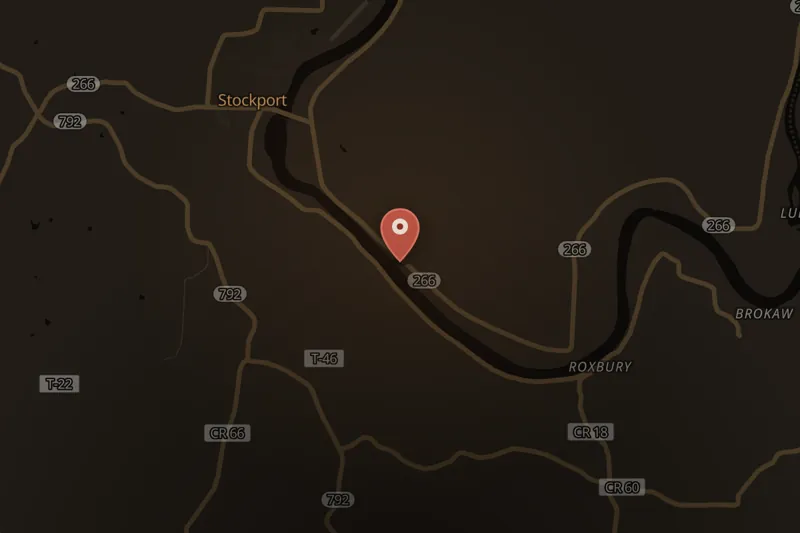
In 1905, landowner Obadiah Brokaw erected a monument to the massacre at his own expense on the site of the former blockhouse; the monument and surrounding land were transferred to the Ohio State Archaeological and Historical Society later that year. The Ohio Historical Society (now the Ohio History Connection) maintains the three-acre Big Bottom Memorial Park in Stockport, Ohio, which is listed on the National Register of Historic Places and includes a marble obelisk and interpretive signage. A separate historical marker listing the names of those killed was placed in Marietta, Ohio, in 1893.


 Credit: NyttendPublic domainSourceUNSOLVEDListen