Casepin
Back to cases

Active case

Gnadenhutten Massacre

UNSOLVED1782Gnadenhutten, Ohio Country (present-day Ohio, USA)3 SOURCESUPDATED JUL 2026
Burial Site of Indian Martyrs
Burial Site of Indian Martyrs — Credit: Nyttend · Public domain

In September 1781, British-allied Native Americans forced Christian Native Americans and Moravian missionaries out of their Ohio mission villages, relocating them to a settlement called Captive Town on the Sandusky River. Facing starvation there, more than 150 of the Moravian Christian Indians were permitted in February 1782 to return to their former villages—including Gnadenhutten, Salem, and Schoenbrunn—to harvest crops they had left behind.

On March 4, 1782, a Pennsylvania militia force of about 160 men under Lieutenant Colonel David Williamson marched into the Tuscarawas Valley. On March 6, the militia killed Joseph Schebosh Jr., a Moravian Christian, despite his pleas for his life. The militiamen then approached the Moravian Christian Indians in the fields, feigning goodwill and falsely promising to escort them to Fort Pitt for protection. The Indians handed over their guns and hatchets at the militia's request. Militiamen also lured residents from the nearby settlement of Salem to Gnadenhutten under the same false pretenses.

Once assembled at Gnadenhutten, the militia bound the Moravian Christian Indians and accused them of participating in raids into Pennsylvania, charges the Moravians denied. The militia held a vote on whether to kill them; eighteen militiamen opposed the killing and did not participate, separating themselves from the rest. The condemned were held overnight in two buildings—one for men, one for women and children—where they spent the night praying and singing hymns, while the militiamen reportedly became intoxicated on stolen communion wine. Before the killings, women and girls were reportedly taken outside and raped by militiamen.

On the morning of March 8, 1782, the militia led the Indians in small groups to two "killing houses," where they were bound, struck with mallets, and killed by scalping cuts. According to one militiaman's account, an individual named Nathan Rollins was said to have killed nineteen people himself. In total, the militia killed 28 men, 29 women, and 39 children—96 people. Two boys survived, one after being scalped, and escaped to warn others. Militiamen looted the village, using roughly 80 horses to carry away plunder, then burned Gnadenhutten and other abandoned Moravian villages.

No criminal charges were ever filed against those responsible. Surviving Moravian Christian Indians eventually resettled near the Thames River in present-day Ontario, and the U.S. Congress granted them three town sites in 1785 in response to the massacre. Missionary John Heckewelder later collected the remains of the victims and buried them in a mound at the village site, which is today listed on the National Register of Historic Places and includes a memorial shrine dedicated in stages, most recently in 2019.

Key facts

Victims
Joseph Schebosh Jr.
Date
1782
Location
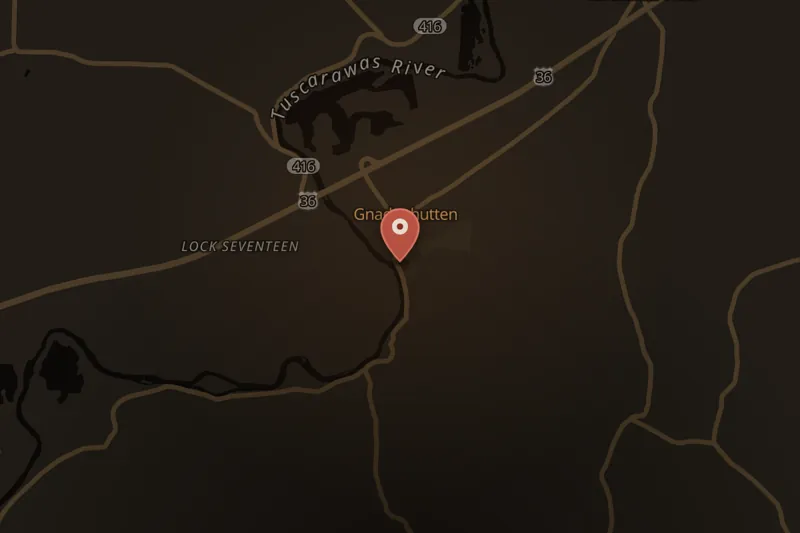
Gnadenhutten, Ohio Country (present-day Ohio, USA)
Case status
unsolved

Case timeline

  1. 1778

    Lenape leader White Eyes signs the Treaty of Fort Pitt with the Americans; he dies later that year.

  2. 1781-04-19

    Colonel Daniel Brodhead's expedition destroys the Lenape village of Coshocton.

  3. 1781-09

    British-allied Native Americans force Moravian Christian Indians and missionaries from their Ohio villages to Captive Town on the Sandusky River.

  4. 1782-02

    More than 150 Moravian Christian Indians are permitted to return to Gnadenhutten, Salem, and Schoenbrunn to harvest crops.

  5. 1782-03-04

    A Pennsylvania militia of about 160 men under Lt. Col. David Williamson marches toward the Tuscarawas Valley.

  6. 1782-03-06

    Militiamen kill Joseph Schebosh Jr. and lure Moravian Christian Indians to Gnadenhutten under false promises of protection.

  7. 1782-03-08

    Militiamen kill 96 Moravian Christian Indians (28 men, 29 women, 39 children) at Gnadenhutten and burn the village.

  8. 1785

    U.S. Congress grants surviving Moravian Christian Indians three town sites in response to the massacre.

  9. 1798

    David Zeisberger leads Moravian Christian Indians back to Ohio to establish the Goshen Mission.

  10. 1799

    Missionaries John Heckewelder and David Peter bury the gathered remains of the victims at the village site.

  11. 1889

    Theodore Roosevelt calls the massacre "a stain on frontier character that the lapse of time cannot wash away."

  12. 2019

    Gerard F. Heath dedicates a shrine and memorial service at the village site.

Best coverage

No approved coverage links are attached yet.

People

  • Obadiah Holmes Jr.

    LAW ENFORCEMENT

    Militiaman who opposed and did not participate in the killings; later rescued and raised one of the surviving Lenape children.

  • David Williamson

    LAW ENFORCEMENT

    Lieutenant Colonel who commanded the Pennsylvania militia that carried out the massacre; no criminal charges were ever filed against him.

  • Joseph Schebosh Jr.

    VICTIM

    Moravian Christian killed by militiamen on March 6, 1782, prior to the main massacre.

Roles reflect public records and court outcomes at the time of writing — supporting citations are on file under Sources.

Archival records

  • Burial Site of Indian Martyrs

    archival location

    Burial Site of Indian Martyrs

    Credit: Nyttend · Public domain · Source

Places

Common questions

What happened to the victim?
On March 8, 1782, Pennsylvania militiamen under Lt. Col. David Williamson killed 96 unarmed, pacifist Christian Lenape and Mohican residents of the Moravian mission village of Gnadenhutten in Ohio Country, after falsely accusing them of raiding and promising them safe relocation.
Where did the massacre happen?
Gnadenhutten, Ohio Country (present-day Ohio, USA).
What is the current status of the case?
Status: unsolved.

Sources

  1. ENCYCLOPEDICGnadenhutten massacreWikipedia · 2026-07-07
  2. OFFICIAL / AGENCYGnadenhutten Massacre and Village Site — National Register of Historic Places Registrationnpgallery.nps.gov · 2026-07-07
  3. PRESSGnadenhutten Remembrance Day observed in the villagethebargainhunter.com · 2026-07-07

Record history

First published
JUL 07, 2026