Casepin
Back to cases

Case file

Black War

SOLVED1824Van Diemen's Land (Tasmania), Australia3 SOURCESUPDATED JUL 2026
Illustrative

The Black War was a period of violent conflict between British colonists and Aboriginal Tasmanians in Van Diemen's Land (present-day Tasmania) that intensified from the mid-1820s and effectively ended in early 1832. The conflict was fought largely as guerrilla warfare on both sides. Estimates place Aboriginal deaths at 600 to 900, with more than 200 British colonists also killed, though historians note recorded figures likely undercount total deaths.

When a British penal settlement was established in Van Diemen's Land in 1803, the Aboriginal population is estimated to have been between 3,000 and 7,000 people. Relations between colonists and Aboriginal people were initially marked by sporadic violence over competition for game and the abduction of Aboriginal women and children. Conflict escalated sharply from 1824 as British settlement expanded rapidly over Aboriginal land, with Aboriginal attacks on colonists rising from an average of 1.7 per year (1803–1823) to 18 per year (1824–1826).

Governor George Arthur issued proclamations authorising settlers to use force against hostile Aboriginal groups, and in November 1828 declared martial law in the settled districts—a measure that remained in force for more than three years. Military and settler patrols conducted frequent raids on Aboriginal encampments, often resulting in multiple deaths. In October–November 1830, Arthur organised the "Black Line," a large-scale military operation involving roughly 2,200 men intended to drive hostile Aboriginal nations into the Tasman Peninsula. The campaign failed to achieve its goal, capturing only a small number of Aboriginal people.

Conciliation efforts led by George Augustus Robinson, working with Aboriginal negotiators including Truganini and Mannalargenna, proved more successful than military action. Through a series of "Friendly Missions" in 1830 and 1831, Robinson's parties persuaded surviving Aboriginal groups—including those led by Montpelliatta, Tongerlongeter, and Umarrah—to surrender. This surrender, completed in December 1831 and formalised in Hobart in January 1832, effectively ended the Black War; martial law was revoked that month.

Following the conflict, nearly all remaining Aboriginal Tasmanians were removed from the mainland between 1832 and 1835 and eventually relocated to the Wybalenna Aboriginal Mission on Flinders Island. Of the 220 people initially relocated, disease and low birth rates reduced the population to 46 by the time the mission closed in 1847.

Historians disagree on death tolls, population estimates, and characterisation of the conflict. Some historians and genocide scholars, including Raphael Lemkin, Robert Hughes, James Boyce, and Lyndall Ryan, have described the events as genocide. Others, including Henry Reynolds and Nicholas Clements, argue that while individual settlers may have supported extermination, colonial authorities did not pursue an official policy of destroying the Aboriginal population. Historian Keith Windschuttle's substantially lower death-toll estimates have been widely challenged by other historians.

Key facts

Victims
On file
Date
1824
Location
Van Diemen's Land (Tasmania), Australia
Case status
solved

Case timeline

  1. 1803-09

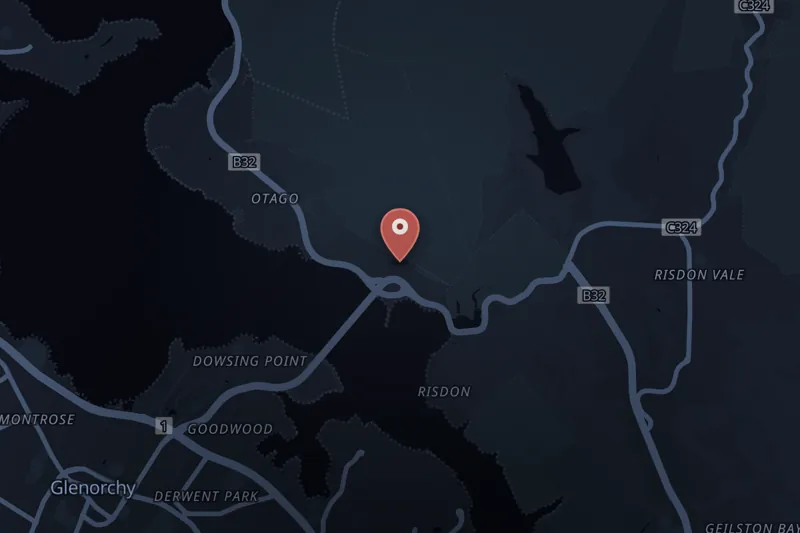
    British establish a military outpost at Risdon Cove, marking the first significant European settlement presence in Van Diemen's Land.

  2. 1804-05-03

    Soldiers, settlers and convicts fire on an Aboriginal hunting party at Risdon Cove; witnesses report between three and 50 Aboriginal deaths.

  3. 1824

    Conflict intensifies as Aboriginal warriors resist rapid expansion of British settlement.

  4. 1826-09

    Two Aboriginal men are hanged for the murder of three colonists, part of escalating reprisals.

  5. 1826-11-29

    Governor George Arthur issues a notice authorising settlers to treat hostile Aboriginal groups as open enemies.

  6. 1827-06

    At least 80 to 100 members of the Pallittorre clan are killed in reprisals for the killing of three stockmen.

  7. 1828-02-10

    Cape Grim massacre: shepherds ambush and kill Aboriginal people collecting shellfish in northwestern Tasmania.

  8. 1828-04-19

    Arthur issues the 'Proclamation Separating the Aborigines from the White Inhabitants'.

  9. 1828-11-01

    Arthur declares martial law against Aboriginal people in the settled districts.

  10. 1830-03

    The Aborigines Committee, chaired by Archdeacon William Broughton, publishes its report on the conflict.

  11. 1830-10

    The Black Line military operation begins, involving about 2,200 men attempting to drive Aboriginal nations from the settled districts.

  12. 1830-11-26

    The Black Line campaign is disbanded after limited success.

  13. 1831-12-31

    George Augustus Robinson and Aboriginal negotiators make contact with a party of 26 Big River and Oyster Bay people led by Montpelliatta and Tongerlongeter, who agree to surrender.

  14. 1832-01-07

    Robinson leads the surrendered Aboriginal groups to Hobart, where they surrender to Governor Arthur, effectively ending the Black War.

  15. 1832-01

    Martial law is revoked.

  16. 1833-02

    The Aboriginal Establishment is moved to Flinders Island and renamed Wybalenna.

  17. 1847

    The Wybalenna mission closes; the Aboriginal population there had fallen to 46 due to disease and low birth rates.

Best coverage

No approved coverage links are attached yet.

People

  • Truganini

    LAW ENFORCEMENT

    Aboriginal negotiator who worked with George Augustus Robinson during the 'Friendly Missions' to secure the surrender of Aboriginal belligerents.

  • George Arthur

    LAW ENFORCEMENT

    Governor of Van Diemen's Land from May 1824 who declared martial law, authorised bounties, and organised the Black Line military operation against Aboriginal Tasmanians.

  • George Augustus Robinson

    LAW ENFORCEMENT

    British emissary appointed to lead conciliation missions and negotiate the surrender and removal of Aboriginal Tasmanian groups.

Roles reflect public records and court outcomes at the time of writing — supporting citations are on file under Sources.

Places

Common questions

What happened to the victim?
A period of violent conflict between British colonists and Aboriginal Tasmanians in Van Diemen's Land (Tasmania) from the mid-1820s to 1832, during which some 600 to 900 Aboriginal people and more than 200 British colonists were killed, and which precipitated the near-extermination of the Indigenous population.
Where did the crime happen?
Van Diemen's Land (Tasmania), Australia.
What is the current status of the case?
Status: solved.

Sources

  1. Black Warwikipedia · Wikipedia · 2026-07-07
  2. Colonial Frontier Massacres record — Black Warnews · c21ch.newcastle.edu.au · 2026-07-07
  3. Journal article on the Black War / Tasmanian genocidenews · tandfonline.com · 2026-07-07