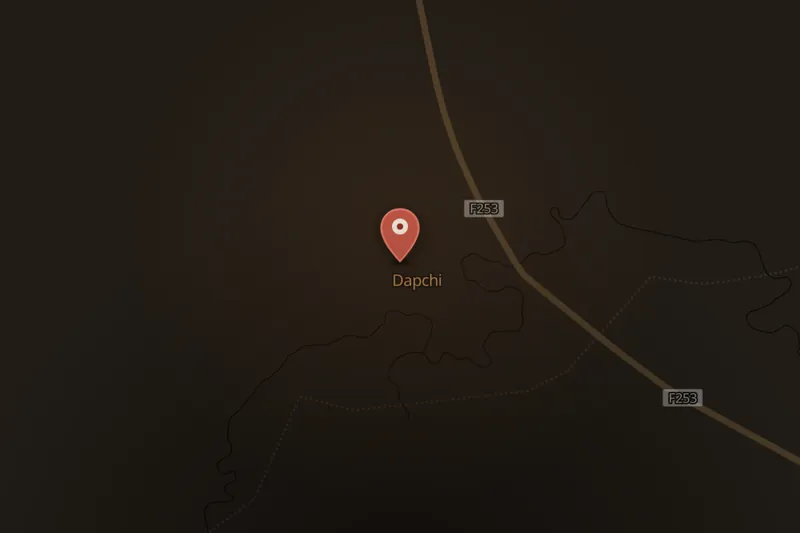
On February 19, 2018, at approximately 5:30 pm, Boko Haram militants abducted schoolgirls aged 11 to 19 from the Government Girls' Science and Technical College (GGSTC) in Dapchi, a town in Bulabulin, Bursari Local Government Area of Yobe State in northeastern Nigeria. Dapchi is located roughly 275 km (170 miles) northwest of Chibok, the site of a much larger 2014 Boko Haram schoolgirl kidnapping. Five of the abducted girls reportedly died on the same day they were taken. In response, the Nigerian federal government deployed the Nigerian Air Force and other security agencies to search for the missing students.
The kidnapping was followed by controversy over a reported military withdrawal from Dapchi shortly before the attack. Yobe State Governor Ibrahim Gaidam alleged that Nigerian Army soldiers had removed a checkpoint from the town hours before the abduction without notifying local police or the state government. The army later offered differing explanations, including a claim that it had formally handed over security responsibility to police before withdrawing — a claim the Yobe police commissioner denied, with no supporting documentation produced. An internal army intelligence document dated February 6, 2018, reportedly raised concerns about a possible Boko Haram attack in nearby Damaturu, contradicting the army's assertion that no Boko Haram activity had been detected in the area.
There was also significant early confusion regarding the number of girls abducted, with figures ranging from 94 to 111 cited by different officials, including the Yobe governor, the chairman of a parents' forum, and the state police commissioner. Observers drew comparisons to the 2014 Chibok kidnapping, noting a similarly delayed initial government response in both cases.
On March 21, 2018, the Nigerian federal government announced that Boko Haram had returned 106 of the captives, comprising 104 schoolgirls, one girl who had not been a student, and a boy, dropped off in Dapchi in nine vehicles. Nigeria's information minister described the release as unconditional, though the United Nations later reported that the government had paid a substantial ransom. The militants reportedly warned parents against sending the returned girls back to school.
Leah Sharibu, a Christian student who was fourteen at the time of her abduction, was not released along with the others; her parents said Boko Haram would only free her if she converted to Islam, which she refused to do. Some released girls said Sharibu had once escaped her captors but was returned to them by a nomadic Fulani family. Christian Solidarity Worldwide reported she was later given to a Boko Haram fighter as a slave. An August 2018 audio recording captured her pleading for freedom, and her parents said in October 2018 that Boko Haram had threatened to kill her. Reports of her death circulated in February 2019 but were dismissed by the government as disinformation. In January 2020, multiple outlets reported she had been forcibly converted to Islam, married to a Boko Haram commander, and had given birth; her father disputed this account. Further reports indicated she gave birth to additional children in 2020 and 2023. As of the most recent reporting, Sharibu remains in captivity.

 ONGOINGListen