
Start here
THE MURDER OF THE PASTOR AND THE CHOIR SINGER – The Hall-Mills Case

Brooke Makenna's 15-minute overview: the quickest complete way into the case.
Watch on YouTubeUnsolved case · 1920s
Also known as Hall-Mills murders · Hall–Mills murder case
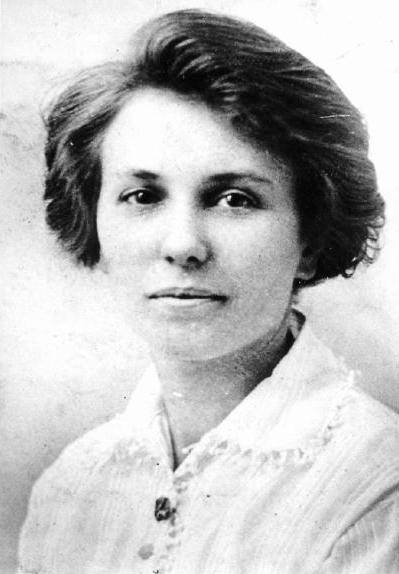 Eleanor Reinhardt Mills, Edward Wheeler HallCredit: Wikipedia/Wikimedia Commons (Hall–Mills murder case), c.1920Public domainSource
The short answer
Episcopal priest Edward Wheeler Hall and choir member Eleanor Mills, with whom he was having an affair, were found shot to death in a New Jersey field in September 1922. Hall's wife and her two brothers were tried in 1926 and acquitted; the case remains legally unsolved.
THE MURDER OF THE PASTOR AND THE CHOIR SINGER – The Hall-Mills CaseBrooke Makenna · 15 min1 piece from 1 creator: ranked, with duplicates removed and short clips set aside.
Start here
Brooke Makenna's 15-minute overview: the quickest complete way into the case.
Watch on YouTubeTitles and descriptions are the creators’ own and may not reflect current legal status. The sourced facts are in the file below. Players load only when you press play. Suggest coverage we’re missing.
Edward Wheeler Hall, an Episcopal priest, and Eleanor Mills, a member of his church choir with whom he was having an affair, were murdered on September 14, 1922, in Franklin Township, New Jersey. Their bodies were discovered on September 16, 1922, in a field near a farm in Somerset County. Both had been shot in the head with a .32-caliber pistol — Hall once, Mills three times — and were found lying on their backs, feet pointing toward a crab apple tree, with torn-up love letters placed between them. A police officer noted that Mills' throat had been severed and that maggots were already present in the wound, indicating death had occurred at least 24 hours earlier.
The crime scene straddled the border of Somerset and Middlesex counties, and confusion between the two jurisdictions' police forces, combined with crowds of curiosity-seekers who trampled the scene and took souvenirs, severely compromised the physical evidence. Eleanor Mills was identified as the wife of James E. Mills, sexton at St. John the Evangelist Episcopal Church, with whom she had two children. Edward Hall was identified as a New Brunswick Episcopal priest married to Frances Noel Stevens Hall.
The original 1922 investigation, led by Joseph E. Stricker, produced no indictments. Renewed press speculation, notably in the New York Daily Mirror, prompted New Jersey Governor A. Harry Moore to order a second investigation, leading to a 1926 trial of Frances Hall, her brothers Henry Hewgill Stevens and William "Willie" Carpender Stevens, for the murders. A cousin, Henry de la Bruyere Carpender, was also an initial suspect but won a separate trial and was ultimately never tried.
The trial began November 3, 1926, at the Somerset County Courthouse in Somerville and lasted about thirty days, drawing enormous national press attention due in part to the social standing of the Stevens and Carpender families. Alexander Simpson led the prosecution; Robert H. McCarter and Timothy N. Pfeiffer led the defense. The prosecution's key witness was Jane Gibson, a local pig farmer known as the "pig woman," who testified to having seen four people near the crab apple tree and hearing gunshots and a woman shouting the name "Henry." Gibson's account varied between her statements to police, to newspapers, and at trial, and the defense worked to undermine her credibility. All three defendants were acquitted on December 3, 1926.
After the trial, Frances Hall sued the New York Daily Mirror for defamation, which was settled out of court. The case attracted extensive contemporaneous newspaper coverage, including from The New York Times, and has since been the subject of numerous books, including works theorizing alternative explanations for the killings; no such theories have resulted in further prosecutions. The murders remain formally unsolved following the 1926 acquittals.
Edward Wheeler Hall and Eleanor Mills are murdered in Franklin Township, New Jersey.
The bodies of Hall and Mills are discovered in a field near a farm in Somerset County, New Jersey.
Initial investigation led by Joseph E. Stricker yields no indictments.
The Hall–Mills trial begins at the Somerset County Courthouse in Somerville, New Jersey.
Frances Hall, Henry Hewgill Stevens, and William Carpender Stevens are acquitted of the murders.
Jane Gibson, the prosecution's key witness known as the 'pig woman,' dies.
Henry de la Bruyere Carpender, an initial suspect never brought to trial, dies.
Henry Hewgill Stevens dies, 13 years to the day after the acquittal.
Frances Noel Stevens Hall dies.
William 'Willie' Carpender Stevens dies, 11 days after his sister.
Victims first. Every legal label is set from public records and court outcomes, not from the prose.
Episcopal priest murdered on September 14, 1922; his affair with Eleanor Mills preceded the killings.[3]
Choir member murdered on September 14, 1922, alongside Edward Hall.[3]
Indicted in 1926 for the 1922 murders of Edward Hall and Eleanor Mills; after his co-defendants were acquitted, prosecutors dropped the charge by nolle prosequi, and no charges remain pending.[3]
Edward Hall's wife; tried in 1926 as an alleged instigator of the murders and acquitted on December 3, 1926.[3]
Brother of Frances Hall; prosecution alleged he fired the shots; acquitted December 3, 1926.[3]
Brother of Frances Hall; prosecution alleged he supplied the weapon; acquitted December 3, 1926.[3]
Key prosecution witness, a local farmer known as the 'pig woman,' who testified about events at the crime scene on the night of the murders.[3]
Coverage is not a source: every fact in this file rests on the records below.
Are you family of someone named in this file? Corrections and removal requests from victims’ families are prioritized.
 Credit: External Links LibraryCC BY-SA 4.0SourceSOLVEDListen
Woodbridge Township, New Jersey (murder); remains recovered from Chesapeake Bay, Virginia · 1990s
Melanie McGuire, a New Jersey nurse, was convicted of murdering her husband William McGuire in April 2004, dismembering his body, and disposing of his remains in three suitcases recovered from Chesapeake Bay.
 Credit: SsmartinoCC BY-SA 4.0SourceUNSOLVEDListen
657 Boulevard, Westfield, New Jersey · 2010s
Starting in June 2014, an unidentified stalker calling themselves "The Watcher" sent a family multiple harassing letters about their newly purchased home in Westfield, New Jersey, referencing their children and claiming a generational connection to the house. The sender has never been identified and no charges have ever been filed.
 Credit: World Telegram staff photographerPublic domainSourceSOLVEDListen
Highfields estate, East Amwell, New Jersey · 1930s
In 1932, 20-month-old Charles Augustus Lindbergh Jr. was abducted from his family's New Jersey home and later found dead. Bruno Richard Hauptmann was convicted of the murder in 1935 and executed in 1936, though debate over his guilt has continued.
 Credit: Family/Instagram photograph, widely distributed in press coverageEditorial useSourceSOLVEDListen
Moscow, Idaho · 2022
Four University of Idaho students—Madison Mogen, Kaylee Goncalves, Ethan Chapin, and Xana Kernodle—were fatally stabbed inside an off-campus house in Moscow, Idaho, in the early morning hours of November 13, 2022. Bryan Kohberger, a criminology PhD student at nearby Washington State University, was arrested that December and pleaded guilty in 2025, receiving four consecutive life sentences.
 Credit: Mona EshaikerCC BY-SA 3.0SourceSOLVEDListen
Holmby Hills, Los Angeles, California · 2009
Singer Michael Jackson died on June 25, 2009, in Los Angeles from acute propofol intoxication administered by his personal physician, Conrad Murray. The Los Angeles County coroner ruled the death a homicide, and Murray was convicted of involuntary manslaughter in November 2011.
 Credit: RaptacCC BY-SA 4.0SourceSOLVEDListen
Bardstown, Kentucky · 2015
Crystal Rogers, a 35-year-old Bardstown, Kentucky, mother of five, disappeared in July 2015 and has never been found; in 2025, her former boyfriend, Brooks Houck, was found guilty of her murder, and two other men were convicted of related conspiracy and evidence-tampering charges.
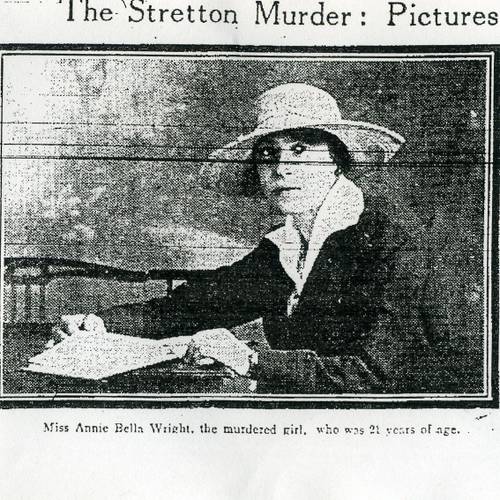 Credit: Contemporary newspaper via Wikipedia (Green Bicycle Case)Public domainSourceSOLVEDListen
Gartree Road, near Little Stretton, Leicestershire, England · 1919
Bella Wright, a 21-year-old factory worker, was shot dead near Little Stretton, Leicestershire, on 5 July 1919 while cycling home. Ronald Light, seen riding with her shortly before her death on a distinctive green bicycle, was tried for her murder in 1920 and acquitted.
Fish Head Beach, Jenner, California · 2004
A young engaged couple, Lindsay Cutshall and Jason Allen, were shot to death while sleeping on a Sonoma County beach in August 2004. The case went unsolved for nearly 13 years until Shaun Gallon confessed following his arrest for another murder; he was convicted and sentenced to life without parole in 2019.
 Credit: English WikipediaEditorial useSourceSOLVEDListen
Washington Township, Macomb County, Michigan · 2007
Tara Lynn Grant, a 34-year-old Michigan mother of two, was strangled by her husband Stephen Grant in February 2007 after an argument; he later dismembered her body, briefly fled, and confessed to police. He was convicted of second-degree murder in December 2007 and sentenced to 50 years in prison.
Clutter family home, Holcomb, Kansas · 1959
In November 1959, four members of the Clutter family were murdered in their rural home near Holcomb, Kansas, in a robbery that yielded almost no money. Two ex-convicts were convicted and executed for the crime, later chronicled in Truman Capote's In Cold Blood.
 SOLVEDListen
Peterborough, Cambridgeshire, England · 2013
Joanna Dennehy pleaded guilty to murdering three men in Cambridgeshire in March 2013 and was sentenced to life imprisonment with a whole life order.
