Start here
The Kidnapping of Charlie Lindbergh (Part 1)
A 70-minute listen from Morbid, the deepest on file. Good for a drive or a walk.
Listen on RssBefore you continue
This case involves crimes against children. Casepin presents the record in neutral, non-graphic language. Choose whether to continue.
Solved case · 1932
Also known as Lindbergh kidnapping · Lindbergh baby kidnapping
 Charles Lindbergh testifyingCredit: World Telegram staff photographer·Public domain·Source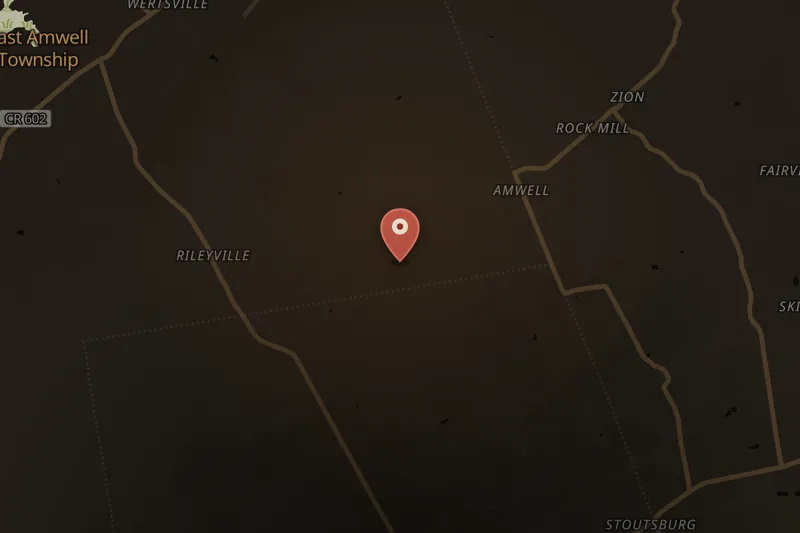
The short answer
In 1932, 20-month-old Charles Augustus Lindbergh Jr. was abducted from his family's New Jersey home and later found dead. Bruno Richard Hauptmann was convicted of the murder in 1935 and executed in 1936, though debate over his guilt has continued.
Start hereThe Kidnapping of Charlie Lindbergh (Part 1)Morbid · 1 hr 10 minThe coverage index
2 pieces from 1 creator: ranked, with duplicates removed and short clips set aside.
Start here
Podcast · Rss · 1 hr 10 min · 2026
A 70-minute listen from Morbid, the deepest on file. Good for a drive or a walk.
Listen on RssThe Kidnapping of Charlie Lindbergh (Part 2)
Titles and descriptions are the creators’ own and may not reflect current legal status. The sourced facts are in the file below. Players load only when you press play. Suggest coverage we’re missing.
The case file
On the evening of March 1, 1932, 20-month-old Charles Augustus Lindbergh Jr., son of aviator Charles Lindbergh and Anne Morrow Lindbergh, was discovered missing from his crib at the family's Highfields estate in East Amwell, New Jersey. A ransom note demanding $50,000 was found on the windowsill, along with a broken wooden ladder and impressions in the ground outside the nursery window. No usable fingerprints were recovered from the note, the ladder, or the nursery, aside from the child's own prints.
The investigation, coordinated between the New Jersey State Police, local Hopewell authorities, and eventually the Bureau of Investigation (forerunner of the FBI), was complicated by public interference at the crime scene and unauthorized intermediaries, including underworld contacts arranged by figures close to Lindbergh. A retired schoolteacher, John F. Condon, became an intermediary with the purported kidnapper, who used the alias "John" and met Condon at two Bronx cemeteries. Ransom of $50,000 was ultimately paid on April 2, 1932, but the child was not returned.
On May 12, 1932, the body of a toddler was found by a truck driver's assistant near Mount Rose in Hopewell Township, about 4.5 miles from the Lindbergh home. The child's nurse, Betty Gow, identified the remains through overlapping toes and a handmade shirt. The cause of death was determined to be a blow to the head. A household servant, Violet Sharpe, who had given inconsistent statements about her whereabouts on the night of the kidnapping, died by suicide on June 10, 1932, before a fourth scheduled police interview; her alibi was later confirmed and her involvement ruled out.
Investigators tracked ransom bills as they surfaced around New York City over the following two years. On September 18, 1934, a bank teller flagged a ransom gold certificate bearing a penciled license plate number, which was traced to Bruno Richard Hauptmann, a German immigrant carpenter living in the Bronx. A search of his home turned up over $14,000 in ransom bills, a notebook sketch resembling the ladder used in the kidnapping, and Condon's address written inside a closet. Wood from Hauptmann's attic floor was later matched by expert analysis to the ladder recovered at the crime scene.
Hauptmann was indicted for extortion in New York and for murder in New Jersey in September and October 1934. His trial in Flemington, New Jersey ran from January 2 to February 13, 1935; he was convicted of first-degree murder and sentenced to death. Hauptmann maintained his innocence throughout, claiming the money had been left with him by a deceased former business associate, Isidor Fisch. His appeals, including to the New Jersey Court of Errors and Appeals and the New Jersey Board of Pardons, were unsuccessful. He was executed in the electric chair at New Jersey State Prison on April 3, 1936.
The case prompted passage of the U.S. Federal Kidnapping Act. Hauptmann's widow, Anna Hauptmann, pursued unsuccessful lawsuits in the 1980s seeking to overturn the conviction, and various authors have since raised questions about the investigation and trial evidence, though other researchers maintain the conviction was sound.
13 dated entries · 1932–1936
Charles Augustus Lindbergh Jr. is discovered missing from his crib at the Lindbergh family home in East Amwell, New Jersey; a ransom note is found on the windowsill.
A second ransom letter, postmarked from Brooklyn, arrives at the Lindbergh home.
John Condon receives a toddler's sleeping suit and a seventh ransom note.
Condon pays $50,000 in ransom money to a man calling himself "John" at St. Raymond's Cemetery in the Bronx.
The child's body is discovered near Mount Rose in Hopewell Township, about 4.5 miles from the Lindbergh home.
Household servant Violet Sharpe dies by suicide before a scheduled fourth police interview; her alibi is later confirmed.
A traced ransom gold certificate leads investigators to Bruno Richard Hauptmann via a penciled license plate number.
Hauptmann is indicted in the Bronx for extortion of the ransom.
Hauptmann is indicted in New Jersey for the murder of Charles Augustus Lindbergh Jr.
Hauptmann's murder trial begins at the Hunterdon County Courthouse in Flemington, New Jersey.
Hauptmann is convicted of first-degree murder and sentenced to death.
Hauptmann's final appeal for clemency to the New Jersey Board of Pardons is denied.
Hauptmann is executed by electric chair at New Jersey State Prison.
2 named in this file
Victims first. Every legal label is set from public records and court outcomes, not from the prose.
From the record
3 cited
Coverage is not a source: every fact in this file rests on the records below.
PressTIMEAccessed Jul 5, 2026
PressThe New York TimesAccessed Jul 5, 2026
EncyclopedicWikipediaAccessed Jul 5, 2026
Trust
Are you family of someone named in this file? Corrections and removal requests from victims’ families are prioritized.
Near this case
 Image record·Editorial use·SourceSOLVEDListen
Hamilton Township, Mercer County, New Jersey · 1990s
Seven-year-old Megan Kanka was abducted, assaulted, and killed by a neighbor in Hamilton Township, New Jersey in 1994; the conviction that followed became the catalyst for sex-offender registration and community-notification laws known as Megan's Law.
 Credit: Wikipedia/Wikimedia Commons (Hall–Mills murder case), c.1920·Public domain·SourceUNSOLVEDListen
Franklin Township, Somerset County, New Jersey · 1920s
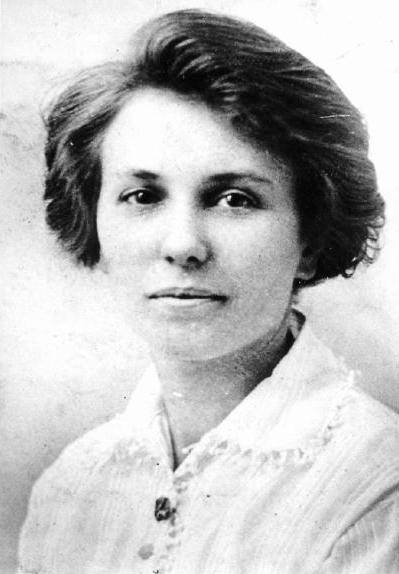
Episcopal priest Edward Wheeler Hall and choir member Eleanor Mills, with whom he was having an affair, were found shot to death in a New Jersey field in September 1922. Hall's wife and her two brothers were tried in 1926 and acquitted; the case remains legally unsolved.
 Credit: External Links Library·CC BY-SA 4.0·SourceSOLVEDListen
Woodbridge Township, New Jersey (murder); remains recovered from Chesapeake Bay, Virginia · 1990s
Melanie McGuire, a New Jersey nurse, was convicted of murdering her husband William McGuire in April 2004, dismembering his body, and disposing of his remains in three suitcases recovered from Chesapeake Bay.
 Credit: Unknown, Landesarchiv Berlin, A Rep. 358-02 Nr. 108586 Foto 3546·Public domain·SourceSOLVEDListen
Gaflei, Liechtenstein · 1933
In April 1933, Liechtenstein Nazi sympathizers and German collaborators attempted to kidnap Jewish theatre directors Fritz and Alfred Rotter to forcibly return them to Nazi Germany; Alfred Rotter and his wife Gertrud died falling into a ravine while fleeing, and Fritz Rotter escaped with injuries.
 Credit: Family/Instagram photograph, widely distributed in press coverage·Editorial use·SourceSOLVEDListen
Moscow, Idaho · 2022
Four University of Idaho students—Madison Mogen, Kaylee Goncalves, Ethan Chapin, and Xana Kernodle—were fatally stabbed inside an off-campus house in Moscow, Idaho, in the early morning hours of November 13, 2022. Bryan Kohberger, a criminology PhD student at nearby Washington State University, was arrested that December and pleaded guilty in 2025, receiving four consecutive life sentences.
 Credit: Mona Eshaiker·CC BY-SA 3.0·SourceSOLVEDListen
Holmby Hills, Los Angeles, California · 2009
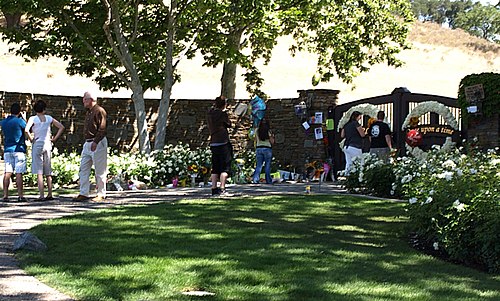
Singer Michael Jackson died on June 25, 2009, in Los Angeles from acute propofol intoxication administered by his personal physician, Conrad Murray. The Los Angeles County coroner ruled the death a homicide, and Murray was convicted of involuntary manslaughter in November 2011.
Also covered by
 Credit: Argonne National Laboratory / Wikimedia Commons, c.1922–23·Public domain·SourceSOLVEDListen
Orange, New Jersey · 1917
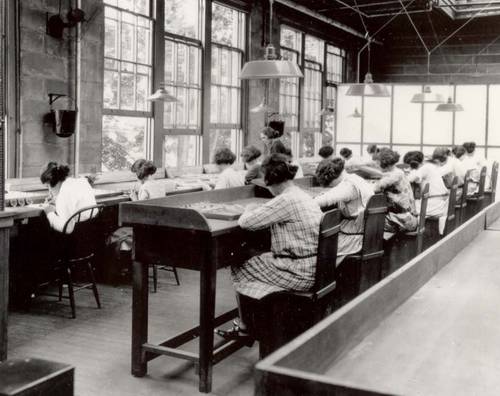
Beginning in 1917, factory workers who came to be known as the Radium Girls were poisoned after being instructed to shape radium-paint brushes with their lips; the resulting illnesses, deaths, and lawsuits against the United States Radium Corporation and the Radium Dial Company reshaped U.S. occupational health and labor law.
 Image record·Editorial use·SourceOVERTURNEDListen
Belle Haven, Greenwich, Connecticut · 1998
Martha Moxley, 15, was found bludgeoned and stabbed with a golf club in her family's Greenwich, Connecticut backyard on October 31, 1975. Michael Skakel was convicted of her murder in 2002, but after multiple appeals his conviction was overturned in 2018, and in 2020 prosecutors announced they would not retry him.