Casepin
Back to cases

Active case

Ikiza (1972 Burundi Killings)

UNSOLVED1962Burundi (nationwide, centered on Bujumbura)3 SOURCESUPDATED JUL 2026
Illustrative

Background

Burundi's population in the early 1970s was roughly 85% Hutu, 14% Tutsi, and 1% Twa. Following independence in 1962, a series of coups brought Tutsi military officer Michel Micombero to power; he abolished the monarchy and increasingly concentrated power among Tutsis, particularly a group from Bururi Province known as the Groupe de Bururi. Hutu participation in government was steadily reduced, and rumors of a 1969 Hutu coup plot led to the execution of dozens of Hutu public figures. Tensions also existed between Tutsi subgroups, and in January 1972 a military tribunal sentenced sixteen Tutsi-Banyaruguru figures over an alleged plot to restore the deposed King Ntare V.

On 30 March 1972, Ntare V returned to Burundi from exile in Uganda and was placed under house arrest. The circumstances of his return remain disputed among historians and diplomats.

Hutu Uprising

Between the evening of 29 April and 5 May 1972, Hutu militants — joined by Zairean exiles — launched attacks in Bujumbura and the southern provinces of Rumonge, Nyanza-Lac, and Bururi, killing local officials and, according to missionary estimates, 800–1,200 Tutsis and Hutus, with most victims Tutsi. The rebels briefly declared a "République de Martyazo." Government forces suppressed the uprising in Bujumbura within 24 hours. On the night of 29 April, Ntare V was executed at Gitega by government troops on the orders of Micombero, according to historians who reviewed witness testimony. Zaire and Tanzania provided material support to the Burundian government to fight the insurgency, later withdrawn once the scale of reprisal killings became apparent. France, Uganda, and Libya continued to provide arms or assistance.

Killings

Following the suppression of the uprising, the Burundian government undertook a program of repression targeting Hutu elites, including cabinet ministers, military officers, university students and administrators, and Catholic priests. The UN High Commissioner for Refugees estimated 131 Hutu officers were killed by late May. The American ambassador estimated roughly 500 Hutu soldiers and 2,000 civil servants were detained in the capital. Victims were typically arrested based on names appearing on lists and later executed out of public view; most were stabbed or beaten rather than shot. Some Tutsis viewed as "liberal" or insufficiently supportive of the repression were also killed, including an estimated 100 Tutsis executed in Gitega on 6 May. The most intense violence subsided by June, with the army declaring an end to operations on 21 June, though killings continued in some areas into July before mostly ending by early August.

International Response

The Burundian government denied the killings constituted genocide, characterizing its actions as "legitimate defense." Foreign governments, including the United States and Belgium, expressed concern through diplomatic channels; Belgium halted ammunition sales and later ended military aid. The United Nations and international charities, including the ICRC, provided humanitarian relief, though the Burundian government restricted and periodically obstructed aid distribution. The Organisation of African Unity publicly expressed support for Micombero's government at the time. No international intervention occurred to stop the killings.

Death Toll

Conservative estimates place the death toll between 100,000 and 150,000; some estimates run as high as 300,000.

Key facts

Victims
Marc Ndayiziga, Martin Ndayahoze, Michel Kayoya, Ntare V, Jean Chrysostome Bandyambona, Claver Nuwinkware, Eustache Ngabisha, Joseph Cimpaye, Pascal Bubiriza, Joseph Baragengana
Date
1962
Location
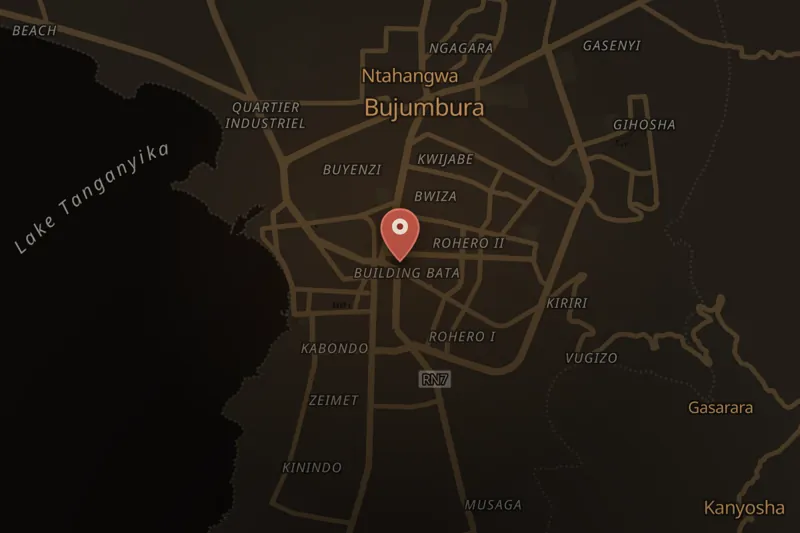
Burundi (nationwide, centered on Bujumbura)
Case status
unsolved

Case timeline

  1. 1962-07

    Urundi granted independence as the Kingdom of Burundi.

  2. 1966

    King Mwambutsa IV ousted in a coup in favor of his son Ntare V; Ntare V is soon deposed by Michel Micombero, who abolishes the monarchy and becomes president.

  3. 1969

    Rumored Hutu coup plot leads the government to execute dozens of Hutu public figures.

  4. 1972-01-14

    A military tribunal sentences nine Tutsi-Banyaruguru to death and seven to life imprisonment for an alleged plot to restore Ntare V.

  5. 1972-03-30

    Ntare V returns to Burundi from exile in Uganda and is placed under house arrest in Gitega.

  6. 1972-04-29

    Hutu militants begin attacks in Bujumbura and southern provinces; the Burundian government dissolves and later declares a state of emergency.

  7. 1972-04-29

    Ntare V is executed at Gitega by government troops on the orders of Micombero.

  8. 1972-05-01

    Government troops secure Rumonge; the United States declares Burundi a disaster area.

  9. 1972-05-10

    Burundian government announces complete military control over southern Burundi.

  10. 1972-05-15

    Hutu intellectual Michel Kayoya is shot after being removed from prison.

  11. 1972-05-19

    Belgian Prime Minister Gaston Eyskens tells his cabinet he has information Burundi is experiencing 'veritable genocide.'

  12. 1972-06-21

    Army Commander-in-Chief Thomas Ndabyemeye announces that all military operations are over.

  13. 1972-07-13

    Burundian army seizes UNICEF vehicles and a UN survey boat and executes Hutus working on UN projects.

  14. 1972-08

    The most severe killings mostly end by early August; civilian governors restored to provinces on 23 August.

  15. 1973

    Rwandan government formally accuses Burundi of genocide against Hutus at an OAU meeting in May 1973; US ambassador Robert L. Yost recalled from Burundi.

  16. 1974-01

    The United States normalizes relations with Burundi.

Best coverage

No approved coverage links are attached yet.

People

  • Artémon Simbananiye

    LAW ENFORCEMENT

    Burundian Minister of Foreign Affairs; appointed to an itinerant ambassadorship on 12 May 1972 empowering him to organise and direct killings of Hutus, per the source; not described as charged.

  • Marc Ndayiziga

    VICTIM

    Minister of Public Works; detained and killed in the first week of the crisis.

  • Martin Ndayahoze

    VICTIM

    Hutu military commandant and former government minister; arrested and executed after being summoned to a crisis meeting on 30 April 1972.

  • Michel Kayoya

    VICTIM

    Hutu intellectual arrested for 'racism' and shot on 15 May 1972.

  • Ntare V

    VICTIM

    Former King of Burundi; executed at Gitega on the night of 29 April 1972 by government troops on the orders of President Michel Micombero, according to historians' review of witness testimony.

  • Jean Chrysostome Bandyambona

    VICTIM

    Minister of Social Affairs; detained and killed in the first week of the crisis.

  • Claver Nuwinkware

    VICTIM

    University administrator and former government minister; executed during the Ikiza.

  • Eustache Ngabisha

    VICTIM

    Former parliamentarian and governor; executed during the Ikiza.

  • Thomas Melady

    LAW ENFORCEMENT

    United States Ambassador to Burundi during the events; reported on the killings and appealed to Micombero for restraint.

  • Joseph Cimpaye

    VICTIM

    Burundi's first prime minister; executed during the Ikiza.

  • Michel Micombero

    LAW ENFORCEMENT

    President of Burundi at the time of the killings; historians concluded he ordered the execution of Ntare V and directed the repression, though he was not charged in any judicial proceeding described in the source.

  • Pascal Bubiriza

    VICTIM

    Minister of Communications; detained and killed in the first week of the crisis.

  • Joseph Baragengana

    VICTIM

    Minister of Civil Service; detained and killed in the first week of the crisis.

Roles reflect public records and court outcomes at the time of writing — supporting citations are on file under Sources.

Places

Common questions

What happened to the victim?
In 1972 Burundi's Tutsi-dominated army and government carried out mass killings, primarily targeting educated and elite Hutus, following a Hutu-led uprising in the south of the country. Conservative estimates place the death toll between 100,000 and 150,000, with some estimates as high as 300,000.
Where did the killings happen?
Burundi (nationwide, centered on Bujumbura).
What is the current status of the case?
Status: unsolved.

Sources

  1. Ikizawikipedia · Wikipedia · 2026-07-07
  2. Belgian Chief Sees Burundi Genocidenews · The New York Times · 2026-07-07
  3. Declassified CIA intelligence document on Burundinews · cia.gov · 2026-07-07