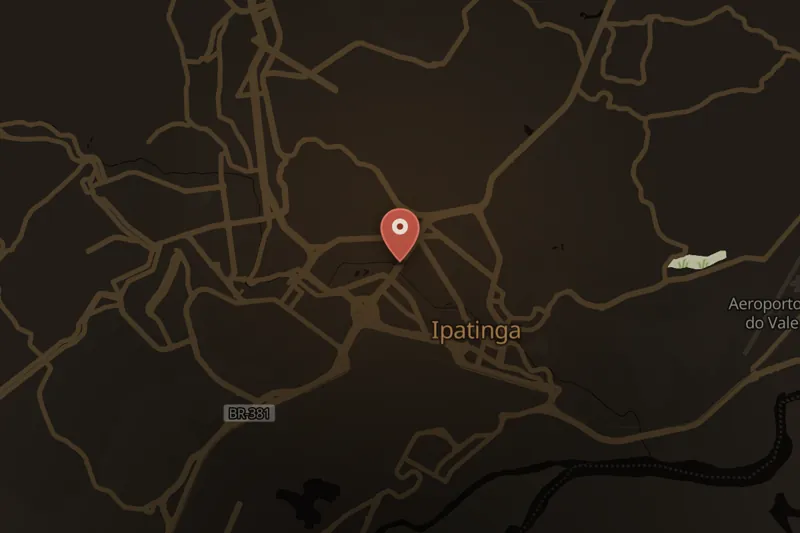
On October 7, 1963, in Ipatinga—then a village belonging to Coronel Fabriciano in the Brazilian state of Minas Gerais—military police officers opened fire on a crowd of striking steel workers employed by Usiminas. The confrontation followed weeks of tension over working conditions, degrading security searches, and suppression of union organizing at the recently opened steel plant, which employed about fifteen thousand people under harsh and often dangerous conditions.
The immediate trigger was a heavy search of workers leaving the night shift on October 6, 1963, during which food and milk they customarily brought home were confiscated or spilled. This provoked confrontations between workers and police that night in the Santa Monica lodge (now the Horto neighborhood), resulting in beatings, home invasions, shootings, and roughly three hundred arrests. Father Avelino Marques, a local priest, helped negotiate the release of detainees and arranged a morning meeting between Usiminas management, police, and worker representatives, including union president Geraldo Ribeiro.
On the morning of October 7, about six thousand striking workers gathered outside the Usiminas gate awaiting the outcome of that meeting, which concluded around 9:15 a.m. with an agreement to suspend cavalry policing pending an investigation into the prior night's violence. As armed police remained on site despite the agreement, tensions rose, with workers throwing stones and jeering. As Father Avelino and Geraldo Ribeiro were preparing to address the crowd, nineteen military police officers positioned atop a truck began firing into the crowd. The shooting lasted approximately fifteen minutes. José Isabel do Nascimento, a foreman who had been photographing the crowd and was seen firing a revolver at police, was shot and later died on October 17. A three-month-old girl, Ângela Eliane Martins, was killed while being carried by her mother toward the company's medical clinic. Five other industrial workers and a tailor were also among the eight officially recorded dead; 79 were officially recorded as wounded.
The official death toll has been repeatedly disputed, with various witnesses, family members, and later accounts citing figures far higher—ranging from around thirty to as many as eighty deaths—including claims of bodies dumped in the Ipanema river and discrepancies in numbers of coffins ordered locally versus reportedly requested from Belo Horizonte.
In the aftermath, wage increases and changes to Usiminas' security staff followed, along with an initial conviction of the police officers involved. However, the 1964 Brazilian military coup that deposed President João Goulart led to the imprisonment of local union leaders and, on March 8, 1965, the acquittal of the police officers on grounds of self-defense; a military prosecution appeal was rejected in December 1965. Compensation to victims' families did not begin until 2004, following a 1995 law and a 2004 provisional measure covering deaths in public demonstrations. In 2013, on the fiftieth anniversary, survivors and relatives testified before Brazil's National Truth Commission, which in a December 2014 report named three victims and identified the state governor at the time as responsible for the police action.

Key facts
- Victims
- Antônio José dos Reis, Sebastião Tomé da Silva, Ângela Eliane Martins, Gilson Miranda, Aides Dias de Carvalho, Geraldo Rocha Gualberto, Alvino Ferreira Felipe, José Isabel do Nascimento
- Date
- 1963
- Location
- Ipatinga, Minas Gerais, Brazil
- Case status
- solved
Case timeline
1962-10-26
Usiminas steel plant begins operations in Ipatinga with about fifteen thousand employees.
1963-10-04
President João Goulart asks Congress to decree a state of siege amid rising political and labor tensions.
1963-10-06
Workers leaving the night shift are subjected to a heavy search; confrontations follow at the Santa Monica lodge, leading to beatings, shootings, and about three hundred arrests.
1963-10-07
Nineteen military police officers open fire on striking workers outside the Usiminas gate, officially killing eight people, including an infant, and wounding 79.
1963-10-08
The Legislative Assembly of Minas Gerais opens a Commission of Inquiry; a police investigation is also opened.
1963-10-17
José Isabel do Nascimento dies of gunshot wounds sustained during the massacre.
1963-11-04
Inquiry against the 19 police officers involved in the October 7 shooting is closed.
1964-03-31
Military coup d'état overthrows President João Goulart, beginning Brazil's military dictatorship.
1964-04-29
Ipatinga and Timóteo are emancipated from Coronel Fabriciano.
1965-03-08
All police officers involved in the massacre are acquitted, having claimed self-defense.
1965-12-10
Military Prosecution's appeal against the acquittal is rejected, concluding the case in favor of the police.
2004-10-07
First compensation process for a massacre victim's family (tailor Geraldo Gualberto's family) is approved by the Federal Government's Commission of the Dead and Disappeared.
2013-10-07
On the fiftieth anniversary, victims and relatives testify before Brazil's National Truth Commission at a public hearing in Ipatinga.
2014-12
The National Truth Commission releases a report naming three victims and identifying the state governor at the time as responsible for the police action.
Best coverage
No approved coverage links are attached yet.
People
Antônio José dos Reis
VICTIMIndustrial worker killed in the October 7, 1963 shooting.
Sebastião Tomé da Silva
VICTIMIndustrial worker killed in the October 7, 1963 shooting.
Ângela Eliane Martins
VICTIMThree-month-old girl shot and killed while being carried by her mother toward the Usiminas outpatient clinic.
Gilson Miranda
VICTIMIndustrial worker killed in the October 7, 1963 shooting.
Aides Dias de Carvalho
VICTIMIndustrial worker killed in the October 7, 1963 shooting.
Geraldo Rocha Gualberto
VICTIMTailor killed in the October 7, 1963 shooting; his family's compensation claim was the first approved in 2004.
Alvino Ferreira Felipe
VICTIMIndustrial worker killed in the October 7, 1963 shooting.
José Isabel do Nascimento
VICTIMContractor's foreman who was photographing the crowd and was shot; died October 17, 1963, from his wounds.
Roles reflect public records and court outcomes at the time of writing — supporting citations are on file under Sources.
Places
Common questions
- What happened to the victim?
- On October 7, 1963, military police in Ipatinga, Minas Gerais, opened fire on striking Usiminas steelworkers protesting poor working conditions and degrading searches, officially killing eight people—including an infant—and wounding 79, though the true toll is disputed.
- Where did the massacre happen?
- Ipatinga, Minas Gerais, Brazil.
- What is the current status of the case?
- Status: solved.
Sources
- Ipatinga massacrewikipedia · Wikipedia · 2026-07-07
- Comissão da Verdade ouve vítimas do massacre de Ipatinganews · g1.globo.com · 2026-07-07
- História do massacre de Ipatinga é recontada 50 anos depoisnews · em.com.br · 2026-07-07