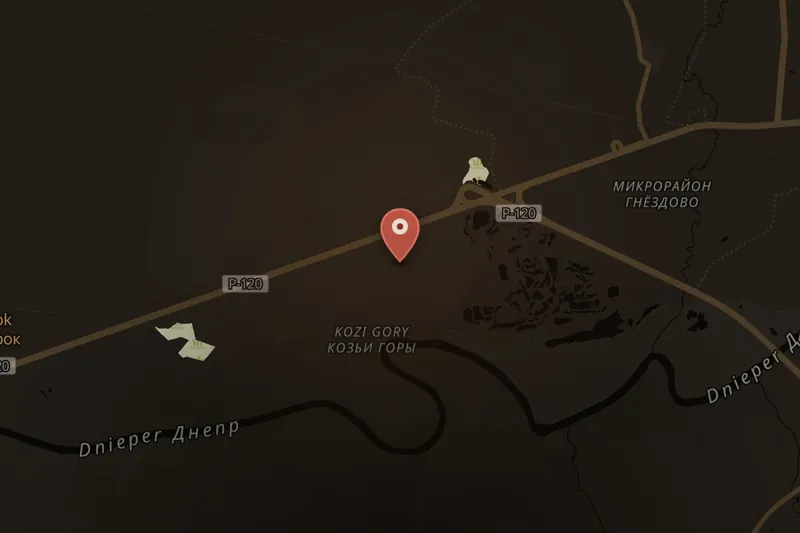
The Katyn massacre refers to a series of mass executions carried out by the Soviet NKVD (secret police) between April and May 1940, in which nearly 22,000 Polish military officers, police, border guards, and members of the intelligentsia were killed. Although named for the Katyn forest near Smolensk, where mass graves were first discovered by German forces in 1943, killings also took place at NKVD prisons in Kalinin and Kharkiv, with victims buried at additional sites including Mednoye and Piatykhatky.
Following the Soviet invasion of Poland in September 1939, hundreds of thousands of Polish soldiers and police were captured, with roughly 125,000 imprisoned in NKVD-run camps. On 5 March 1940, six members of the Soviet Politburo — Joseph Stalin, Vyacheslav Molotov, Lazar Kaganovich, Kliment Voroshilov, Anastas Mikoyan, and Mikhail Kalinin — signed an order to execute approximately 25,700 Polish "nationalists and counterrevolutionaries" held in camps and prisons in occupied western Ukraine and Belarus. Soviet documents declassified in 1990 confirmed 21,857 executions after 3 April 1940, including 14,552 prisoners of war and 7,305 prisoners from western Belarusian and Ukrainian SSR facilities. Among the dead were 14 Polish generals, an admiral, thousands of officers and non-commissioned officers, and civilians including professors, physicians, lawyers, and journalists. An estimated 700–900 victims were Polish Jews, and Lieutenant Janina Lewandowska was the only woman prisoner of war executed at Katyn.
Nazi Germany announced the discovery of the mass graves in April 1943 and used the finding for anti-Soviet propaganda, convening an international forensic commission. The Soviet government denied responsibility, claiming German forces had killed the prisoners in 1941, and severed relations with the Polish government-in-exile after it requested an International Red Cross investigation. After Soviet forces retook the area later in 1943, the NKVD conducted a cover-up, destroying evidence and coercing witness testimony. A Soviet-appointed body, the Burdenko Commission, formally attributed the killings to German forces in January 1944, a position the USSR maintained for decades.
Western governments, including the United Kingdom and the United States, possessed intelligence pointing to Soviet responsibility but suppressed or downplayed it to preserve wartime and Cold War-era alliances; reports by figures such as George Earle and John H. Van Vliet Jr. concluding Soviet guilt were shelved. Soviet negotiators attempted unsuccessfully to have the killings attributed to Germany at the Nuremberg trials in 1946.
The Soviet Union did not acknowledge NKVD responsibility until 13 April 1990, when Mikhail Gorbachev admitted the massacre and confirmed related burial sites. In 1990, Boris Yeltsin released classified documents, including Beria's original 1940 execution order, to Polish President Lech Wałęsa. A joint Soviet and later Russian prosecutorial investigation (1990–2004) confirmed Soviet responsibility but declined to classify the killings as a war crime, closing the case on the grounds that alleged perpetrators had died. In 2010, the Russian State Duma approved a declaration condemning Stalin and other officials for ordering the massacre.


 Credit: Sti2CC BY-SA 3.0SourceCOLDListen