Casepin
Back to cases

Active case

Communist purges in Serbia in 1944–1945

Gakovo Memorial1
Gakovo Memorial1 — Credit: Sti2 · CC BY-SA 3.0

In the final months of World War II, as Yugoslav Partisan forces and the Red Army drove Axis troops out of Serbia, members of the Partisan movement and the incoming communist authorities carried out mass killings of people categorized as war criminals, collaborators (quislings) and ideological opponents. Most of these killings occurred between October 1944 and May 1945. According to a state investigation, at least 55,973 people died during this period from causes including summary execution and illness in retention camps; the vast majority of deaths were deliberate executions carried out without trial. Victims came from multiple ethnic backgrounds, predominantly Germans, Serbs, Albanians and Hungarians. Some analysts have argued the killings were not centrally planned but were unorganized reprisals carried out amid post-war disorder, or that some recorded as executed instead died in combat against Partisan forces. Estimates of the total number of victims vary widely, from roughly 80,000 to more than 100,000 for Serbia as a whole, reflecting ongoing controversy and incomplete investigation.

In central Serbia, an estimated 30,000 people were killed. According to Milovan Đilas, communist leaders decided before entering Belgrade that followers of the wartime pro-Axis Government of National Salvation should be liquidated immediately, viewing Belgrade as a center of "reaction" requiring thorough purging of anti-communist elements. This included figures from cultural, political and public life under German occupation, as well as members of the rival Chetnik movement defeated in the parallel civil war.

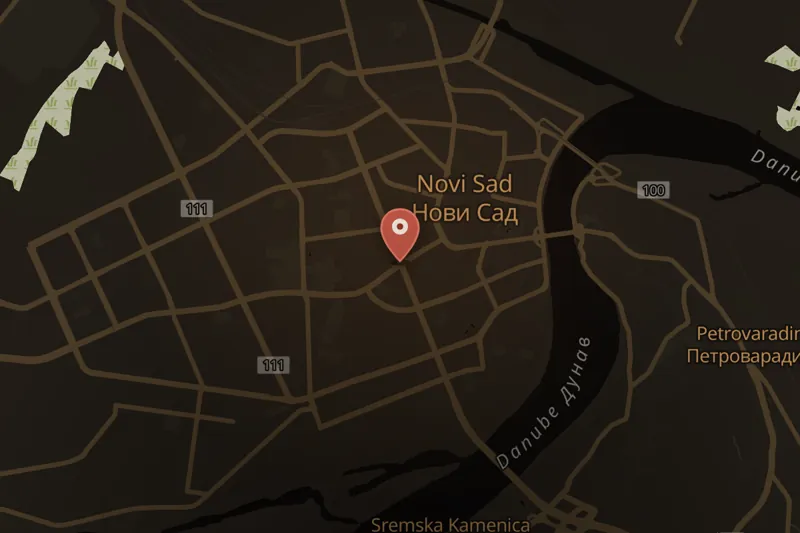
In Vojvodina, encompassing Bačka, Banat, Baranja and Syrmia, most executions took place under a military administration established in October 1944 under Brigadier General Ivan Rukavina. Ethnic German victims in Vojvodina are estimated between 17,000 and over 59,000, with a prison camp system operating from 1944–1946 in which ethnic Germans faced forced labor, torture, and death from starvation and disease; some were transferred to Soviet forces for labor in Siberia. Serb victims in Vojvodina are estimated at 23,000–24,000, including mass arrests and executions of prominent Novi Sad residents—among them the city's former mayor, doctors, industrialists and intellectuals—following the Partisan entry into Novi Sad in October 1944. Estimates of executed Hungarians in Vojvodina vary enormously, from roughly 1,000 to as many as 40,000–50,000 depending on the source, with the state commission's 2014 registry listing 6,112 Hungarian victims. Members of the Rusyn community in Đurđevo were also targeted, with several hundred reportedly executed; the state commission recorded 40 Rusyn victims.

Multiple investigative bodies have examined these events since the war, including a 1943 federal war-crimes commission, a 2001 Vojvodina provincial surveying committee, a 2004 Vojvodina Academy study, a 2009 Serbian State Commission for secret burial places (which produced the 55,973-name registry), and a joint Hungarian-Serbian academic commission formed in 2010. In June 2013, the Serbian Parliament adopted a declaration condemning the massacres and application of collective guilt against Hungarians in Vojvodina; Hungarian President János Áder subsequently apologized in Belgrade for wartime crimes committed against Serb and Jewish civilians during the Hungarian occupation.

Key facts

Victims
Gaja Gračanin, Dragoljub Ristić, Pera Savić, Obrad Milutinović, Miloš Kostić, Fedor Radić, Svetislav Vilovski, Miloš Petrović, Đurica Vlaović, Vojislav Matić, Pavle Tatić, Jovan Begović, Aleksandar Silber, Milan Popović
Date
1944
Location
Serbia and Vojvodina (multiple sites, including Novi Sad, Bečej, Zaječar, Đurđevo)
Case status
cold

Case timeline

  1. 1941

    Nazi Germany and Axis allies invade and occupy Yugoslavia, partitioning Serbia and Vojvodina among German, Italian, Hungarian, Croatian and Bulgarian administration.

  2. 1943-11

    Second session of AVNOJ in Jajce establishes the Federal Commission to investigate Axis-era war crimes in Yugoslavia.

  3. 1944-08-17

    Josip Broz Tito proclaims a general amnesty for Chetniks and Croatian Home Guard members who defect and join the Partisans before 15 September 1944.

  4. 1944-09-12

    King Peter II proclaims that all armed formations should come under Tito's command; this date is later used by the Serbian state commission as the starting point for its investigation of victims.

  5. 1944-09

    First Hungarian victims reported shot in Bečej, Vojvodina, amid accusations of fascist sympathies.

  6. 1944-10-17

    Tito orders the Banat, Bačka and Baranja regions placed under military administration, headed by Brigadier General Ivan Rukavina.

  7. 1944-10-20

    Belgrade is liberated with the assistance of the advancing Red Army.

  8. 1944-10-23

    Partisan forces enter Novi Sad; mass arrests and executions of prominent Serb residents follow, continuing until mid-November.

  9. 1944-10

    Bulk of executions in Vojvodina begin, continuing through January 1945.

  10. 1944-11-21

    A second amnesty is proclaimed for Chetnik and Home Guard defectors.

  11. 1945-01

    Residents in Čurug and Mošorin demand expulsion of Germans and Hungarians from Šajkaška region amid continuing reprisals.

  12. 1945-07-06

    Adoption of the Amnesty and Pardoning Act.

  13. 2001-01-22

    Assembly of the Autonomous Province of Vojvodina forms the Surveying Committee to investigate 1941–1945 events in Vojvodina.

  14. 2004

    Vojvodinian Academy of Sciences and Arts (VANU) takes over and expands the investigation, extending the research period to 1948.

  15. 2008

    VANU publishes preliminary results as 'On the way to the truth: Book of victims of AP Vojvodina 1941-1948', printed in only 10 copies.

  16. 2009-07-09

    Government of Serbia founds the State Commission for the secret graves of victims killed after 12 September 1944.

  17. 2010

    First exhumations under the State Commission take place near Zaječar.

  18. 2010-04-29

    Serbian government declassifies archival documents listing liquidated persons, opening them to researchers.

  19. 2010-12-15

    Hungarian-Serbian Academic Joint Committee for civilian victims during and after WWII in Vojvodina is formally established in Belgrade.

  20. 2011-01-06

    Hungarian section of the Joint Committee holds its inaugural meeting in Budapest.

  21. 2013-06

    Serbian Parliament adopts a declaration condemning the massacres and application of collective guilt against Hungarians in Vojvodina.

  22. 2014

    State commission registry updated to record 6,112 Hungarian victims and a total of 55,973 named victims overall.

Best coverage

No approved coverage links are attached yet.

People

  • Gaja Gračanin

    VICTIM

    Director of the 'Putnik' travel agency, executed in Novi Sad in 1944.

  • Dragoljub Ristić

    VICTIM

    Industrialist executed in Novi Sad in 1944.

  • Pera Savić

    VICTIM

    Journalist executed in Novi Sad in 1944.

  • Obrad Milutinović

    VICTIM

    Doctor and vice-president of Novi Sad municipality, executed in 1944.

  • Miloš Kostić

    VICTIM

    Footballer for FK Vojvodina, executed in Novi Sad in 1944.

  • Fedor Radić

    VICTIM

    Doctor executed in Novi Sad in 1944.

  • Svetislav Vilovski

    VICTIM

    Member of the Serbian Soko society, executed in Novi Sad in 1944.

  • Miloš Petrović

    VICTIM

    Former mayor of Novi Sad, executed following Partisan mass arrests of prominent Serb residents in October–November 1944.

  • Đurica Vlaović

    VICTIM

    Member of the Serbian Soko society, executed in Novi Sad in 1944.

  • Vojislav Matić

    VICTIM

    Editor and publisher of the Serbian-language magazine 'Nova Pošta', executed in 1944.

  • Ivan Rukavina

    LAW ENFORCEMENT

    Brigadier General appointed commander of the Yugoslav Partisan military administration over Banat, Bačka and Baranja in October 1944, under whose order mass arrests of Novi Sad residents occurred.

  • Pavle Tatić

    VICTIM

    Founder of the Socialist Party in Novi Sad, executed in 1944.

  • Jovan Begović

    VICTIM

    Provincial clerk executed in Novi Sad in 1944.

  • Aleksandar Silber

    VICTIM

    Economist executed in Novi Sad in 1944.

  • Milan Popović

    VICTIM

    Intellectual and Rotary Club member, executed in Novi Sad in 1944 (also known as 'Peca' Popović).

Roles reflect public records and court outcomes at the time of writing — supporting citations are on file under Sources.

Archival records

  • Vojvodina 1944 1945 01

    other document

    Vojvodina 1944 1945 01

    Credit: No machine-readable author provided. WikiEditor2004 assumed (based on copyright claims). · Public domain · Source

  • Gakovo Memorial1

    archival location

    Gakovo Memorial1

    Credit: Sti2 · CC BY-SA 3.0 · Source

  • Rudolfsgnad

    archival location

    Rudolfsgnad

    Credit: Adammathias at English Wikipedia · Public domain · Source

Places

Common questions

What happened to the victim?
Between October 1944 and May 1945, Yugoslav Partisan and post-war communist authorities summarily executed tens of thousands of people across Serbia—mostly Germans, Serbs, Hungarians and others considered war criminals, collaborators or ideological opponents—with a 2009 Serbian state commission registering 55,973 named victims and other estimates ranging far higher.
Where did the crime happen?
Serbia and Vojvodina (multiple sites, including Novi Sad, Bečej, Zaječar, Đurđevo).
What is the current status of the case?
Status: cold. Last verified July 2026.

Sources

  1. ENCYCLOPEDICCommunist purges in Serbia in 1944–1945Wikipedia · 2026-07-07
  2. PRESSProganja misterija iz Rajine šumenovosti.rs · 2026-07-07
  3. PRESSOfficial website of the Commission for secret burial places of victims killed after 12 September 1944komisija1944.mpravde.gov.rs · 2026-07-07

Record history

First published
JUL 07, 2026
Last verified against sources
JUL 07, 2026