Case file
Babi Yar Massacres (1941–1943)
Documents violence · crimes against children · torture · ongoing investigation — written to inform, not to shock.

Babi Yar is a ravine in Kyiv, Ukraine, that became the site of one of the largest mass shootings of the Holocaust. Following the German occupation of Kyiv on 19 September 1941 and a series of explosions attributed to Soviet NKVD sabotage, German military governor Generalmajor Kurt Eberhard and SS-Obergruppenführer Friedrich Jeckeln met on 26 September 1941 with Einsatzgruppe C commander Otto Rasch and Sonderkommando 4a commander Paul Blobel. They decided to murder the Jewish population of Kyiv, framing it as retaliation for the explosions.
On 26 September 1941, a public order directed all Jews of Kyiv to report on 29 September with documents, money, valuables, and warm clothing, under threat of execution for noncompliance. On 29 and 30 September 1941, approximately 33,771 Jewish civilians were shot at Babi Yar by Sonderkommando 4a and the 45th Battalion of the German Order Police, with the 303rd Battalion guarding the perimeter, supported by Ukrainian auxiliary police and the German Sixth Army under Field Marshal Walter von Reichenau. Victims were forced to undress, surrender belongings, and were marched in groups into the ravine, where they were shot, often after being made to lie atop previous victims. Wounded victims were buried alive.
Killings at Babi Yar continued for the duration of the German occupation, targeting Soviet prisoners of war, Roma people, patients of a psychiatric hospital, and others, including Ukrainian activists Olena Teliha and Mykhailo Teliha, murdered on 21 February 1942. Total deaths at the site during the occupation are estimated between 100,000 and 150,000. In 1943, as Soviet forces approached, German commander Paul Blobel oversaw an operation (Sonderaktion 1005) to exhume and burn bodies using forced laborers from the Syrets concentration camp, in an effort to conceal the killings.
After the war, several organizers and participants were tried. Paul Blobel was sentenced to death at the Subsequent Nuremberg Trials and hanged in 1951. Friedrich Jeckeln was convicted by a Soviet military tribunal and hanged in 1946. Otto Rasch's case was discontinued for health reasons and he died in prison in 1948. Kurt Eberhard died by suicide in 1947 while in US custody awaiting trial. In January 1946, fifteen former German police personnel were tried in Kyiv; twelve were sentenced to death and publicly hanged, while three received prison terms. Further trials of former personnel took place in West Germany in 1967 and 1971. Many perpetrators were never brought to trial.
Only a small fraction of victims have been formally identified by name, with ongoing archival research—including work following the 2022 Russian invasion of Ukraine—adding names to a memorial database. Babi Yar has also been the site of later tragedies, including a 1961 mudslide from a collapsed dam that killed an estimated 1,500–2,000 people, and a 2022 Russian strike near the site during the Russian invasion of Ukraine that killed at least five people.

Key facts
- Victims
- Mykhailo Teliha, Dina Pronicheva, Olena Teliha
- Date
- 1941
- Location
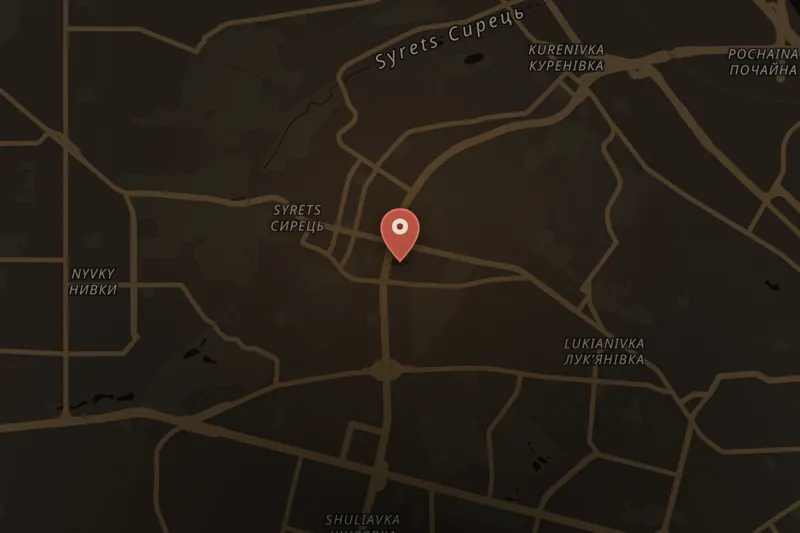
- Babi Yar ravine, Kyiv, Ukraine
- Case status
- solved
Case timeline
1941-09-19
Axis forces occupy Kyiv.
1941-09-26
German military governor Kurt Eberhard, SS officer Friedrich Jeckeln, and Einsatzgruppe C commander Otto Rasch decide to exterminate Kyiv's Jewish population; public order posted requiring Jews to report on 29 September.
1941-09-29
Mass shooting of Jewish civilians begins at Babi Yar.
1941-09-30
Mass shooting concludes; approximately 33,771 Jews reported killed over the two days.
1942-01-10
About 100 captured Soviet sailors executed at Babi Yar after being forced to disinter and cremate earlier victims' bodies.
1942-02-21
Ukrainian poet Olena Teliha and her husband Mykhailo Teliha murdered at Babi Yar.
1943
Sonderaktion 1005, overseen by Paul Blobel, exhumes and burns bodies at Babi Yar to conceal evidence of the massacres ahead of the Soviet advance.
1946-01-29
Twelve former German police personnel convicted in Kyiv trial are publicly hanged for their roles in the massacre and other atrocities.
1946-02-03
Friedrich Jeckeln hanged after conviction by a Soviet military tribunal in the Riga Trial.
1947
Kurt Eberhard dies by suicide in US custody while awaiting trial.
1948
Otto Rasch dies in prison after his Nuremberg case was discontinued for health reasons.
1951-06-07
Paul Blobel hanged at Landsberg Prison following conviction in the Einsatzgruppen Trial.
1961
A mudslide caused by a collapsed dam at Babi Yar kills an estimated 1,500–2,000 people in the Kurenivka neighborhood.
1967
Eleven men charged in a German court in Darmstadt over participation in the massacre; seven later convicted.
1971
Three additional former German police officials tried in Regensburg.
2022-03-01
Russian forces strike near the Babi Yar site during the invasion of Ukraine, killing at least five people.
2025-09
Newly identified names of slain Jews added to the Babyn Yar Holocaust Memorial Center database are read in a ceremony with recitation of the Kaddish.
Best coverage
No approved coverage links are attached yet.
People
Mykhailo Teliha
VICTIMBandurist, husband of Olena Teliha, murdered at Babi Yar on 21 February 1942.
citation on file
Kurt Eberhard
CHARGEDGerman military governor of Kyiv involved in the decision to carry out the massacre; arrested by US authorities and died by suicide in 1947 while awaiting trial.
citation on file
Erich Koch
CONVICTEDReichskommissar of Ukraine at the time of the massacre; tried and sentenced to death by a Polish court for atrocities in occupied Poland (not specifically for Ukraine crimes); sentence commuted to life imprisonment; died in prison in 1986.
citation on file
Paul Scheer
CONVICTEDFormer German police member tried in Kyiv in January 1946 for roles in the massacre and other atrocities; among those sentenced to death and publicly hanged.
citation on file
Paul Blobel
CONVICTEDSS-Standartenführer and Sonderkommando 4a commander; sentenced to death in the Subsequent Nuremberg Trials (Einsatzgruppen Trial) and hanged in 1951 for organizing the massacre.
citation on file
Otto Rasch
CHARGEDEinsatzgruppe C commander; indicted in the Einsatzgruppen Trial but case discontinued for health reasons; died in prison in 1948.
citation on file
Dina Pronicheva
VICTIMActress of the Kyiv Puppet Theatre; survived the September 1941 massacre by feigning death among the bodies and later gave testimony used in Anatoly Kuznetsov's account.
citation on file
Friedrich Jeckeln
CONVICTEDSS-Obergruppenführer and Police Commander for Army Group South; convicted of war crimes by a Soviet military tribunal in the Riga Trial and hanged in 1946.
citation on file
Olena Teliha
VICTIMUkrainian poet and activist murdered at Babi Yar on 21 February 1942.
citation on file
Places
Common questions
- What happened to the victim?
- In September 1941, German forces and collaborators murdered approximately 33,771 Jewish civilians at the Babi Yar ravine in Kyiv over two days, part of a broader campaign that killed an estimated 100,000–150,000 people at the site during the Nazi occupation of Ukraine.
- Where did the crime happen?
- Babi Yar ravine, Kyiv, Ukraine.
- Who was convicted?
- Erich Koch (Reichskommissar of Ukraine at the time of the massacre; tried and sentenced to death by a Polish court for atrocities in occupied Poland (not specifically for Ukraine crimes); sentence commuted to life imprisonment; died in prison in 1986.), Paul Scheer (Former German police member tried in Kyiv in January 1946 for roles in the massacre and other atrocities; among those sentenced to death and publicly hanged.), Paul Blobel (SS-Standartenführer and Sonderkommando 4a commander; sentenced to death in the Subsequent Nuremberg Trials (Einsatzgruppen Trial) and hanged in 1951 for organizing the massacre.), and Friedrich Jeckeln (SS-Obergruppenführer and Police Commander for Army Group South; convicted of war crimes by a Soviet military tribunal in the Riga Trial and hanged in 1946.).
- What is the current status of the case?
- Status: solved. Last verified July 2026.
Sources
- Babi Yarwikipedia · Wikipedia · 2026-07-07
- Contemporaneous coverage — loc.govnews · loc.gov · 2026-07-07
- Contemporaneous coverage — BBC Newsnews · BBC News · 2026-07-07
Last verified JUL 2026