
Unsolved case
Kiev pogrom (1905)
Following the collapse of a city hall meeting in Kiev on October 18, 1905, a mob attacked Jewish homes, shops, and factories over three days, killing an estimated 47 to 100 people and injuring at least 300 more.
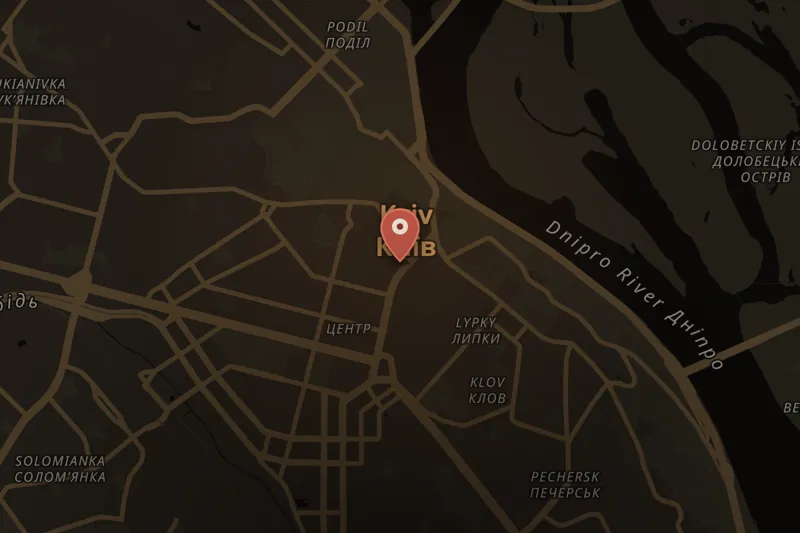
The Kiev pogrom took place October 18–20, 1905 (October 31–November 2, 1905, New Style) in Kiev, then part of the Russian Empire. The violence followed the collapse of a city hall meeting held on October 18, 1905, which drew a mob into the streets. Among the perpetrators were monarchists, reactionaries, anti-Semites, and common criminals, who proclaimed that "all Russia's troubles stemmed from the machinations of the Jews and socialists."
Historian William C. Fuller's account states the riot claimed the lives of between forty-seven and one hundred people, seriously injured at least three hundred more, and destroyed between 10 and 40 million rubles of property. Historian Simon Dubnow, as cited in the same account, described this pogrom and others sweeping the southern Russian Empire at the same time as together amounting to "Russia's St. Bartholomew's night."
Citing the Jewish Encyclopedia, the article notes that anti-Jewish riots broke out earlier in 1905 in Elizabethgrad, Kiev itself, Shpola, Ananiv, Wasilkov, and Konotop, and in roughly 160 other locations in southern Russia over the following six months. The Jewish Encyclopedia account cited states that the riots "were premeditated," offering as an example that Kiev's chief of police, Von Hubbenet, reportedly warned some Jewish acquaintances of the coming riots a week before they broke out.
Historian Shlomo Lambroza, distrusting police-sourced figures, is cited as having used opposition-derived data to count 3,103 murdered Jews across all of Russia during the broader 1905–1906 wave of pogroms, of which the Kiev pogrom was one incident.
No individual perpetrators, victims, or persons charged or convicted in connection with the Kiev pogrom are named, and no legal proceedings are described in the available material.
Key facts
- Victims
- On file
- Date
- 1905
- Location
- Kiev, Russian Empire (present-day Kyiv, Ukraine)
- Case status
- unsolved
Case timeline
1905-04-27
Anti-Jewish riots reported in Elizabethgrad, part of a wider wave preceding the Kiev pogrom, according to the Jewish Encyclopedia as cited in the source.
1905-05-08
Anti-Jewish riots reported in Kiev, part of the same preceding wave.
1905-05-09
Anti-Jewish riots reported in Shpola and Ananiv.
1905-05-10
Anti-Jewish riots reported in Wasilkov and Konotop.
1905-10-18
A city hall meeting in Kiev collapses, drawing a mob into the streets; the Kiev pogrom begins (October 31, New Style).
1905-10-20
The Kiev pogrom ends, having resulted in an estimated 47 to 100 deaths and injuries to at least 300 people (November 2, New Style).
Best coverage
No coverage has been attached to this file yet.
People
No public people records are attached yet.
Places
Common questions
- What happened to the victim?
- Following the collapse of a city hall meeting in Kiev on October 18, 1905, a mob attacked Jewish homes, shops, and factories over three days, killing an estimated 47 to 100 people and injuring at least 300 more.
- Where did the crime happen?
- Kiev, Russian Empire (present-day Kyiv, Ukraine).
- What is the current status of the case?
- Status: unsolved.
Related cases
View all cases
The Holocaust in Ukraine
Babi Yar ravine, Kyiv, Ukraine (representative site within broader Ukraine-wide events)

Kyiv strikes (2022–present)
Kyiv, Ukraine

Babi Yar Massacres (1941–1943)
Babi Yar ravine, Kyiv, Ukraine

Izium mass graves
Izium, Kharkiv Oblast, Ukraine
Kramatorsk railway station attack
Kramatorsk railway station, Kramatorsk, Ukraine

2022 Dnipro shooting
Pivdenmash factory, Dnipro, Ukraine
Sources
- ENCYCLOPEDICKiev pogrom (1905)Wikipedia · 2026-07-07
- PRESSContemporaneous coverage — cnparm.home.texas.netcnparm.home.texas.net · 2026-07-07
- PRESSContemporaneous coverage — monderusse.revues.orgmonderusse.revues.org · 2026-07-07
Record history
- First published
- JUL 07, 2026
When a file you follow changes — a new development, a correction, fresh coverage — the Dispatch is how you hear about it.
The Casepin Dispatch
A calm weekly briefing from the archive — one case worth understanding, meaningful updates to files you follow, and the best new coverage. You’ll also get the one-time note when the apps land. No gore, no rumor, no drip.