Overview
Between 1941 and 1945, the Holocaust in Ukraine resulted in the deaths of an estimated 850,000 to 1.6 million Jews across the Reichskommissariat Ukraine, the General Government, the Crimean General Government, areas under German military control, the Romanian-administered Transnistria Governorate, Bessarabia, Northern Bukovina, the Hertsa region, and Hungarian-controlled Carpathian Ruthenia — all now part of modern Ukraine except Transnistria. Historian Timothy D. Snyder has described the genocide as organically connected to Nazi Germany's war to conquer and colonize Ukraine, a view echoed by historian Wendy Lower, who links the genocide of Ukrainian Jews to German colonization plans.
Occupation Policy and the "Holocaust by Bullets"
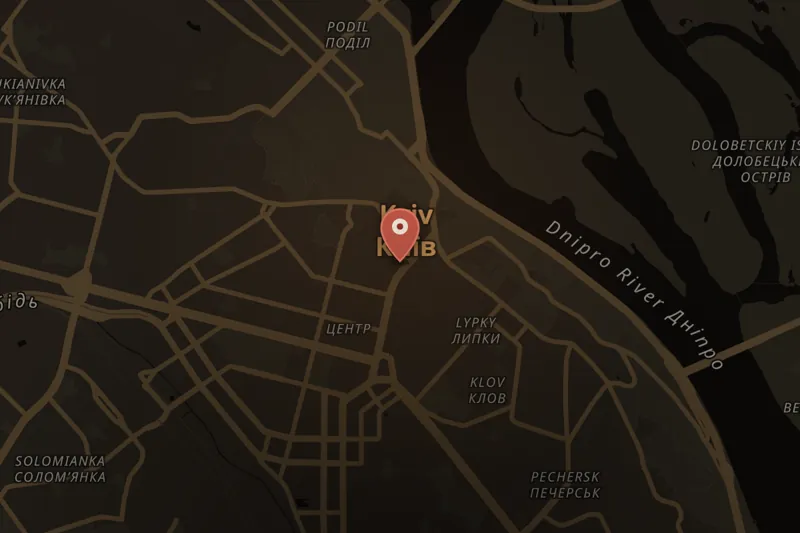
Unlike much of Western Europe, where Jews were deported to extermination camps, the Holocaust in Ukraine was predominantly carried out through localized mass shootings — a phenomenon termed the "Holocaust by bullets." An estimated 1.5 million Jews were killed this way between 1941 and 1944, largely in daylight, near victims' homes, and without the industrialized apparatus of camps like Treblinka or Birkenau. The killings were carried out by the mobile Einsatzgruppen death squads, supported by Order Police battalions, Wehrmacht troops, and local auxiliaries. Einsatzgruppe C, under Otto Rasch, operated in north and central Ukraine, while Einsatzgruppe D, under Otto Ohlendorf, operated in Moldavia, south Ukraine, and Crimea. Notable massacres include the Nikolaev massacre (16–30 September 1941), in which 35,782 Soviet citizens, mostly Jews, were killed, and the Babi Yar massacre outside Kyiv, where 33,771 Jews were killed on 29–30 September 1941, an operation approved by military governor Major-General Kurt Eberhard, SS-Obergruppenführer Friedrich Jeckeln, and Einsatzgruppe C commander Otto Rasch.
Collaboration
Ukrainian collaboration took multiple forms, including local administration, auxiliary police (Schutzmannschaft), and camp guard duty. German historian Dieter Pohl estimated around 100,000 Ukrainians joined police units assisting the Nazis. The Organization of Ukrainian Nationalists (OUN) coordinated with German authorities before the invasion and organized militias that, following a 1941 call for "self-cleansing actions," killed several thousand Jews in western Ukraine, including a pogrom that killed 6,000 Jews in Lviv. According to the Simon Wiesenthal Center, as of January 2011 Ukraine had not conducted its own investigations or prosecutions of local Nazi war criminals independent of earlier Soviet-era trials.
Resistance, Rescue, and Victims
Jewish resistance took forms including the 1942 armed uprising in the Tuchyn Ghetto, partisan units in the Vinnitsa region, and forest-based "family camps." Ukraine ranks fourth worldwide in individuals recognized as "Righteous Among the Nations," with 2,673 recognized as of December 2024. Death toll estimates have risen over time as archival access improved: from roughly 900,000 (a figure used by Raul Hilberg) to Dieter Pohl's 1990s estimate of 1.2 million, and more recent estimates up to 1.6 million. Yad Vashem estimates between 1 and 1.1 million Soviet Jews were murdered overall in the Holocaust.