Unsolved case
Kindu atrocity
On 11 November 1961, thirteen Italian airmen serving with the UN Operation in the Congo were killed by Congolese National Army (ANC) soldiers in Kindu, Congo-Léopoldville, amid rumors they were spies for the secessionist Katangan faction; their bodies were subsequently mutilated and partially eaten by onlookers.

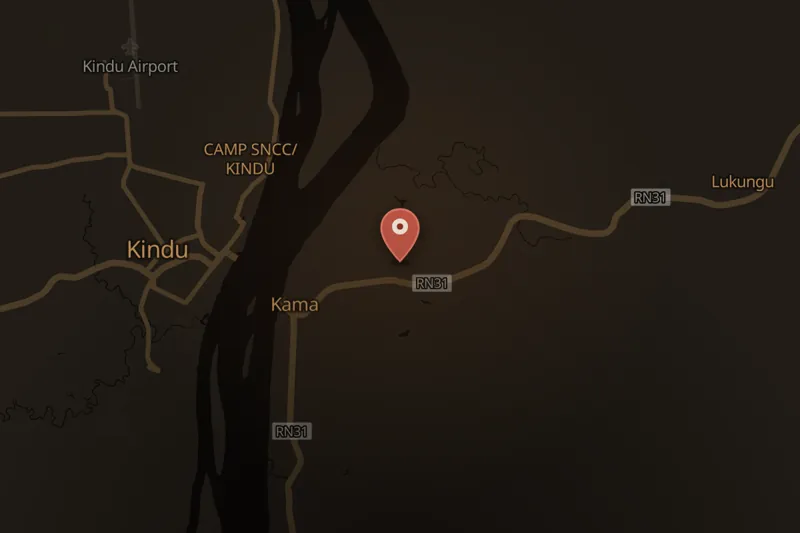
On 11 November 1961, two Italian Air Force C-119 "Flying Boxcar" transport aircraft from the 46ª Aerobrigata, based at Pisa Airfield, landed near Kindu Port-Émpain in Congo-Léopoldville (present-day Democratic Republic of the Congo) while delivering Ferret Scout Cars to a United Nations garrison. The thirteen Italian airmen aboard were part of the United Nations Operation in the Congo (ONUC), deployed to assist during the Congo Crisis, a period of political fragmentation following Belgian decolonization that saw rival factions led by Joseph Kasa-Vubu, Antoine Gizenga, and Moïse Tshombe contest control of the country.
The airmen were initially taken to a UN dining hall. Rumors that Tshombe's Katangan forces were planning an airdrop had heightened tensions among ANC troops stationed in Kindu as a staging post. At around 1600 hours, ANC personnel entered the dining hall and accused the Italians of being Tshombe spies. Despite initial attempts by a UN officer, Maj. Duad, and ANC Col. Pakassa to defuse the situation, the confrontation escalated into violence. One airman, Medic Tenente Remotti, was shot while attempting to escape; the remaining twelve were arrested and taken to a local prison, where they were subsequently shot and killed. Witnesses reported that the bodies were then mutilated, with parts distributed among onlookers, boiled, and reportedly eaten — an account supported by photographs taken by a witness. The remains were buried the following morning at Tokolote cemetery, later exhumed in 1962 and returned to Italy for reburial.
In the aftermath, Congolese General Victor Lundula and UN officers investigated the killings, but Col. Pakassa refused to cooperate and denied responsibility. The incident triggered political tension between the UN and pro-Gizenga factions in the Congolese government; Prime Minister Cyrille Adoula publicly denounced UN plans to disarm the implicated troops. A joint Congolese-UN commission later found two soldiers found in possession of human remains, along with Col. Pakassa and two other ANC members, to be "definitively guilty of involvement in the massacre." However, according to the source, no court trial ever took place, and no one was formally punished for the killings.
In 1994, the thirteen airmen were posthumously awarded Italy's Gold Medal of Military Valor. Their families received compensation in 2007. Memorials to the victims stand at Leonardo da Vinci–Fiumicino Airport in Rome and in Pisa. The case remains formally without judicial resolution despite the commission's findings.

Key facts
- Victims
- Silvestro Possenti, Martano Marcacci, Giulio Garbati, Nazzareno Quadrumani, Armando Fabi, Francesco Paga, Giorgio Gonelli, Antonio Mamone, Filippo Di Giovanni, Francesco Paolo Remotti, Onorio De Luca, Amedeo Parmeggiani, Nicola Stigliani
- Date
- 1961
- Location
- Kindu Port-Émpain, Congo-Léopoldville (now Kindu, Democratic Republic of the Congo)
- Case status
- unsolved
Case timeline
1961-11-11
Two Italian C-119 aircraft arrive at Kindu; ANC soldiers accuse the thirteen Italian airmen of being spies, leading to violence, the killing of Medic Tenente Remotti, and the arrest of the remaining twelve airmen.
1961-11-11
The twelve arrested Italian airmen are shot and killed in front of the local jail; their bodies are subsequently mutilated, with parts distributed, boiled, and reportedly eaten by onlookers.
1961-11-13
General Victor Lundula dispatches officials and UN officers to Kindu to investigate; Col. Pakassa denies responsibility and refuses to cooperate.
1962
Remains of the victims are exhumed from Tokolote cemetery and transported to Italy for reburial.
1994
The murdered airmen are posthumously awarded Italy's Gold Medal of Military Valor.
2007
Compensation is awarded to the victims' relatives.
Best coverage
No coverage has been attached to this file yet.
People
Silvestro Possenti
VICTIMStaff Sergeant assembly operator, age 40, killed at Kindu
Martano Marcacci
VICTIMAirman First Class board electrician, age 27, killed at Kindu
Giulio Garbati
VICTIM2nd Lieutenant pilot, age 22, killed at Kindu
Nazzareno Quadrumani
VICTIMMaster Sergeant engineer, age 42, killed at Kindu
Armando Fabi
VICTIMStaff Sergeant board electrician, age 30, killed at Kindu
Francesco Paga
VICTIMAirman First Class wireless operator, age 31, killed at Kindu
Giorgio Gonelli
VICTIMCaptain pilot, age 31, deputy commander, killed at Kindu
Antonio Mamone
VICTIMAirman First Class wireless operator, age 28, killed at Kindu
Filippo Di Giovanni
VICTIMMaster Sergeant engineer, age 42, killed at Kindu
Francesco Paolo Remotti
VICTIMFirst Lieutenant medic, age 29, first person killed at Kindu, shot while trying to escape
Onorio De Luca
VICTIM2nd Lieutenant pilot, age 25, killed at Kindu
Amedeo Parmeggiani
VICTIMMajor pilot, age 43, commanding officer of both aircrews, killed at Kindu
Nicola Stigliani
VICTIMStaff Sergeant assembly operator, age 30, killed at Kindu
Roles reflect public records and court outcomes at the time of writing — supporting citations are on file under Sources.
Archival records

unclassified
Fairchild C-119G 26040 46-25 Ringway 07.08.54 edited-2
Credit: RuthAS · CC BY 3.0 · Source
Places
Common questions
- What happened to the victim?
- On 11 November 1961, thirteen Italian airmen serving with the UN Operation in the Congo were killed by Congolese National Army (ANC) soldiers in Kindu, Congo-Léopoldville, amid rumors they were spies for the secessionist Katangan faction; their bodies were subsequently mutilated and partially eaten by onlookers.
- Where did the crime happen?
- Kindu Port-Émpain, Congo-Léopoldville (now Kindu, Democratic Republic of the Congo).
- What is the current status of the case?
- Status: unsolved. Last verified July 2026.
Sources
- ENCYCLOPEDICKindu atrocityWikipedia · 2026-07-07
- PRESSContemporaneous coverage — webspace.webring.comwebspace.webring.com · 2026-07-07
- PRESSContemporaneous coverage — catalogue.bnf.frcatalogue.bnf.fr · 2026-07-07
Record history
- First published
- JUL 07, 2026
- Last verified against sources
- JUL 07, 2026
When a file you follow changes — a new development, a correction, fresh coverage — the Dispatch is how you hear about it.
The Casepin Dispatch
A calm weekly briefing from the archive — one case worth understanding, meaningful updates to files you follow, and the best new coverage. You’ll also get the one-time note when the apps land. No gore, no rumor, no drip.