Case file
Pukekawa: The Eyre Murder and the Crewe Murders

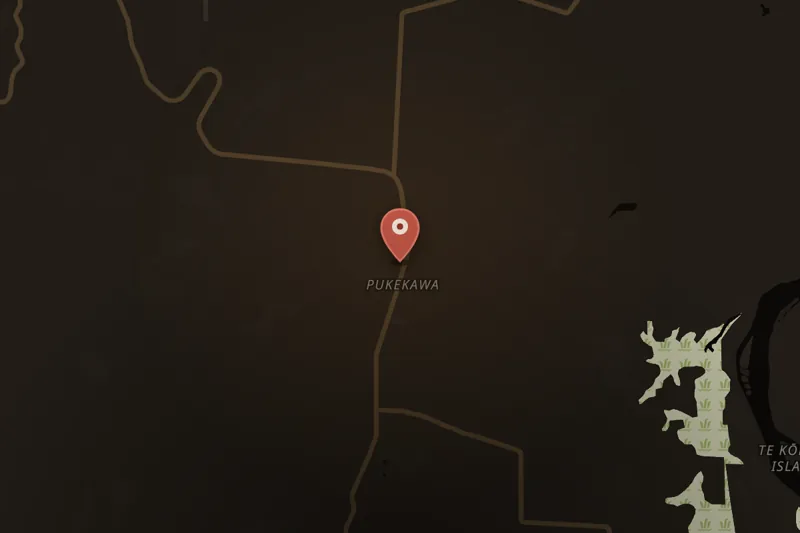
Pukekawa is a small rural settlement in the Lower Waikato River area of New Zealand's North Island, about 66 km south of central Auckland. Though a quiet farming community known for market gardening, it became nationally known in connection with two separate killings.
On the night of 24 August 1920, farmer Sydney Eyre was shot in his bedroom on his Pukekawa farm in the presence of his wife. Police investigation of hoof marks and cartridges at the scene led to a former employee of the Eyre farm, Samuel Thorn. Thorn was convicted of murder that year in the Auckland Supreme Court and was hanged. He maintained his innocence up to his death. The trial drew national attention, and during proceedings Eyre's wife testified that she had been "intimate" with Thorn.
Decades later, Pukekawa returned to national headlines with the killings of Harvey and Jeannette Crewe, who were shot in the living room of their farmhouse on or about 17 June 1970. Their bodies were thrown into the Waikato River and were recovered separately many weeks after the killings. According to the Wikipedia account, a woman who was never officially identified had been observed in the Crewe house before the couple was reported missing, and an unknown person had fed the Crewe baby, Rochelle, and the farm animals during that period. Local farmer Arthur Allan Thomas was twice convicted in the Auckland Supreme Court and imprisoned for the murders; the Crown attributed a motive to a romantic interest in Jeannette Crewe. Thomas was later found to have been wrongly convicted, was pardoned by the Governor-General on 17 December 1979, and was awarded NZ$1 million in compensation. The case was dramatized in the 1980 film Beyond Reasonable Doubt, filmed in Pukekawa with participation from both sides of a local dispute over the case.
The Crewe case has continued to divide the district. Des Thomas, a Pukekawa water-supply contractor and brother of Arthur Thomas, has continued to investigate the murders in relation to an unnamed local man referred to as "farmer X." A police report released in July 2014 cleared as suspects the late Len Demler (Jeannette Crewe's father) and his second wife, Norma Demler, while reportedly implying that Arthur Thomas remained a suspect to police; the same report stated that a cartridge case used as evidence against Thomas may have been "fabricated evidence." The house where the killings occurred remains occupied. The Thomas family farm remains in the family, and a memorial cross once at its gate listing "Justice" and "free Thomas" supporters has since been moved into nearby bush with its lettering obliterated. At the Tuakau cemetery, the graves of Arthur Thomas's parents lie roughly 27 metres from the graves of the Crewes.

This summary is based solely on the Wikipedia article on Pukekawa, which cites a contemporaneous 1888 newspaper item via Papers Past and a 2023 census dataset from Stats NZ as references; those sources were not independently drawn upon for the narrative facts above.
Key facts
- Victims
- Jeannette Crewe, Sydney Eyre, Harvey Crewe
- Date
- 1970
- Location
- Pukekawa, Waikato, New Zealand
- Case status
- overturned
Case timeline
1920-08-24
Farmer Sydney Eyre is shot in his bedroom on his Pukekawa farm in the presence of his wife.
1920
Samuel Thorn, a former employee of the Eyre farm, is convicted of murder in the Auckland Supreme Court and hanged; he maintained his innocence.
1970-06
Harvey and Jeannette Crewe are killed in their farmhouse living room in Pukekawa; their bodies are later thrown into the Waikato River.
1979-12-17
Arthur Allan Thomas, twice convicted of the Crewe murders, is pardoned by the Governor-General after being found to have been wrongly convicted.
1980
The film Beyond Reasonable Doubt, dramatizing the Crewe case, is released, filmed in Pukekawa.
2014-07
A police report on the Crewe murders is released, clearing Len Demler and Norma Demler as suspects while reportedly implying Arthur Thomas remained a suspect, and noting a key cartridge case may have been fabricated evidence.
Best coverage
No approved coverage links are attached yet.
People
Samuel Thorn
CONVICTEDConvicted in the Auckland Supreme Court in 1920 of the murder of Sydney Eyre and hanged; maintained his innocence.
Jeannette Crewe
VICTIMKilled in her Pukekawa farmhouse on or about 17 June 1970; body recovered from the Waikato River.
Len Demler
ACQUITTEDJeannette Crewe's father; cleared as a suspect in a July 2014 police report on the Crewe murders.
Norma Demler
ACQUITTEDLen Demler's second wife after the Crewe murders; cleared as a suspect in a July 2014 police report.
Sydney Eyre
VICTIMPukekawa farmer shot and killed in his bedroom on 24 August 1920.
Harvey Crewe
VICTIMKilled in his Pukekawa farmhouse on or about 17 June 1970; body recovered from the Waikato River.
Arthur Allan Thomas
EXONERATEDTwice convicted in the Auckland Supreme Court of the Crewe murders and imprisoned; later found to have been wrongly convicted, pardoned by the Governor-General on 17 December 1979, and awarded $1 million in compensation.
Roles reflect public records and court outcomes at the time of writing — supporting citations are on file under Sources.
Places
Common questions
- What happened to the victim?
- The small Waikato farming settlement of Pukekawa, New Zealand, was the site of two nationally notorious killings decades apart: the 1920 shooting death of farmer Sydney Eyre, for which Samuel Thorn was convicted and hanged, and the 1970 killings of Harvey and Jeannette Crewe, for which Arthur Allan Thomas was twice wrongly convicted, later pardoned and compensated.
- Where did the murders happen?
- Pukekawa, Waikato, New Zealand.
- Who was convicted?
- Samuel Thorn (Convicted in the Auckland Supreme Court in 1920 of the murder of Sydney Eyre and hanged; maintained his innocence.).
- What is the current status of the case?
- Status: overturned.
Sources
- Pukekawawikipedia · Wikipedia · 2026-07-07
- Contemporaneous coverage — paperspast.natlib.govt.nznews · paperspast.natlib.govt.nz · 2026-07-07
- Contemporaneous coverage — explore.data.stats.govt.nznews · explore.data.stats.govt.nz · 2026-07-07