Active case
Waterloo Bay massacre

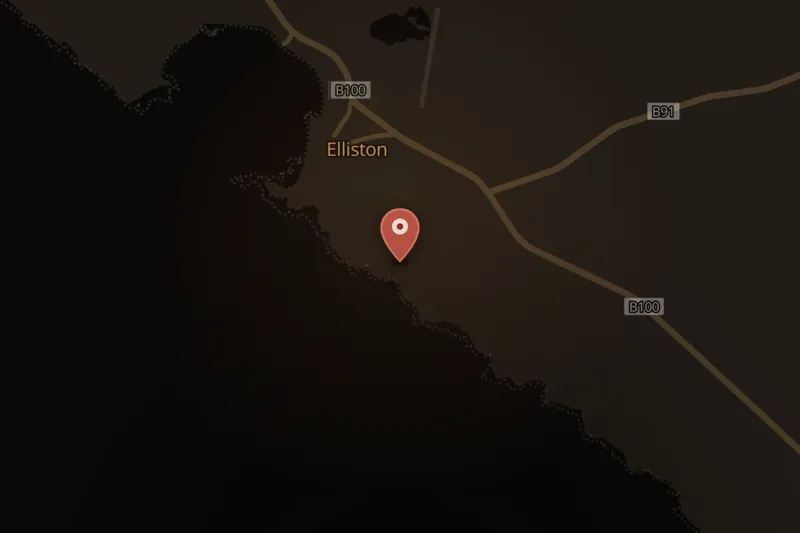
The Waterloo Bay massacre, also called the Elliston massacre, refers to a violent clash between European settlers and Aboriginal Australians on the cliffs of Waterloo Bay near Elliston, on South Australia's Eyre Peninsula, in late May 1849. It occurred against a backdrop of frontier violence in the region following the 1839 establishment of Port Lincoln, where settlers and Aboriginal Nauo, Kokatha and Wirangu people clashed repeatedly as pastoral runs expanded onto traditional lands.
Between June 1848 and May 1849, a sequence of violent incidents preceded the clash. Hutkeeper John Hamp was killed by Aboriginal people on 23 June 1848. In August 1848 at least one Aboriginal person was shot by a station overseer over a stolen shirt. In May 1849, five Aboriginal people died after eating poisoned flour, which the Commissioner of Police believed may have led to the revenge killings of settlers James Rigby Beevor and Annie Easton later that month.
According to official records, the fatal clash occurred on 27 May 1849 after Aboriginal people took stores from a hut on Thomas Cooper Horn's station. Horn and his men pursued a group to the Waterloo Bay cliffs and opened fire as some attempted to escape down the cliff face; contemporaneous accounts from the Government Resident and a police inspector recorded two to three Aboriginal deaths and several captures. Subsequent trials in Adelaide resulted in the hanging of two Aboriginal men for Beevor's murder, the acquittal of three men charged in Easton's death, and the eventual release of others charged over Hamp's killing after doubts were raised about witness testimony.
Beginning with a heavily fictionalised 1880 newspaper account by Henry John Congreve, and reinforced by a widely circulated 1926 version attributed to local resident Archie Beviss, popular narratives grew to describe a much larger event, with claims of up to 260 Aboriginal deaths and a mass drive over the cliffs. Historians in the 1920s and 1930s who examined the archival record, including A. T. Saunders and J. D. Somerville, concluded there was no evidence for a massacre on this scale. A later re-examination by historian Greg Charter in 1989 concluded that some form of punitive action likely did occur and had subsequently been mythologised. Aboriginal people from the region have maintained an oral history tradition describing a large-scale massacre, passed down through generations.
Efforts to memorialise Aboriginal deaths were initially unsuccessful; a 1970 cairn proposal was rejected by the District Council of Elliston pending proof a massacre occurred. In May 2017 the council unveiled a memorial using the word "massacre," an event attended by dance troupe Dusty Feet Mob and Senator Pat Dodson, and recognised nationally in 2018. An anthropologist engaged by the council, Tim Haines, concluded that while it is unlikely hundreds died, it is likely that tens or scores of Aboriginal people were killed. The event remains, according to historians Foster, Hosking and Nettelbeck, a contested site of memory between documented history and Aboriginal oral tradition.

Key facts
- Victims
- John Hamp, James Rigby Beevor, Annie Easton
- Date
- 1849
- Location
- Waterloo Bay, near Elliston, South Australia
- Case status
- cold
Case timeline
1839-03
European settlers arrive from Adelaide to establish Port Lincoln on the Eyre Peninsula.
1848-06-23
Hutkeeper John Hamp is speared and clubbed to death by Aboriginal people at Stony Point sheep station.
1848-08
At least one Aboriginal person is shot by a station overseer over a stolen shirt.
1849-05
Five Aboriginal people die after eating poisoned flour near William Ranson Mortlock's station.
1849-05-03
Settler James Rigby Beevor is speared to death at his hut.
1849-05-07
Settler Annie Easton is speared to death on an adjoining lease; her infant is found unharmed beside her body.
1849-05-27
Clash occurs at Waterloo Bay cliffs after pursuit from Thomas Cooper Horn's station; official records report two to three Aboriginal deaths and several captures.
1849-09
A group of Aboriginal men is transported to Adelaide for trial over the settler killings.
1852-02
Another Aboriginal man is arrested as an accomplice in Hamp's murder, later released for lack of evidence, and subsequently killed by other Aboriginal men while trying to return home.
1880-08-14
Henry John Congreve's fictionalised account of the events is published in the Adelaide Observer.
1926
Archie Beviss's widely circulated account, describing a mass killing of up to 260 Aboriginal people, is published in exchanges in the Register newspaper.
1936
Historian J. D. Somerville concludes in the Port Lincoln Times that no massacre on the scale described occurred.
1969
Neil Thompson publishes 'The Elliston Incident,' a book incorporating massacre legend elements.
1970
A proposed memorial cairn to Aboriginal victims is rejected by the District Council of Elliston pending proof of the massacre.
1989
Historian Greg Charter re-examines archival evidence and concludes some punitive action likely occurred and was later mythologised.
2017-05
The Elliston District Council unveils a memorial referring to the events as a massacre.
2018-05
The Elliston council receives a National Local Government Award for its memorialisation work.
Best coverage
No approved coverage links are attached yet.
People
John Hamp
VICTIMHutkeeper killed by Aboriginal people on 23 June 1848 at Stony Point sheep station.
James Rigby Beevor
VICTIMSettler speared to death at his hut on 3 May 1849.
Annie Easton
VICTIMSettler speared to death on 7 May 1849; her infant survived.
Roles reflect public records and court outcomes at the time of writing — supporting citations are on file under Sources.
Places
Common questions
- What happened to the victim?
- In late May 1849, a clash between European settlers and Aboriginal people occurred on the cliffs of Waterloo Bay near Elliston, South Australia, following a series of violent incidents in the district. Archival records document at least three Aboriginal deaths, while long-circulating oral and popular accounts describe a much larger massacre of tens to hundreds of people.
- Where did the massacre happen?
- Waterloo Bay, near Elliston, South Australia.
- What is the current status of the case?
- Status: cold.
Sources
- Waterloo Bay massacrewikipedia · Wikipedia · 2026-07-07
- Contemporaneous coverage — nla.gov.aunews · nla.gov.au · 2026-07-07
- Contemporaneous coverage — ABC News (Australia)news · ABC News (Australia) · 2026-07-07