Overview
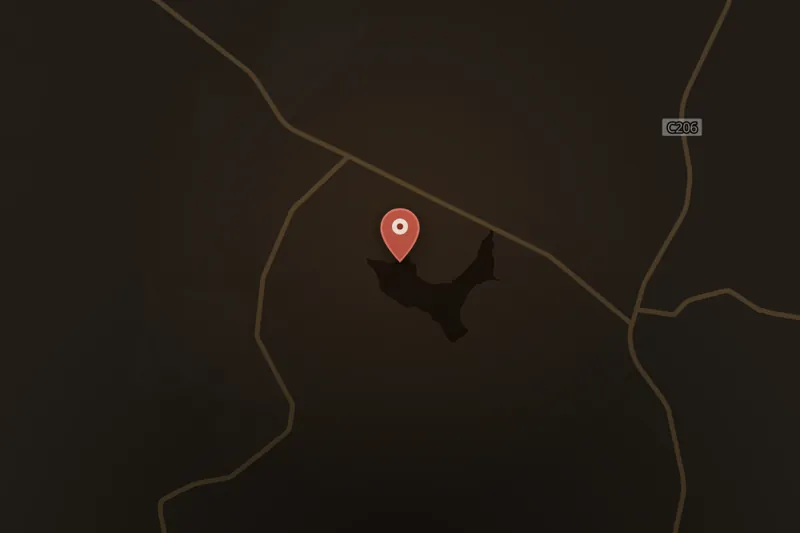
The Avenue Range Station massacre refers to the killing of a group of Aboriginal Australians by white settlers at Avenue Range, a sheep station in the southeast of the Colony of South Australia, in about September 1848. Precise details, including the exact date and number of victims, remain uncertain. A contemporary account listed nine victims: three women, two teenage girls, three infants, and an elderly blind and infirm man. A later account published by Christina Smith in 1880 put the number at eleven, identifying the victims as belonging to the Tanganekald people. Pastoralist James Brown and his overseer, known as Eastwood, were suspected of carrying out the killings in apparent retaliation for attacks on Brown's sheep.
Investigation and legal proceedings
Reports of the massacre reached colonial authorities in January 1849. Matthew Moorhouse, the Protector of Aborigines, traveled to the district in February 1849 to investigate. An Aboriginal witness, Leandermin, led Moorhouse to the site and described witnessing the shootings, identifying Brown as one of the two white men present. Moorhouse's party located human remains in burial holes as well as bones at a nearby fire site, leading Moorhouse to conclude the bodies had been exhumed and burned after initial burial in an apparent attempt to destroy evidence.
Brown was formally charged on 1 March 1849 with the murder of "unknown aboriginal natives" and was committed for trial by a local magistrate, who privately stated there was "little question of the butchery or the butcher." The case came before the Supreme Court in Adelaide beginning 11 June 1849. The presiding judge repeatedly found the evidence insufficient, granting the prosecution multiple extensions. The prosecution's difficulties were compounded by the Aboriginal Witnesses Act of 1848, which restricted the weight given to Aboriginal testimony, particularly in capital cases, unless corroborated by other evidence. Key witnesses, including Eastwood, fled the colony; another witness left for a neighboring district; and Leandermin himself disappeared and was reportedly "made away with." By the November 1849 court sittings, the case had been dropped from the listings, and Brown was never tried.
Later accounts and historical legend
Christina Smith's 1880 book recounted the massacre without naming Brown, describing the killing of the elderly and infants and noting the case had been investigated but the accused discharged for lack of evidence. In subsequent decades, local historians and writers — including Rodney Cockburn (1927) and J. G. Hastings (1944) — circulated altered versions of events, notably substituting a poisoning for the shooting and adding an account of Brown undertaking a long horse ride to Adelaide to establish an alibi. Historians Robert Foster, Rick Hosking, and Amanda Nettelbeck, writing in 2001, argued these later "pioneer legend" versions downplayed the severity of the original crime by shifting focus from the killings to a heroic narrative about Brown.
Status
No conviction was obtained, and the case never proceeded to trial due to evidentiary restrictions and the disappearance or non-cooperation of witnesses.

 SOLVEDListen