Casepin
Back to cases
Illustrative

The brigantine Maria, built in Dublin in 1823, departed Port Adelaide on 26 June 1840 bound for Hobart under Captain William Ettrick Smith, carrying a mate, eight crew, and 16 passengers including women and children. On 28 June 1840 the ship wrecked on the Margaret Brock Reef near Cape Jaffa. The wreck itself has never been located, though debris later washed ashore at Lacepede Bay.

All aboard reached land safely, but none survived to give a firsthand account of what followed. Surviving accounts, largely reconstructed after the fact, indicate the group split up while trekking along the Coorong coast toward Adelaide-area settlements. Passengers who separated from Captain Smith and the crew were attacked, killed, and their remains found decapitated, clubbed, or buried in sand and wombat burrows. A search party led by William Pullen, accompanied by Dr Richard Penney, sailors, a police trooper, and Aboriginal interpreters, departed Adelaide on 28 July 1840 and located a massacre site on 30 July, recovering scattered remains and two wedding rings later identified as belonging to two of the passengers. Accounts differ as to whether 25 or 26 people were killed in total; either figure represents what is described as the largest killing of colonists by Aboriginal people in Australian history.

Following Pullen's report, Governor George Gawler ordered a further punitive expedition under Major Thomas O'Halloran, which departed Goolwa on 22 August 1840 with police, sailors, and Aboriginal guides from Encounter Bay. The party detained 65 Aboriginal people on 23 August; three men were killed and others wounded during the operation. Maria's log-book, bloodstained clothing, and silver spoons were recovered from encampments. On 25 August 1840, O'Halloran summarily sentenced two Aboriginal men, identified as Mongarawata and Pilgarie, to death without trial; they were hanged the same day and their bodies left on display. Two additional men were shot while attempting to escape by swimming.

The legality of the executions was widely disputed. Judge Charles Cooper advised Governor Gawler that British law could not be applied to the Milmenrura, as they had not submitted to colonial authority, despite Aboriginal South Australians having been formally declared British subjects in 1836. The Aborigines' Protection Society condemned Gawler's actions, and the Colonial Office in London later concluded that the executions constituted murder under law, though no prosecution followed. The controversy contributed to Gawler's recall as governor.

Bodies of victims were recovered over the following months at several sites. Oral history maintained by Ngarrindjeri people, including accounts recorded from elder Tom Trevorrow in 2003 and earlier from anthropologist Norman Tindale in 1934, describe a different sequence of events, including allegations that crew members had attempted to sexually interfere with Aboriginal women, provoking the killings under tribal law. Some Indigenous oral history also holds that the men executed by O'Halloran's party were not those responsible. A commemorative monument was erected at Kingston SE in 1966, and a collaborative project involving First Nations groups and the National Trust of South Australia has since sought to present Indigenous perspectives on the events.


Key facts

Victims
James Strutt, William Ettrick Smith, Samuel Denham
Date
1840
Location
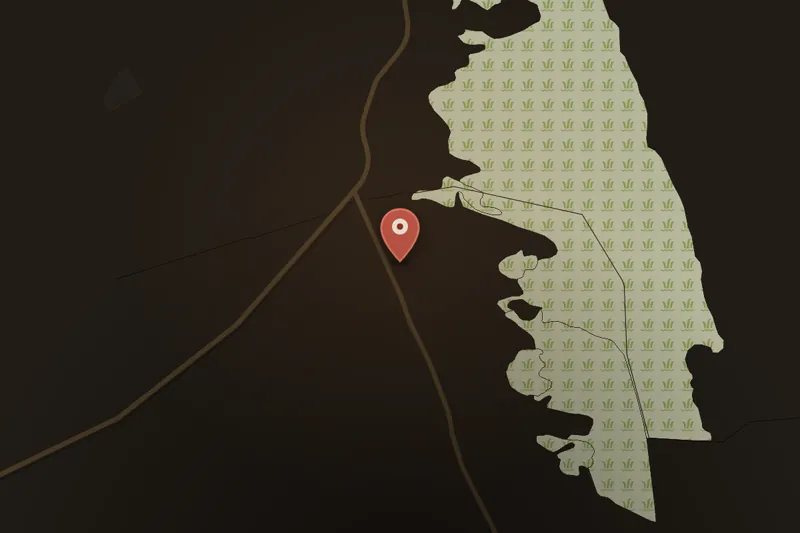
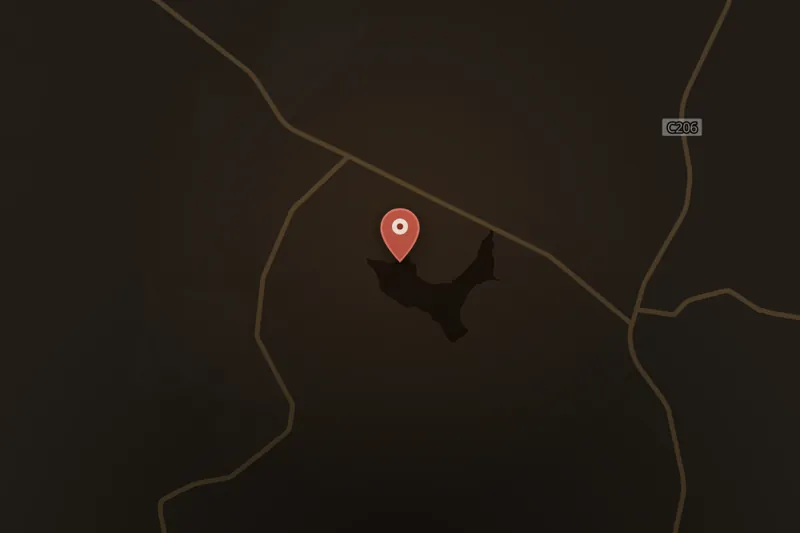
Coorong / Margaret Brock Reef area, near Kingston SE, South Australia
Case status
solved

Case timeline

  1. 1823

    Maria launched from Grand Canal Docks, Dublin, as a passenger brigantine.

  2. 1840-06-26

    Maria departs Port Adelaide bound for Hobart with 25 people aboard.

  3. 1840-06-28

    Maria wrecks on Margaret Brock Reef near Cape Jaffa, South Australia.

  4. 1840-07-28

    Search party led by William Pullen departs Adelaide to investigate reports of killings.

  5. 1840-07-30

    Pullen's party finds a massacre site with scattered human remains.

  6. 1840-08-15

    Major O'Halloran's punitive expedition departs Adelaide under Governor Gawler's orders.

  7. 1840-08-22

    O'Halloran's mounted force departs Goolwa with police, sailors, and Aboriginal guides.

  8. 1840-08-23

    O'Halloran's party detains 65 Aboriginal people; three men killed during the operation.

  9. 1840-08-25

    Two Aboriginal men, Mongarawata and Pilgarie, are summarily hanged without trial.

  10. 1841-04-10

    Aboriginal guides lead Richard Penney to the remains of four further victims from the Maria.

  11. 1841-10

    The Secretary of State for the Colonies responds to Gawler's report; Law Officers of the Crown opine the executions constituted murder, but no prosecution follows.

  12. 1966-02-18

    A commemorative monument to the Maria wreck and its victims is unveiled at Kingston SE.

Best coverage

No approved coverage links are attached yet.

People

  • William Pullen

    LAW ENFORCEMENT

    Led the initial search party that located a massacre site in July 1840.

  • James Strutt

    VICTIM

    Passenger, hired servant, killed following the wreck.

  • George Gawler

    LAW ENFORCEMENT

    Governor of South Australia who ordered the punitive expedition and was later recalled amid controversy over the executions.

  • Thomas O'Halloran

    LAW ENFORCEMENT

    Major who led the punitive expedition and ordered the summary executions of two Aboriginal men.

  • Pilgarie

    CONVICTED

    Aboriginal man (also recorded as Moorcangua) summarily sentenced to death and hanged by Major O'Halloran's party on 25 August 1840 without trial.

  • Mongarawata

    CONVICTED

    Aboriginal man summarily sentenced to death and hanged by Major O'Halloran's party on 25 August 1840 without trial.

  • William Ettrick Smith

    VICTIM

    Captain of the Maria, killed following the wreck.

  • Samuel Denham

    VICTIM

    Passenger killed along with his wife and five children following the wreck.

Roles reflect public records and court outcomes at the time of writing — supporting citations are on file under Sources.

Places

Common questions

What happened to the victim?
In 1840, up to 26 shipwrecked passengers and crew of the brigantine Maria were killed by Aboriginal people on the Coorong in South Australia; a punitive police expedition later summarily hanged two Aboriginal men without trial, sparking lasting controversy over colonial law and justice.
Where did the massacre happen?
Coorong / Margaret Brock Reef area, near Kingston SE, South Australia.
Who was convicted?
Pilgarie (Aboriginal man (also recorded as Moorcangua) summarily sentenced to death and hanged by Major O'Halloran's party on 25 August 1840 without trial.) and Mongarawata (Aboriginal man summarily sentenced to death and hanged by Major O'Halloran's party on 25 August 1840 without trial.).
What is the current status of the case?
Status: solved.

Sources

  1. Maria massacrewikipedia · Wikipedia · 2026-07-07
  2. Contemporaneous coverage — nla.gov.aunews · nla.gov.au · 2026-07-07
  3. Contemporaneous coverage — trove.nla.gov.aunews · trove.nla.gov.au · 2026-07-07