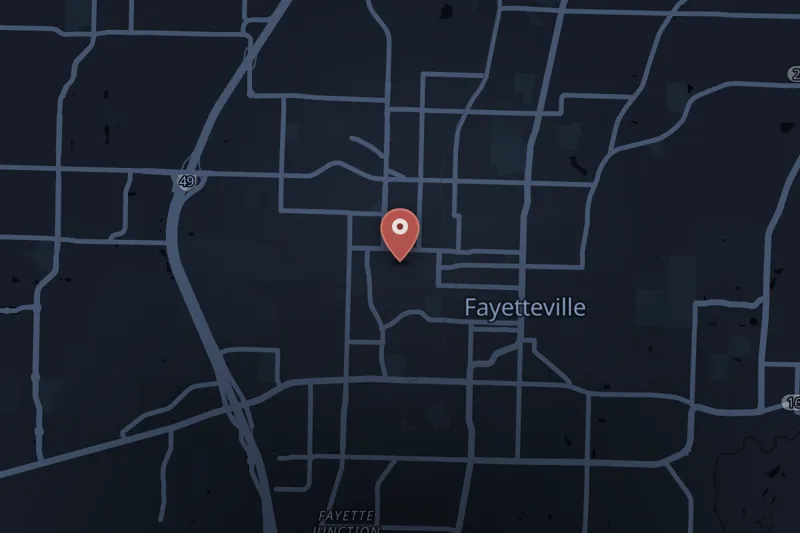
On the first day of the Fall 2000 semester, shortly after noon on August 28, 2000, James Easton Kelly, 37, a recently dismissed PhD candidate in the University of Arkansas's Comparative Literature program, entered the office of his former faculty advisor, Dr. John R. Locke, 67, director of the Comparative Literature program, in Kimpel Hall. After the first shot was fired, a graduate student in a nearby office reported hearing someone say, "I didn't do anything." A 911 call reporting gunshots in Kimpel Hall was received by the Fayetteville Police Department at approximately 12:14 p.m. Investigators later determined Kelly shot Locke three times with a .38-caliber revolver loaded with ammunition he had purchased earlier that day.
Campus police responding to multiple 911 calls found Locke's office door closed and locked. A man inside the office told officers he had been hurt but that they should not enter; officers spoke with him for several minutes before hearing another gunshot, after which no further contact was made. A SWAT team was activated, and approximately an hour after the first officers arrived, police entered the office and found the bodies of Locke and Kelly, along with a handgun, on the floor between them. A crime lab report classified Locke's death as homicide and Kelly's as suicide. University police Chief Larry Slamons said a shot through Locke's hand suggested he had raised his arm to defend himself, and that the two men may have struggled before Locke was fatally wounded. Two bullets remained in the revolver when officers entered the office; investigators concluded Kelly killed himself with the fourth of four shots fired. A satchel found with Kelly's body contained dismissal-related letters from his graduate committee, and a receipt discovered later in Kelly's rental car showed he had purchased a 50-round box of ammunition at a Wal-Mart about 10 miles from campus roughly 40 minutes before the shooting.
The investigation found that Kelly, who had been dismissed from the PhD program, blamed Locke for his dismissal, although Locke had actually abstained from voting on the dismissal decision. Kelly had earlier failed his oral examination for an English PhD in 1996 and accused departmental faculty of racism before Locke admitted him into the Comparative Literature program, believing it might better suit his interests. Locke, a New York City native who had taught at the university since 1967, was known for his work on Rilke translations and for circulating an unpublished manuscript on meditation drawing from Buddhist, Taoist, and Jungian thought; he had planned to retire at the end of the 2000–2001 academic year.
The shooting was described as the first incident of its kind in the university's history. That evening, approximately 500 people attended an unofficial prayer vigil at the Unitarian Universalist Fellowship of Fayetteville, and an impromptu shrine appeared outside Locke's office. A formal memorial service was held on September 12, 2000, and a memorial garden outside Kimpel Hall, funded by collections begun in 2001, was dedicated in September 2003. In 2006, a memorial library housing Locke's book collection was opened in Rogers, Arkansas.

 SOLVEDListen