Solved case
2010 Moscow Metro bombings
Two female suicide bombers detonated explosives during rush hour at Lubyanka and Park Kultury metro stations in Moscow on March 29, 2010, killing at least 40 people and injuring over 100. Caucasus Emirate leader Doku Umarov claimed responsibility.

On the morning of March 29, 2010, two suicide bombings struck the Moscow Metro during rush hour, roughly 40 minutes apart, at Lubyanka and Park Kultury stations. At least 40 people were killed and over 100 injured, in what Russian officials described as the deadliest attack on the Russian capital in six years, referencing 2004 metro bombings. An estimated 500,000 people were commuting through the system at the time.
The first explosion occurred at approximately 7:56 am local time when a woman detonated explosives equivalent to up to 1.5 kg of TNT after the doors opened on a train at Lubyanka station, killing 15 people on board and 11 on the platform. The second explosion followed at approximately 8:38 am at Park Kultury station, carried out by a woman carrying the equivalent of 2 kg of TNT, killing 14 commuters. Both devices were packed with metal nuts, bolts and screws to maximize damage, and are believed to have been detonated via mobile phone devices. Panic and stampedes followed at both stations. Victims ranged in age from 16 to 65, including three minors; two additional deaths resulted from stampedes. A Black Sea Fleet officer, Captain Viktor Ginkut, was among those killed at Park Kultury.
Russian authorities identified the two bombers as Dzhanet Abdullayeva, widow of insurgent Umalat Magomedov, and Maryam Sharipova, a 28-year-old schoolteacher from Dagestan, identified by her father. Investigators believed male accomplices had rented an apartment, escorted the women to a station in southwest Moscow, provided the explosive belts, and then remotely triggered the detonations from the apartment. FSB chief Alexander Bortnikov said the investigation pointed to groups linked to the North Caucasus, and on May 13, 2010, he announced that all members of the group behind the attack had been identified, with three killed during an attempted arrest, including the man who had escorted the bombers from Dagestan to Moscow.
Two days after the attack, Caucasus Emirate leader Doku Umarov claimed responsibility in an internet video, stating the attacks were ordered by him in revenge for killings of Chechen and Ingush civilians by Russian security forces near Arshty in February 2010, and warned further attacks would follow unless Russia granted independence to Muslim states in the North Caucasus. The Caucasus Emirate had initially denied responsibility. In August 2010, Russia's Anti-Terror Committee confirmed that Magomedali Vagabov — believed to be a militant behind the bombings, a close associate of Umarov, and the husband of bomber Maryam Sharipova — was killed along with four other militants during an operation in Dagestan. A man accused of bringing the suicide bombers to Moscow was arrested in July 2010.
The bombings were followed by further attacks in Dagestan and Ingushetia within days, which Russian officials linked to the Moscow attack. In response, Prime Minister Vladimir Putin ordered compensation payments to victims' families, March 30 was declared a national day of mourning, and heightened security measures were imposed on the Moscow Metro through mid-May 2010. Daily commuter numbers on the metro fell by 17% the day after the attack.

Key facts
- Victims
- Viktor Ginkut
- Date
- 2010
- Location
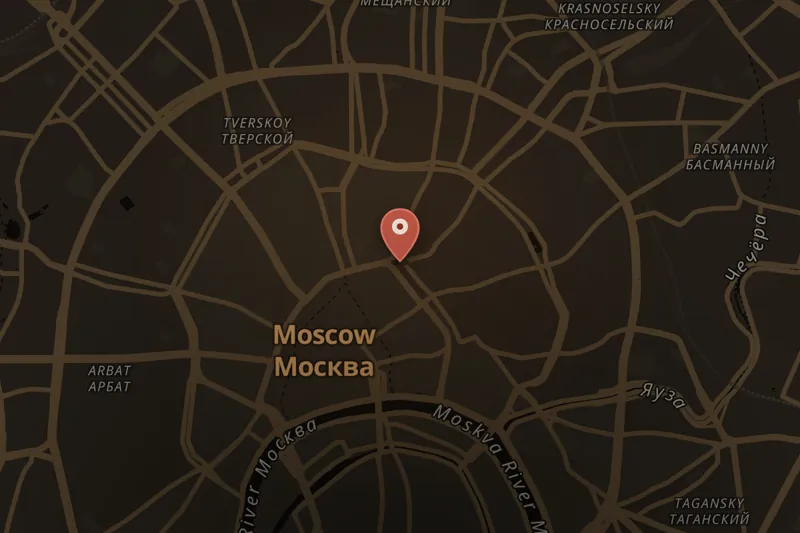
- Moscow Metro (Lubyanka and Park Kultury stations), Moscow, Russia
- Case status
- solved
Case timeline
2010-03-29
Suicide bombings occur at Lubyanka (approx. 7:56 am) and Park Kultury (approx. 8:38 am) stations of the Moscow Metro during rush hour, killing at least 38 people initially reported and injuring over 100.
2010-03-30
A national Day of Mourning is declared in Russia; death toll revised upward to 40 after a victim dies of injuries.
2010-03-31
Caucasus Emirate leader Doku Umarov claims responsibility for ordering the attacks in an internet video.
2010-04-01
A bombing in Dagestan kills two people, drawing parallels to the Moscow attack.
2010-04-05
A bombing in Ingushetia targeting a police barracks draws further parallels to the Moscow and Dagestan attacks.
2010-05-13
FSB director Alexander Bortnikov announces all members of the group behind the attack have been identified; three are killed during an attempted detention, including the man who escorted the bombers from Dagestan to Moscow.
2010-07
The man who brought the suicide bombers to Moscow is arrested.
2010-08
Russia's Anti-Terror Committee confirms Magomedali Vagabov, believed to be a militant behind the bombings, was killed along with four other militants in an operation in Dagestan.
Best coverage
No coverage has been attached to this file yet.
People
Dzhanet Abdullayeva
CHARGEDIdentified by Russia's FSB as the suicide bomber who detonated the explosion at Park Kultury station; died in the attack. Widow of insurgent Umalat Magomedov.
Alexander Bortnikov
LAW ENFORCEMENTFSB director who led public statements on the investigation and announced identification of the group behind the attacks.
Maryam Sharipova
CHARGEDIdentified by investigators as the second suicide bomber; a 28-year-old schoolteacher from Dagestan who died in the attack, identified by her father.
Magomedali Vagabov
CHARGEDBelieved by Russian authorities to be a militant behind the bombings and a close associate of Doku Umarov; husband of bomber Maryam Sharipova; killed in an operation in Dagestan in August 2010.
Doku Umarov
CHARGEDLeader of the Caucasus Emirate who claimed responsibility in a video for ordering the attacks.
Viktor Ginkut
VICTIMA Captain in the Black Sea Fleet of the Russian Federation, killed at Park Kultury station.
Roles reflect public records and court outcomes at the time of writing — supporting citations are on file under Sources.
Archival records

other document
Blasts Mar2010 on metro map
Credit: Dmitrij Rodionov DR (talk), derivative work of: Mosmetro2009.png derivative work by Nickkolosov (talk) Mosmetro2008.png: A.Savin Explosion.svg: chabacano · CC BY-SA 3.0 · Source

archival location
Flowers at Lubyanka 3
Credit: Amarhgil · CC BY-SA 3.0 · Source

archival location
Park Kultury. Flowers1. 30-03-2010
Credit: Stanislav Kozlovskiy · Public domain · Source

archival location
Комсомольский проспект после теракта в метро 2010
Credit: Anton Nosik · CC BY 3.0 · Source

unclassified
Vladimir Putin on Botkin Hospital with Moscow Metro terrorist attack 03
Credit: premier.gov.ru · CC BY 4.0 · Source

unclassified
Vladimir Putin on Botkin Hospital with Moscow Metro terrorist attack 01
Credit: premier.gov.ru · CC BY 4.0 · Source

archival location
2010 terrorist attack in Mosmetro on MCHS 06
Credit: МЧС России · CC BY 4.0 · Source

archival location
Medvedev at Lubyanka metro station 1
Credit: Фото пресс-службы Президента России · CC BY 4.0 · Source

crime scene press
2010 terrorist attack in Mosmetro on MCHS 08
Credit: МЧС России · CC BY 4.0 · Source

archival location
2010 terrorist attack in Mosmetro on MCHS 05
Credit: МЧС России · CC BY 4.0 · Source

archival location
2010 terrorist attack in Mosmetro on MCHS 01
Credit: МЧС России · CC BY 4.0 · Source
Places
Common questions
- What happened to the victim?
- Two female suicide bombers detonated explosives during rush hour at Lubyanka and Park Kultury metro stations in Moscow on March 29, 2010, killing at least 40 people and injuring over 100. Caucasus Emirate leader Doku Umarov claimed responsibility.
- Where did the crime happen?
- Moscow Metro (Lubyanka and Park Kultury stations), Moscow, Russia.
- What is the current status of the case?
- Status: solved.
Sources
- ENCYCLOPEDIC2010 Moscow Metro bombingsWikipedia · 2026-07-07
- PRESSContemporaneous coverage — BBC NewsBBC News · 2026-07-07
- PRESSContemporaneous coverage — The GuardianThe Guardian · 2026-07-07
Record history
- First published
- JUL 07, 2026
When a file you follow changes — a new development, a correction, fresh coverage — the Dispatch is how you hear about it.
The Casepin Dispatch
A calm weekly briefing from the archive — one case worth understanding, meaningful updates to files you follow, and the best new coverage. You’ll also get the one-time note when the apps land. No gore, no rumor, no drip.