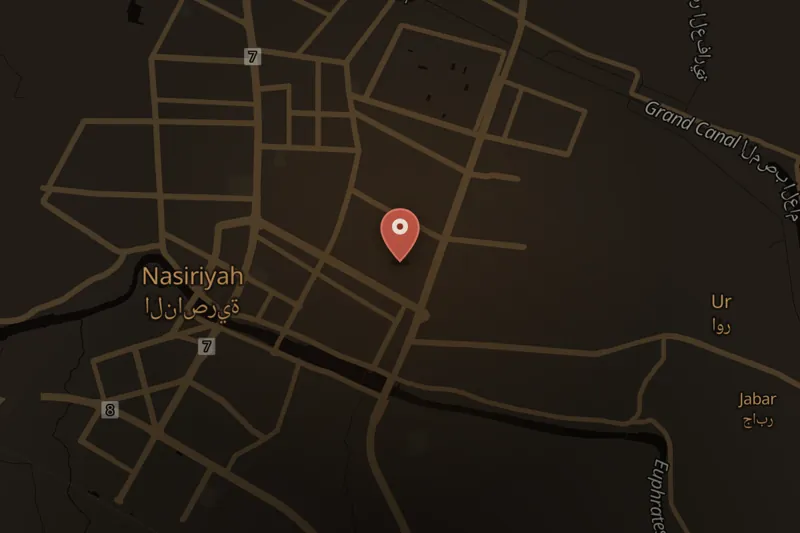
On 14 September 2017, members of the Islamic State (IS) staged a coordinated, multi-part attack on the outskirts of Nasiriyah, in Iraq's southern Dhi Qar Governorate. The assault killed at least 84 people and injured 93 others, making it one of the deadliest single-day attacks in southern Iraq since the 2003 U.S.-led invasion.
The attacks occurred as IS was suffering major territorial losses across Iraq and Syria, including the fall of Mosul after a nine-month battle in early July 2017 and a government offensive that recaptured Tal Afar in late August 2017. U.S. officials at the time said the group had lost roughly 90 percent of the territory it had seized during its 2014 offensive, including areas that had housed facilities for producing car bombs and improvised explosive devices. Analysts said this degradation pushed IS toward relying more heavily on suicide bombers and small-arms attacks against civilian and government targets, a pattern also seen in attacks in Tikrit and a bombing at a Baghdad ice cream parlor. Observers warned that despite battlefield setbacks, the group retained the capacity to strike soft targets such as restaurants and entertainment venues.
The first attack took place around lunchtime, when several gunmen and at least one suicide bomber, dressed in military uniforms, arrived in three vehicles at the Fadak restaurant on Freeway 1 leading to Baghdad. The restaurant was a popular stop for pilgrims traveling north to the Shia holy cities of Najaf and Karbala. The attackers opened fire with automatic weapons and threw grenades, killing or injuring at least 50 people. Shortly afterward, two additional suicide bombers—one driving a vehicle rigged with explosives—detonated themselves at a nearby police checkpoint, causing further casualties.
According to Dhi Qar provincial governor Yahya al-Nassiri, most of the casualties were expected to be Iranian and Iraqi Shia pilgrims who had been inside the restaurant during the first attack. At least one report indicated the attackers had disguised themselves as members of the Popular Mobilization Forces, a predominantly Shia paramilitary umbrella group that had fought alongside Iraqi government forces against IS.
The pro-Islamic State Amaq News Agency claimed responsibility for the twin attacks on behalf of the group.
The Nasiriyah attacks were described as the deadliest in Iraq since the government's recapture of Mosul in July 2017, and among the highest single-day tolls in southern Iraq since 2003. IS had previously targeted Iraqi and Iranian pilgrims during the 2016 Arba'een Pilgrimage, when truck bombings in the central town of Hillah killed more than 120 people.

 Credit: CEphoto, Uwe AranasCC BY-SA 3.0SourceUNSOLVEDListen


