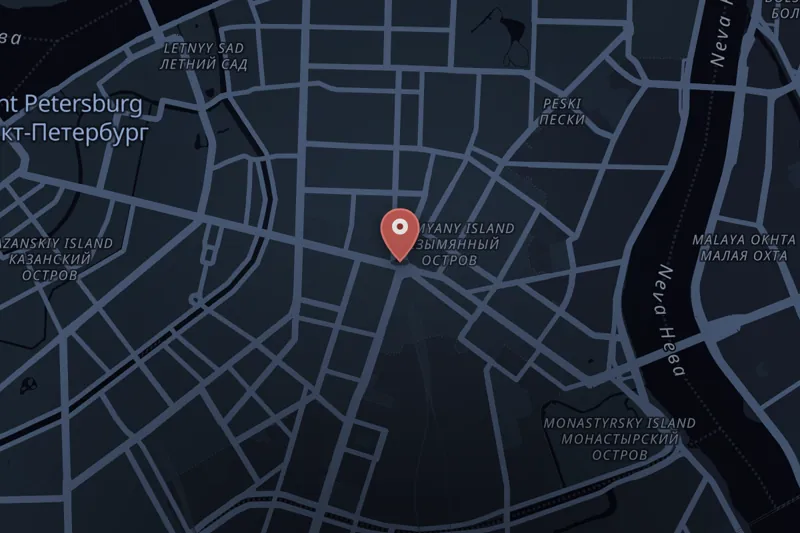
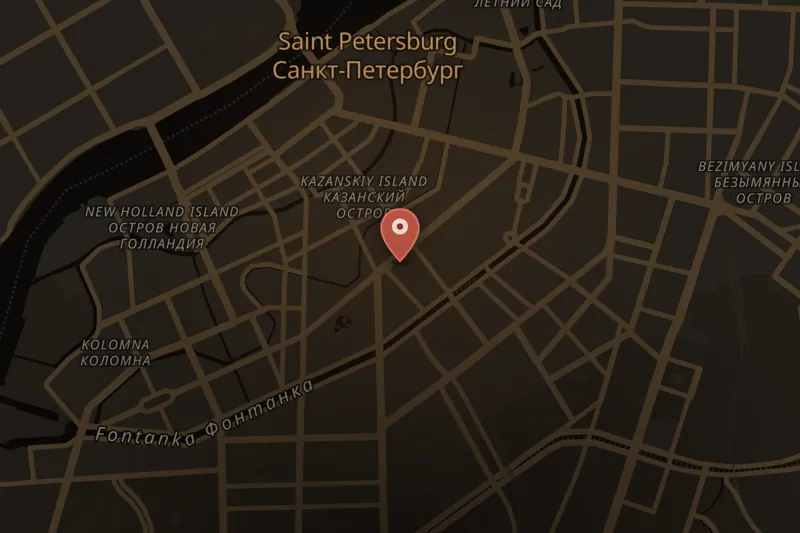
On 3 April 2017, an explosive device detonated aboard a train travelling through a tunnel between the Sennaya Ploshchad and Tekhnologichesky Institut stations of the Saint Petersburg Metro. The device, containing an estimated 200–300 grams of explosives, was detonated on the third carriage. Eyewitnesses reported the blast occurred near a door, and smoke quickly filled the platform. All metro stations in Saint Petersburg were closed immediately afterward, with services on Lines 3, 4, and 5 resuming later that evening. A second device, hidden inside a fire extinguisher and containing ball bearings, screws, shrapnel, and an equivalent of about 1 kilogram of TNT, was discovered and disarmed at Ploshchad Vosstaniya station.
Fifteen people died as a result of the attack — ten during the incident and five more later from their injuries — including thirteen Russian citizens, a Kazakh man, and an Azerbaijani woman. At least 64 people were injured according to the Russian Ministry of Health, with 39 hospitalised and six in critical condition; children were among the injured. The Investigative Committee of Russia stated that the train operator's decision to continue driving the train to the next station helped limit the casualty count.
Investigators identified the suspected perpetrator as Akbarzhon Jalilov, a 22-year-old ethnic Uzbek who was a Russian citizen born in Osh, Kyrgyzstan, in 1995. He had moved to Moscow around 2011 and, according to Russian media reporting, had worked variously as a cook and in a garage before disappearing weeks before the attack. Russian media reported that he had travelled to Syria in 2014 and trained with Islamic State militants, and authorities said he had ties to radical Islamic groups. Jalilov's DNA was reportedly found on a bag containing the fire extinguisher device, indicating he had left it inside a carriage, as some passengers had witnessed. Initial reports on the day of the attack misidentified a missing Kazakh IT student as the suspect; he was later correctly identified as a victim. Roughly two weeks after the bombing, Russia's FSB announced the detention in Moscow of Abror Azimov, described as the alleged mastermind who had trained the suicide attacker. On 26 April 2017, a group calling itself the Imam Shamil Battalion claimed responsibility via a statement posted by the SITE Intelligence Group, asserting the bomber had acted on instructions from al-Qaeda leader Ayman al-Zawahiri.
President Vladimir Putin, who was in Saint Petersburg — his home city — on the day of the attack, pledged a thorough investigation and later visited the site to lay flowers. Saint Petersburg declared three days of mourning. Security was heightened nationally, including reinstated metal detectors in metro systems and increased security at Pulkovo International Airport and in other Russian cities. International leaders and organizations, including the United Kingdom, the United States, the European Union, and NATO, offered condolences.


 Credit: CCTV cameraPublic domainSourceSOLVEDListen