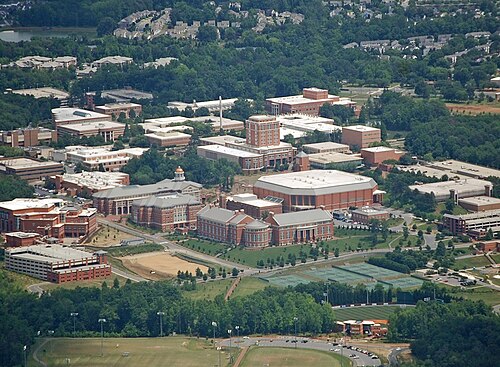
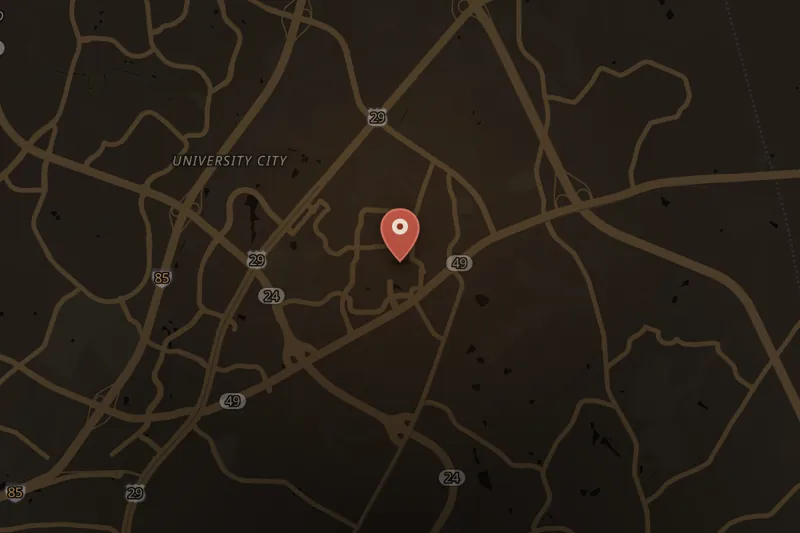
On April 30, 2019, at approximately 5:40 p.m., a gunman entered Room 236 of the Woodford A. Kennedy Building at the University of North Carolina at Charlotte, where roughly 60 students in a liberal studies course were delivering final group presentations. According to survivor accounts and the course instructor, the gunman entered the room and opened fire at random with a pistol. As the classroom emptied in panic, the instructor held open a rear door to help students escape. Student Riley Howell tackled the gunman, an act that survivors said gave classmates time to flee; Howell was shot multiple times and died of his injuries. Student Ellis Parlier was also killed. Four other students — Drew Pescaro, Sean DeHart, Rami Al-Ramadhan, and Emily Houpt — were wounded, three of whom underwent surgery.
Police were alerted within minutes, and UNC Charlotte Police Sergeant Richard Gundacker was the first officer to enter the classroom, disarming the gunman and recovering the firearm and additional magazines. The gunman was identified as Trystan Andrew Terrell, a former UNC Charlotte history student who had withdrawn from the university months earlier and had no prior criminal record. He was taken into custody within minutes of the shooting being reported and was later held at the Charlotte-Mecklenburg Jail.
Following his arrest, Terrell reportedly told investigators he had planned the attack for several months, had researched other mass shootings including the Sandy Hook Elementary School shooting, and had practiced at a shooting range beforehand. He was charged with two counts of murder, four counts of attempted first-degree murder, four counts of assault with a deadly weapon, and firearms offenses on educational property. A grand jury formally indicted him on May 6, 2019.
On September 19, 2019, Terrell pleaded guilty to two counts of first-degree murder, four counts of attempted first-degree murder, and discharging a firearm on educational property, with assault charges dropped as part of a plea agreement. In court, his defense attorneys described stress related to student debt, unemployment, and effects of his autism. Terrell apologized to victims' families. As part of the plea bargain, prosecutors did not seek the death penalty, and Terrell was sentenced to two consecutive life terms without the possibility of parole.
In the aftermath, UNC Charlotte canceled remaining classes and exams for the term, held a campus vigil attended by approximately 7,500 people, and formed a Remembrance Commission to determine how to memorialize the victims and decide the future use of the classroom where the shooting occurred. Howell was posthumously awarded military and civilian honors for his actions, and both he and Parlier received honorary degrees at commencement.

 Credit: Hashtag youre itCC BY-SA 4.0SourceSOLVEDListen