Start here
FRANCE24-EN-TOP-STORY-WHO-KILLED-ANNA-POLITKOVSKAYA-?
The creator's telling of the case, the strongest entry point on file.
Watch on YouTubeThe short answer
Russian journalist and human rights activist Anna Politkovskaya, a prominent critic of the Second Chechen War and of Vladimir Putin, was shot dead in her Moscow apartment building elevator on 7 October 2006.
FRANCE24-EN-TOP-STORY-WHO-KILLED-ANNA-POLITKOVSKAYA-?1 piece from 1 creator: ranked, with duplicates removed and short clips set aside.
Start here
The creator's telling of the case, the strongest entry point on file.
Watch on YouTubeTitles and descriptions are the creators’ own and may not reflect current legal status. The sourced facts are in the file below. Players load only when you press play. Suggest coverage we’re missing.
Anna Politkovskaya, a Russian journalist, writer and human rights activist known for her reporting on the Second Chechen War and her criticism of President Vladimir Putin, was found shot dead in the elevator of her apartment block in central Moscow on 7 October 2006. Police recovered a Makarov pistol and four shell casings near her body; she had been shot four times, including once in the head, in what was widely reported as a contract-style killing. The date coincided with Putin's 54th birthday, a fact widely noted in subsequent commentary.
Politkovskaya had authored *Putin's Russia: Life in a Failing Democracy*, which criticized Putin's handling of the Chechen conflict and accused the FSB of suppressing civil liberties. She had received death threats over her work, reported falling seriously ill after apparently being poisoned in September 2004 while traveling to the Beslan hostage crisis, and had described receiving threats of rape and a mock execution in Chechnya. Former FSB officer Alexander Litvinenko later said Politkovskaya had asked him whether her life was in danger shortly before her death; he was fatally poisoned with polonium weeks after publicly accusing Putin of sanctioning her murder.
Her killing prompted international condemnation and protests in Moscow, St. Petersburg, Yekaterinburg, Saratov, Krasnoyarsk, Helsinki, London, Paris, New York and Washington, as well as during a Putin visit to Dresden, Germany.
In August 2007, Russian authorities arrested ten suspects, including members of a Chechen organized-crime group and former FSB agents. Three men — Sergey Khadzhikurbanov, Dzhabrail Makhmudov and Ibragim Makhmudov — were tried for murder, while another suspect, Pavel Ryaguzov, faced lesser charges. On 19 February 2009, a jury acquitted the three defendants; the Supreme Court of Russia later overturned the acquittals on 25 June 2009 and ordered a retrial.
Rustam Makhmudov, alleged by investigators to have fired the fatal shot, was reported hiding in western Europe before being arrested in Chechnya in May 2011. Former police officer Dmitry Pavlyuchenkov was charged in July 2012 with planning the murder and, in December 2012, was convicted and sentenced to 11 years under a plea arrangement; he did not name whoever had hired him. In June 2014, five men were sentenced for the murder, with two receiving life sentences, bringing the total number convicted of charges related to her death to six. In November 2023, it was reported that Khadzhikurbanov received a presidential pardon after serving in Russia's invasion of Ukraine under a signed military contract.
Despite the convictions, commentators including the BBC noted that the identity and motive of whoever ordered the killing was never resolved, and questions remained about why Politkovskaya had reportedly been under FSB surveillance for at least two months before her death.
Politkovskaya reportedly fell violently ill after drinking tea while traveling to Beslan during the hostage crisis; she said she believed she had been poisoned.
At a Reporters Without Borders press freedom conference in Vienna, Politkovskaya spoke publicly about the danger she faced for her work.
Anna Politkovskaya was found shot dead in the elevator of her Moscow apartment block.
Hundreds rallied in Moscow to protest the murder; demonstrations also occurred in St. Petersburg.
Demonstrators called Putin a 'murderer' during his visit to Dresden, Germany.
Politkovskaya's funeral was held at Troyekurovsky Cemetery in Moscow.
Alexander Litvinenko, who had accused Putin of sanctioning Politkovskaya's murder, died after being poisoned with polonium.
Russian police arrested ten suspects believed to be involved in Politkovskaya's murder.
Rustam Makhmudov was reported identified as the suspected shooter.
Investigators announced three men — Sergey Khadzhikurbanov, Dzhabrail Makhmudov and Ibragim Makhmudov — would stand trial for murder; Pavel Ryaguzov was charged with lesser offenses.
The case against Khadzhikurbanov and the Makhmudov brothers was sent to court.
A jury unanimously acquitted Dzhabrail Makhmudov, Ibragim Makhmudov, and Sergei Khadzhikurbanov.
The Supreme Court of Russia overturned the acquittals and ordered a retrial.
Rustam Makhmudov was arrested in Chechnya.
Former police officer Dmitry Pavlyuchenkov was charged with planning the murder.
Dmitry Pavlyuchenkov was found guilty and sentenced to 11 years in prison under a plea deal.
Five men were sentenced for the murder, two receiving life sentences.
It was reported that Sergei Khadzhikurbanov had received a presidential pardon after serving in Russia's invasion of Ukraine.
Victims first. Every legal label is set from public records and court outcomes, not from the prose.
Russian journalist and human rights activist shot dead in her Moscow apartment building on 7 October 2006.[3]
Former police lieutenant colonel charged with planning the murder in 2012; convicted and sentenced to 11 years in prison under a plea deal in December 2012.[3]
Initially tried for murder and acquitted in February 2009; convicted after retrial in June 2014.[3]
Initially tried for murder and acquitted in February 2009; convicted after retrial in June 2014.[3]
Convicted by the Moscow City Court as the gunman who shot and killed journalist Anna Politkovskaya in 2006; sentenced to life imprisonment on 9 June 2014.[3]
Initially tried for murder and acquitted in February 2009; convicted after retrial in June 2014; later reported pardoned in 2023 after military service in Ukraine.[3]
FSB colonel charged with lesser offenses including abuse of office and extortion in connection with the case.[3]
From the record
Coverage is not a source: every fact in this file rests on the records below.
Are you family of someone named in this file? Corrections and removal requests from victims’ families are prioritized.
 Credit: Soviet governmentPublic domainSourceSOLVEDListen
Moscow, Soviet Union (Archive of the President of the Russian Federation) · 1930s
Lists of extrajudicially accused persons submitted for approval to Stalin and other Politburo members during the Soviet Great Purge, resulting in mass executions by shooting.
 Credit: евгений измайловCC BY-SA 3.0SourceSOLVEDListen
Apartment buildings in Buynaksk, Moscow, and Volgodonsk, Russia · 1990s
A series of explosions struck apartment blocks in Buynaksk, Moscow, and Volgodonsk in September 1999, killing more than 300 people and helping trigger the Second Chechen War amid disputed accounts of who was responsible.
 Credit: Ludvig14CC BY-SA 3.0SourceSOLVEDListen
Mokhovaya Street, near Red Square and the Moscow Kremlin, Moscow, Russia · 2000s
A suicide bombing on Mokhovaya Street near Red Square in Moscow on 9 December 2003 killed six people and injured 14, after a female suicide bomber detonated an explosive belt on a busy street close to the Kremlin.
 Credit: CBS News / Travis Alexander (personal photo)Editorial useSourceSOLVEDListen
Mesa, Arizona, United States · 2000s
Travis Alexander, 30, was stabbed, slashed, and shot to death in his Mesa, Arizona home on June 4, 2008. His ex-girlfriend, Jodi Arias, was convicted of first-degree murder in 2013 and sentenced to life without parole in 2015 after two juries deadlocked on the death penalty.
 Credit: Prugna at Italian WikipediaCC BY-SA 4.0SourceSOLVEDListen
Via della Pergola 7, Perugia, Italy · 2000s
British exchange student Meredith Kercher was found murdered in her Perugia flat on 2 November 2007. Rudy Guede was convicted of her sexual assault and murder in a fast-track trial. Kercher's roommate Amanda Knox and Knox's boyfriend Raffaele Sollecito were separately convicted, then acquitted, reconvicted, and finally acquitted and declared innocent by Italy's Supreme Court of Cassation in 2015.
 SOLVEDListen
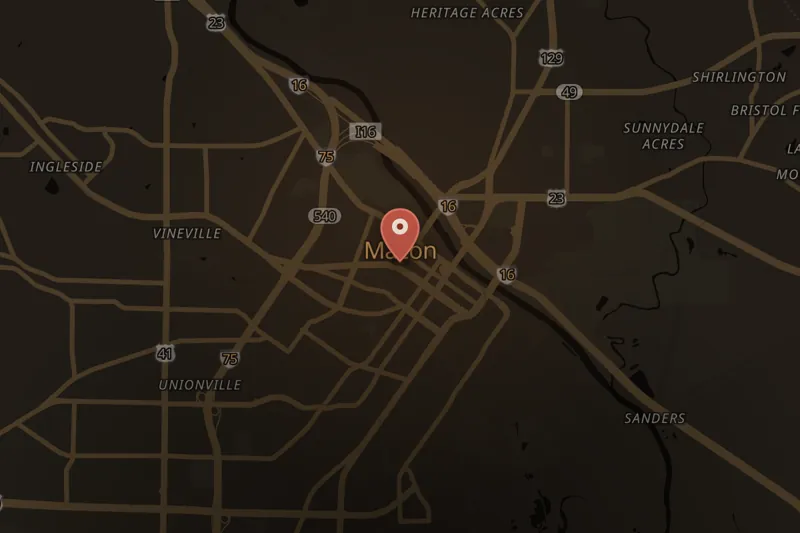
Macon, Georgia, United States · 2011
Lauren Giddings, a recent Mercer University School of Law graduate studying for the bar exam, was strangled and dismembered in Macon, Georgia, in June 2011 by her neighbor and former classmate Stephen Mark McDaniel, who pleaded guilty in 2014.