Skip to content
Casepin

Unsolved case · 1980

1980 Camarate Air Crash

Also known as 1980 Camarate air crash · Camarate air crash

UNSOLVED
Updated
Updated Jul 13, 2026
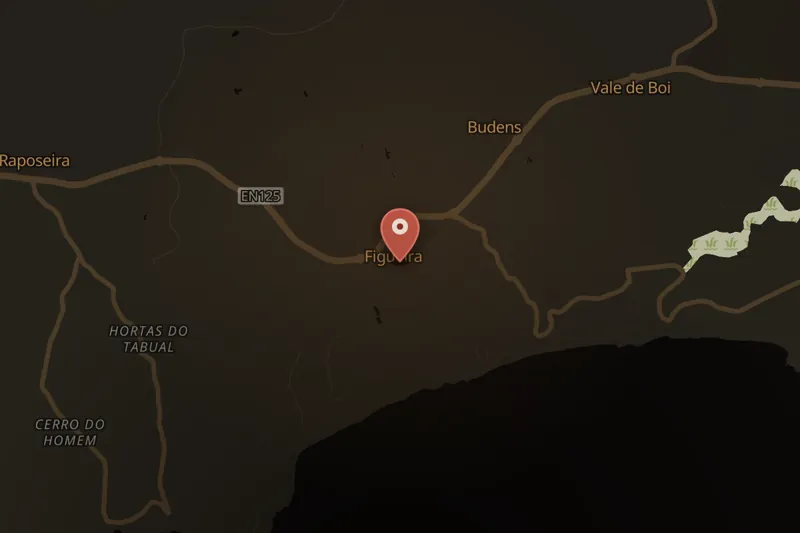
Camarate, Lisbon, PortugalView on the map

The short answer

1980 Camarate Air Crash in brief

A chartered aircraft carrying Portugal's prime minister and defense minister crashed shortly after takeoff near Lisbon in December 1980, killing both men. Courts and parliamentary inquiries have never agreed on whether the crash was an accident or a bombing, and no one has ever been charged.

Key facts

Year
1980
Place
Camarate, Lisbon, Portugal
Status
UNSOLVEDUnsolved
Victims
Adelino Amaro da Costa and Francisco de Sá Carneiro
Outcome
No conviction on file

The coverage index

Where to watch & listen

No one's coverage is attached to this file yet.

Know great coverage of this case?

A documentary, a podcast episode, a careful long-form video. Suggest it and an editor will review it before it appears here.

Suggest coverage for 1980 Camarate Air Crash

The case file

What happened

On 4 December 1980, a chartered aircraft crashed shortly after taking off from Lisbon's Portela Airport, killing Portugal's Prime Minister, Francisco de Sá Carneiro, and Defense Minister Adelino Amaro da Costa. Sá Carneiro had been elected Prime Minister on 3 January 1980, following the 1974 Carnation Revolution, with da Costa serving as the country's first civilian Defense Minister. The two men were traveling to a campaign rally three days ahead of Portugal's 1980 presidential election. Da Costa had chartered the Cessna 421A Golden Eagle for the trip; Sá Carneiro, who had planned to travel separately, joined at the last minute with his partner, Snu Abecassis. Witnesses reported seeing the aircraft trailing debris before it struck high-voltage power lines and crashed in a fireball.

Portugal's aviation authority initially attributed the crash to a lack of fuel in one of the aircraft's tanks, and a 1981 police report ruled out any criminal cause. The Attorney General suspended the inquiry in 1983, and parliamentary investigations in 1990 and 1991 did not reopen the case. A fifth parliamentary inquiry in 1995 prompted a judicial reopening: the victims' bodies were exhumed, and a forensic report concluded that an in-flight explosion had probably not occurred, though it did not rule out the possibility.

A private prosecution brought by the victims' relatives was declared time-barred in 1996, except for the case against one alleged conspirator, whose statute of limitations was suspended because he was separately detained in Brazil. In that surviving case, a district court in 1998, and the Court of Appeal in 2000, both reaffirmed that the crash had been an accident, the latter in an 800-page judgment. A 2001 bid to reopen the matter on the strength of new evidence was again ruled time-barred, and Portugal's Supreme Court dismissed further legal challenges in 2006. Relatives of the victims then appealed to the European Court of Human Rights in 2007, arguing that delays by Portuguese authorities had unfairly denied them access to a court; the court ruled against them in 2011, finding no negligence or failure to act.

Even as the courts closed the door on prosecution, a parliamentary inquiry reached a different conclusion: its eighth investigation into the crash, reporting in 2004, found unanimously that the aircraft had been brought down by an explosive device. After the case's 15-year statute of limitations lapsed, individuals came forward publicly describing an alleged role in planning an attack on the aircraft, including a claim that a device had been built to start a pre-flight fire rather than cause a fatal crash. None of these claims has led to criminal charges or been independently verified. No one has ever been charged in connection with the crash, and investigators remain divided on whether it was an accident or an act of sabotage.

16 dated entries · 1980–2011

Timeline

  1. Francisco de Sá Carneiro is elected Prime Minister of Portugal, with Adelino Amaro da Costa becoming the country's first civilian Defense Minister.

  2. A chartered Cessna 421A Golden Eagle crashes shortly after takeoff from Lisbon's Portela Airport, killing Sá Carneiro and Amaro da Costa.

  3. A police report rules out criminal action, attributing the crash to a lack of fuel in one of the aircraft's tanks.

  4. Portugal's Attorney General suspends the criminal investigation.

  5. Parliamentary investigations in 1990 and 1991 examine the crash without reopening the case.

  6. A fifth parliamentary inquiry leads to the judicial investigation being reopened; the victims' bodies are exhumed and a forensic report finds an in-flight explosion probably did not occur, though it does not rule out the possibility.

  7. A private prosecution by the victims' relatives is declared time-barred, except for the case against one alleged conspirator, whose statute of limitations is suspended due to his detention in Brazil on unrelated matters.

  8. A district court reaffirms that the crash was an accident in the surviving private prosecution.

  9. The Court of Appeal upholds the accident finding in an 800-page judgment.

  10. A bid to reopen the case on the grounds of new evidence is ruled time-barred.

  11. The eighth parliamentary inquiry into the crash concludes unanimously that it was caused by an explosive device aboard the aircraft.

  12. A former security agent publicly claims to have built an explosive device intended for use against the Defense Minister's aircraft, saying it was designed to start a fire before takeoff rather than cause a fatal crash.

  13. Portugal's Supreme Court dismisses further legal challenges in the case.

  14. Relatives of the victims appeal to the European Court of Human Rights, alleging that delays by Portuguese authorities unfairly denied them access to a court.

  15. The European Court of Human Rights rules against the victims' relatives, finding no negligence or failure to act by Portuguese authorities.

  16. An individual publishes an online statement describing an alleged role in planning an attack on the aircraft; the claim does not lead to criminal charges.

2 named in this file

People

Victims first. Every legal label is set from public records and court outcomes, not from the prose.

  • Adelino Amaro da Costa

    VICTIM

    Defense Minister of Portugal; killed when the chartered aircraft crashed shortly after takeoff.[3]

  • Francisco de Sá Carneiro

    VICTIM

    Prime Minister of Portugal; killed when the chartered aircraft crashed shortly after takeoff.[3]

3 cited

Sources

Coverage is not a source: every fact in this file rests on the records below.

  • 2 Press
  • 1 Encyclopedic
  1. 1980 Camarate plane crash

    EncyclopedicWikipediaAccessed Jul 12, 2026

Trust

Record history

First published
Jul 13, 2026
Corrections
1
  1. Jul 13, 2026Correction

    Catalog QA: moved to the archive tier without removing the public dossier.

Are you family of someone named in this file? Corrections and removal requests from victims’ families are prioritized.