Following the outbreak of the German–Soviet war on 22 June 1941, Soviet authorities in Minsk faced the prospect of German forces overrunning the city and freeing political prisoners held in its two main prisons, Pishchalauski Castle ("Volodarka") and the NKVD investigative prison known as "Amerikanka." On 24 June 1941, NKVD chief Lavrentiy Beria ordered regional NKGB offices to shoot political prisoners who could not be evacuated. In Minsk, this order combined with a chaotic evacuation effort that became one of several "death marches" carried out during the Soviet withdrawal from Belarus.
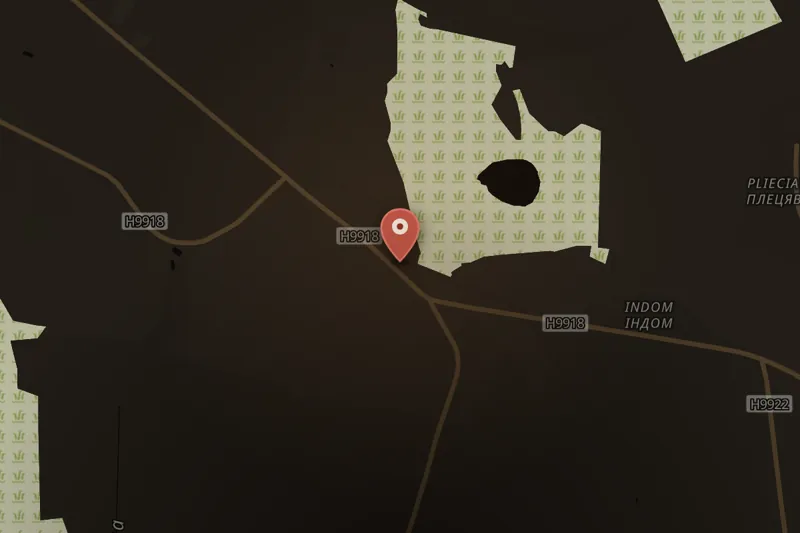
Beginning around the night of 22–23 June, NKVD officers reportedly began killing some prisoners inside the Minsk prisons. Surviving prisoners — estimated by various sources at between roughly 2,000 (per Soviet documentation) and as many as 20,000 (per Polish investigators and witness Janusz Prawdzic-Szlaski) — were marched on foot beginning 24–25 June along the Mogilev road under NKVD convoy troops, including the 42nd NKVD Convoy Brigade. During the multi-day march, prisoners suffered from exhaustion, heat, hunger, and thirst; those unable to keep pace, attempting to escape, or deemed dangerous were shot or bayoneted by guards. Several mass executions occurred along the route near Chervyen, including shootings at a gravel pit, an alder grove, and roadside forests; in at least one instance, a column of about 1,200 prisoners escaped death when their convoy leader tore up a shooting order and took his own life, causing the guards to flee.
On 26–27 June, survivors reached Chervyen, where they were held in the local prison. NKVD officers there separated prisoners by sex and category. On 27 June, a telegram from NKVD prison-department head Mikhail Nikolsky ordered that 400 prisoners be retained and the rest executed; because prisoner files had been destroyed by German bombing, the selection for execution was largely random. Groups of several hundred men were marched out overnight and into 27 June and shot in nearby forests; bodies were reportedly burned in at least one instance. Only a small number of prisoners in each group are recorded as having survived, including Prawdzic-Szlaski. Some women prisoners survived by hiding within the prison. When NKVD officers fled Chervyen following a German air raid, remaining prisoners were freed by local residents, though many recaptured escapees were shot by Soviet patrols; survivors of the march were generally reported to have received assistance from the local Belarusian population.
The precise death toll remains unresolved. Soviet documentation records lower figures (such as 209 or 500 shot), while Polish investigators, citing witness testimony, estimated up to 18,000 dead assuming roughly 20,000 prisoners were originally evacuated; historian Bogdan Musiał considers such high estimates likely overstated but believes the toll should be counted in the thousands. A Polish state investigation (1992–2018) identified 348 named victims before being discontinued in 2018 due to the deaths of identified perpetrators and the inability to identify others. The Institute of National Remembrance characterized the killings as a communist crime and crime against humanity. Memorials to victims, including Lithuanian, Belarusian, and Polish commemorative markers, have been erected at Chervyen since 1990.


 SOLVEDListen


