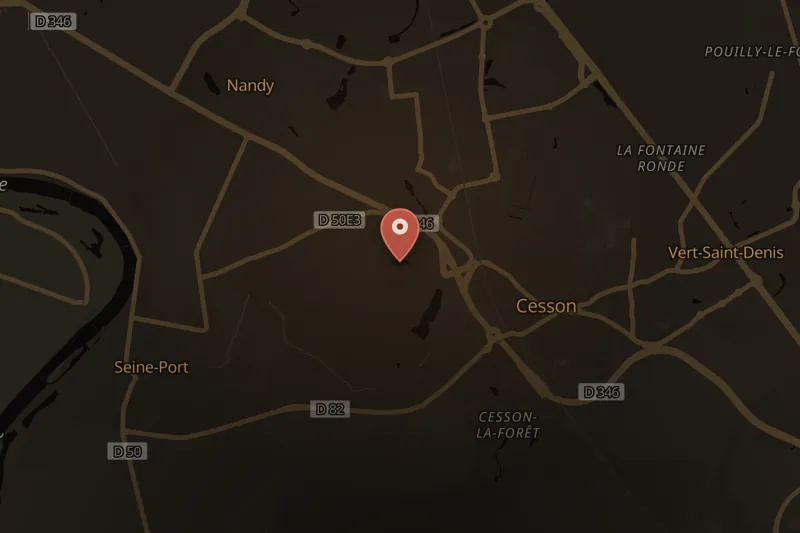
The Courrier de Lyon case is a French criminal case dating from the period of the French Revolution. During the night of 27-28 April 1796, a mail coach travelling from Paris toward Lyon was ambushed outside Paris, in the commune of Vert-Saint-Denis, by several men. The coach was carrying a large sum of money, reported as seven million livres, that was intended for the Army of Italy. Both the driver and the armed guard were killed during the attack. A third man who was aboard the coach, travelling under an assumed name, took part in the killing and afterwards disappeared.
Following investigations, six men were arrested: Etienne Couriol, Charles Guenot, Joseph Richard, Antoine Bruer, David Bernard and Joseph Lesurques. After a trial, three of them - Couriol, Bernard and Lesurques - were executed. Before his execution, Couriol stated that Lesurques was innocent, saying that Lesurques had been arrested only because he resembled Andre Dubosq, one of the men who had actually attacked the coach.
Couriol's final statements also led to the arrest of further participants. Joseph Durochat had travelled aboard the coach under the name "Laborde"; Pierre Vidal was identified as the person who devised the plan to rob the coach; and Louis Roussy was named as one of those who carried out the killings. Each of these men was convicted and executed. Andre Dubosq was likewise arrested and executed.
Dubosq's trial did not lead to the judgement against Lesurques being overturned, because the witnesses who had identified Lesurques continued to maintain that they had seen Lesurques rather than Dubosq. Lesurques' family spent much of the 19th century trying to rehabilitate his name, but none of the committees convened to re-examine the case found sufficient grounds to clear him. Lesurques is nonetheless widely regarded in France as having been innocent, and the case is remembered there as a well-known example of a miscarriage of justice.
The case has had a lasting presence in French and English culture. It was adapted for the stage, including a French play by Paul Siraudin and Louis-Mathurin Moreau and the 1854 play The Courier of Lyons by Charles Reade, which Reade rewrote in 1877 as The Lyons Mail for Henry Irving at the Lyceum Theatre in London. These works were subsequently adapted into several films, and the case was featured in the 1937 French film L'Affaire du courrier de Lyon.