Active case
Dangrek Incident
Documents violence · ongoing investigation — written to inform, not to shock.

In early 1979, Vietnamese forces overthrew the Democratic Kampuchea regime, and fighting swept toward Khmer Rouge camps on the Cambodia–Thailand border. Facing famine and fear of conscription or retaliation, large numbers of Cambodians sought asylum in Thailand; by the fall of 1979 approximately 140,000 Khmer refugees had crossed, equal to about one percent of Thailand's population. Dega people fleeing the Montagnard resistance also sought passage, but many were caught by Khmer Rouge forces under Son Sen and forced to fight the Vietnamese; mines were planted around detention camps to prevent their escape.
Thailand initially allowed Khmer Rouge combatants to cross for refuge before returning to Cambodia, while blocking civilian refugees "as much as possible." As famine worsened, Thailand laid land mines and closed its borders, leading to refugee encampments on the Cambodian side. UNHCR and researcher Fiona Terry reported pushbacks of refugees in late April and again in May 1979.
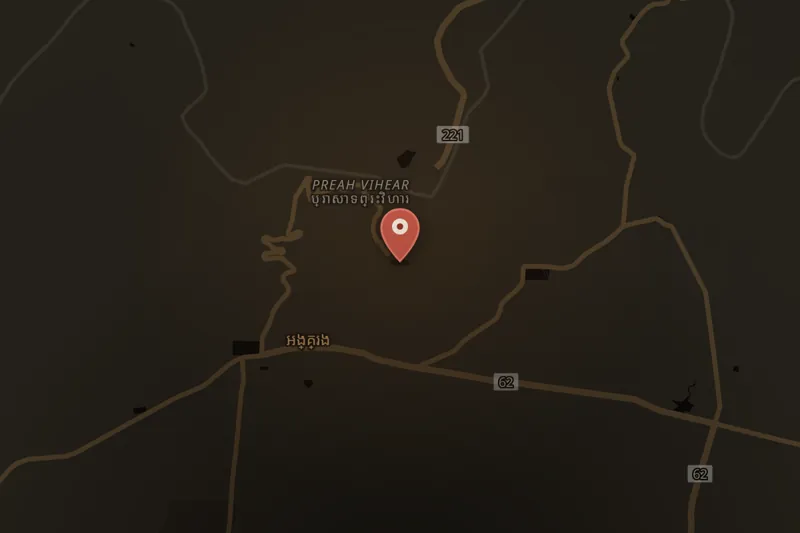
On June 5, 1979, Frenchwoman Yvette Pierpaoli traveled to the border and found hundreds of Cambodians detained behind barbed wire, prompting an emergency response effort. According to New York Times correspondent Henry Kamm's June 12 report, Thai officials decided to bus tens of thousands of refugees to the Preah Vihear area of the Dangrek Mountains and force them at gunpoint down a cliff into Cambodia, despite acknowledging the presence of landmines and booby traps. William Shawcross reported that 110 buses arrived at Nong Chan on June 8, 1979, to begin transporting refugees. On June 12, Pierpaoli, U.S. diplomat Lionel Rosenblatt, and two others attempted a rescue at Wat Koh with a list of roughly 25,000 approved-for-resettlement refugees; about 1,500 were saved before Thai officials expelled the group. Most listed refugees were still forced back into Cambodia, and Thai soldiers used physical violence to compel refugees onto buses, confiscating money and property.
Refugees, a majority of them women and children, were forced down a mountainous, forested ridge into minefields; former Lon Nol soldiers were sent first and their bodies helped clear a path. Shawcross reported that a group of refugees who tried to return under a white flag were shot by Thai soldiers after their valuables were taken. Approximately 10,000 refugees remained trapped beneath Preah Vihear for over a week into July, enduring scarce food and water, gunfire directed at those attempting to return, and deaths from disease and exposure.
Death toll estimates vary: Shawcross put the number forced down the cliff at 43,000–45,000; W. Courtland Robinson cited more than 42,000 by June 15. A 1991 Human Rights Watch/Physicians for Human Rights report said thousands died, mostly from dehydration, mines, and diarrhea. Judy Mayotte's 1992 book noted no official death count existed, calling 10,000 dead from shootings and mines alone a "conservative estimate," while UNHCR cited a minimum of 3,000 deaths from shootings, falls, or landmines.
In July, under international pressure, Thailand agreed to readmit 1,000 refugees "who can still be saved." The events prompted a July 23, 1979 Geneva conference on Indochinese refugees and contributed to the later establishment of Thai border refugee camps, including Sa Kaeo and Khao-I-Dang. <parameter name="timeline">[{"date": "1979-01", "event": "Vietnamese forces overthrow the Democratic Kampuchea (Khmer Rouge) regime and advance toward the Cambodia–Thailand border."}, {"date": "1979-03", "event": "Thailand lays land mines and closes its border to block an anticipated influx of Cambodian refugees, prompting refugee encampments on the Cambodian side."}, {"date": "1979-04", "event": "UNHCR and researchers report thousands of Cambodian refugees who entered Thailand are pushed back."}, {"date": "1979-05", "event": "UNHCR reports further pushbacks of refugees after a three-week pause."}, {"date": "1979-06-05", "event": "Yvette Pierpaoli travels to the Thai border and observes hundreds of Cambodians detained behind barbed wire."}, {"date": "1979-06-08", "event": "110 buses arrive at Nong Chan to begin transporting thousands of refugees toward Preah Vihear."}, {"date": "1979-06-12", "event": "New York Times publishes Henry Kamm's report on Thailand's plan to force refugees down the Preah Vihear cliff; Pierpaoli and Lionel Rosenblatt attempt a rescue at Wat Koh with 22 buses."}, {"date": "1979-06-15", "event": "More than 42,000 refugees reported forced down the cliff into Cambodia, per W. Courtland Robinson."}, {"date": "1979-07", "event": "Approximately 10,000 refugees remain trapped beneath Preah Vihear amid scarce food, water, and continued danger from mines and gunfire; Thailand later agrees to readmit 1,000 refugees."}, {"date": "1979-07-23", "event": "World Council of Churches-convened meeting on Indochinese refugees held in Geneva under UNHCR auspices, attended by representatives of more than 60 nations."}, {"date": "1979-10", "event": "Thai Prime Minister Kriangsak Chamanan visits the border and is reported visibly distressed by conditions."}, {"date": "1979-11", "event": "Sa Kaeo Refugee Camp is erected; Rosalynn Carter visits Ban Kaeng camp; Khao-I-Dang, the largest refugee camp, opens."}, {"date": "1980-01", "event": "Thai border closed again amid concerns over demographic and geopolitical impact of continued refugee influx."}]

Key facts
- Victims
- Mengly Jandy Quach, Teeda Butt Mam, Kassie Neou
- Date
- 1979
- Location
- Preah Vihear, Dangrek Mountains, Cambodia–Thailand border
- Case status
- cold
Case timeline
No timeline entries are attached yet.
Best coverage
No approved coverage links are attached yet.
People
Mengly Jandy Quach
VICTIMKhmer refugee among those forced toward Preah Vihear who later described the ordeal in an autobiography or oral history.
citation on file
Yvette Pierpaoli
LAW ENFORCEMENTFrenchwoman and humanitarian aid worker who organized an emergency rescue effort at the Thai border, attempting to save refugees at Wat Koh.
citation on file
Teeda Butt Mam
VICTIMKhmer refugee among those forced toward Preah Vihear who later described the ordeal in an autobiography or oral history.
citation on file
Lionel Rosenblatt
LAW ENFORCEMENTAmerican diplomat who joined Pierpaoli in a rescue attempt at Wat Koh, compiling and reading refugee names approved for resettlement.
citation on file
Kassie Neou
VICTIMKhmer refugee among those forced toward Preah Vihear who later described the ordeal in an autobiography or oral history.
citation on file
Places
Common questions
- What happened to the victim?
- In June 1979, Thai authorities forced tens of thousands of Cambodian refugees off buses at Preah Vihear in the Dangrek Mountains and down a mined cliff back into Cambodia, resulting in thousands of deaths from landmines, gunfire, dehydration, and disease.
- Where did the crime happen?
- Preah Vihear, Dangrek Mountains, Cambodia–Thailand border.
- What is the current status of the case?
- Status: cold. Last verified July 2026.
Sources
- Dangrek Incidentwikipedia · Wikipedia · 2026-07-07
- Thais Deport 30,000 Cambodians While Others Continue To Arrivenews · The New York Times · 2026-07-07
- Geneva Conference on Refugees Faces Divisionsnews · The Washington Post · 2026-07-07
Last verified JUL 2026
Case updates
JUL 07, 2026 · Source review
Source article revised on Wikipedia — flagged for re-verification
Source