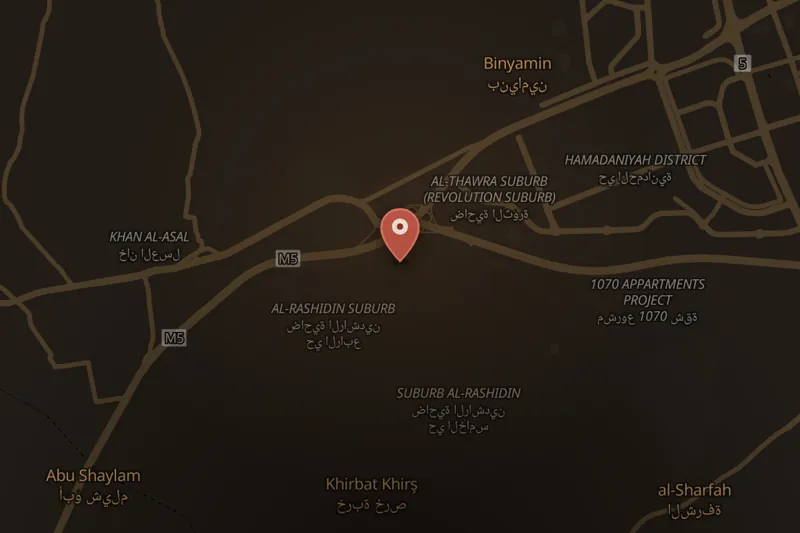
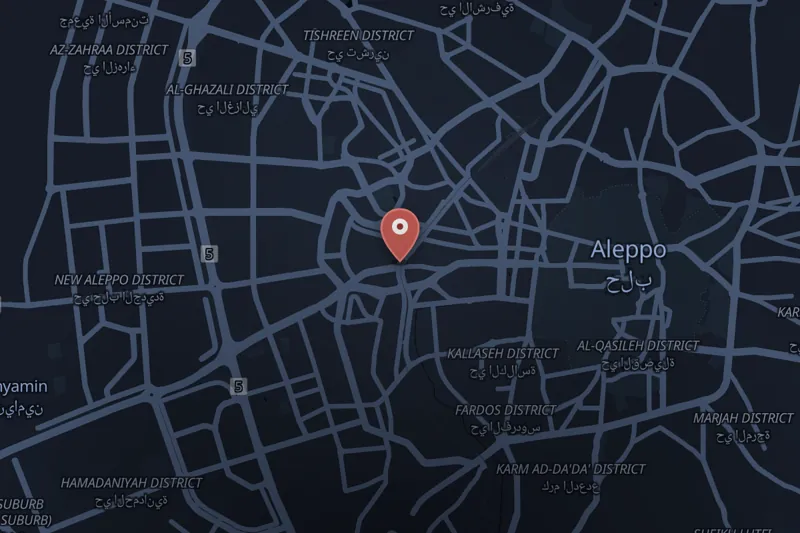
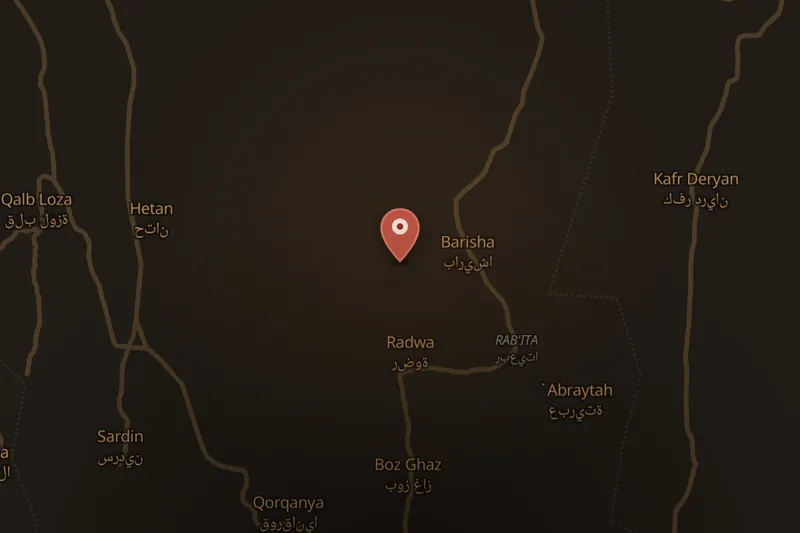
On the night of October 26–27, 2019, United States Joint Special Operations Command forces, including 1st SFOD-D (Delta Force) operators and U.S. Army Rangers from the 75th Ranger Regiment, launched an air assault—codenamed Operation Kayla Mueller—on a compound outside Barisha, Idlib Governorate, Syria. The operation targeted Abu Bakr al-Baghdadi, the leader and self-proclaimed caliph of the Islamic State. According to CENTCOM commander General Kenneth F. McKenzie Jr., Baghdadi fled into a tunnel beneath the compound while wearing a suicide vest and carrying two children. Cornered by a military working dog and an explosive ordnance disposal robot, he detonated the vest, killing himself and the two children and collapsing the tunnel. DNA testing conducted within 15 minutes confirmed his identity.
The operation followed an extended intelligence effort involving the CIA's Special Activities Center, Iraqi and Kurdish intelligence services, and the Kurdish-led Syrian Democratic Forces (SDF), which stated it had spent five months gathering intelligence on Baghdadi's location. An IS militant who had defected and become an informant for the SDF reportedly provided a detailed layout of the compound and obtained a blood sample used for DNA matching. Turkish authorities were informed of the operation in advance to avoid unintended clashes but were not told the target's identity.
During the raid, five IS members inside the compound—four women and one man—were killed after not responding to surrender commands; U.S. forces stated they were suspected of wearing suicide vests. Non-combatants, including 11 children, were detained, checked, and later released. Two adult male captives were taken along with electronic devices and documents. According to the Syrian Observatory for Human Rights, nine people died in the operation in addition to the two children killed by Baghdadi's vest. A local Hurras al-Din commander who owned the house where Baghdadi was staying was also killed by Delta Force. The compound was subsequently destroyed by airstrikes to prevent it from becoming a site of veneration.
President Donald Trump announced Baghdadi's death at a press conference the next day, describing the raid in detail and stating that Baghdadi died "whimpering and crying and screaming," a characterization that Joint Chiefs of Staff Chairman Mark Milley and other officials could not confirm, noting Trump had only viewed silent drone footage. Baghdadi's body was buried at sea with Islamic rites, according to anonymous U.S. officials.
A December 2019 NPR report, later substantiated through a Freedom of Investigation Act lawsuit, found that two civilian cousins, Khaled Mustafa Qurmo and Khaled Abdel Majid Qurmo, were killed and a third man, Barakat Ahmad Barakat, was injured when U.S. helicopters fired on their van near the raid site; a subsequent CENTCOM "credibility assessment" concluded forces had acted appropriately after perceiving the men as hostile, and the U.S. military did not compensate the families. IS confirmed Baghdadi's death on October 31, 2019, and named a successor.


 UNSOLVEDListen