Mauro De Mauro was an Italian investigative journalist for the Palermo newspaper L'Ora, known for reporting that exposed ties between organized crime and public officials in Sicily. In 1962 he published one of the first detailed maps of the Sicilian Mafia's structure, later corroborated by Mafia informant Tommaso Buscetta, and republished a 1937 Mafia member's testimony that had gone largely unnoticed for decades. His reporting made him a marked figure within the Mafia; colleagues said the organization held off acting against him because his death would have drawn unwanted attention.
In 1970, De Mauro renewed an earlier investigation into the 1962 plane-crash death of Enrico Mattei, president of the Italian state energy company Eni, at the request of film director Francesco Rosi, who was preparing a film about Mattei. De Mauro told colleagues he had found 'a scoop that is going to shake Italy' and had come to believe Mattei's aircraft had been sabotaged. Two days before he vanished, he interviewed Graziano Verzotto, a former Eni public-relations official who had been aboard Mattei's plane the day before it crashed.
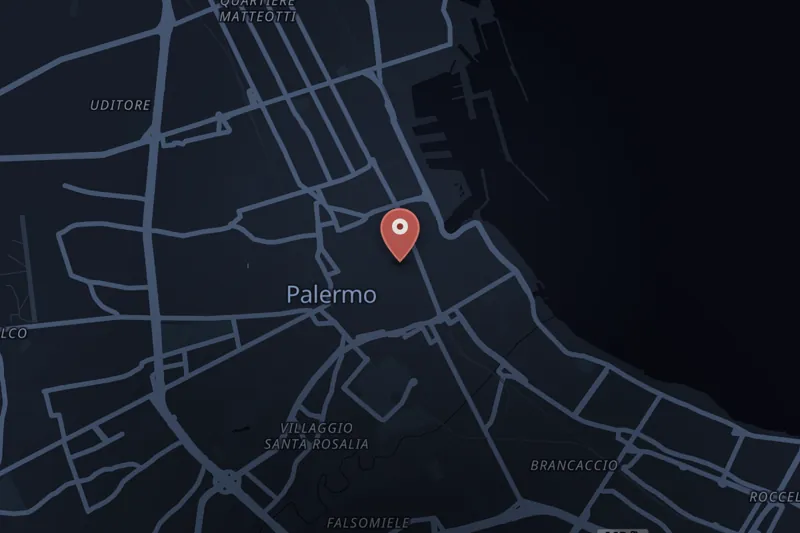
On the evening of 16 September 1970, De Mauro was abducted outside his home on via delle Magnolie in Palermo. A large-scale search involving police, Carabinieri, helicopters and dogs failed to locate him, and his body has never been recovered. Carabinieri investigators including Colonel Carlo Alberto Dalla Chiesa pursued a theory that De Mauro had been killed after uncovering a Sicily-United States drug-trafficking network, while police inspector Boris Giuliano focused on his Mattei reporting after finding that notes and a tape had disappeared from De Mauro's office. Giuliano stated publicly that officials in Rome did not want the investigation to reach its conclusion.
Mafia informants who came forward in later decades gave competing, sometimes overlapping accounts. In May 1994, Buscetta stated that the Sicilian Mafia had killed Mattei on the American Mafia's behalf and had abducted De Mauro to stop him from publishing what he had learned. Other Mafia informants linked the killing instead to De Mauro's own wartime connections, saying he had learned of the 1970 Golpe Borghese coup plot through his fascist-era ties. This new testimony led Italian authorities to reopen the case in 2001.
In April 2006, Sicilian Mafia boss Salvatore Riina stood trial at the Court of Palermo as the sole surviving defendant in De Mauro's killing. Prosecutor Antonio Ingroia argued in his 2011 closing statement that De Mauro was killed both to protect Mafia secrets about Mattei's death and to prevent exposure of the Borghese coup plot. On 10 June 2011, the court acquitted Riina for insufficient evidence; De Mauro's daughter, Franca, said afterward that the family still had 'no answer about what happened that day.' The Palermo Appeal Court upheld the acquittal in January 2014, and Italy's Supreme Court of Cassation issued a final absolution in June 2015. No one has ever been convicted in connection with De Mauro's disappearance, and his body has never been found.


 SOLVEDListen


