Start here
"Solved" By The Russian Government After 61 Years? | Dyatlov Pass Incident #Crimetober

Kendall Rae's 29-minute breakdown, the fullest single telling on file.
Watch on YouTubeCold case · 1959
Also known as Death of the Dyatlov Hiking Group · Gibel turgruppy Dyatlova
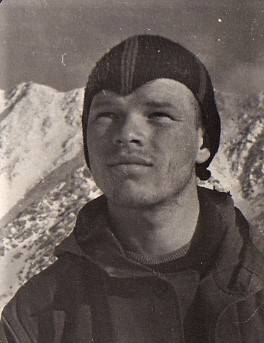 Igor Dyatlov (group leader/namesake) + 8 fellow hikers (9 dead total)Credit: Petr Bartolomey / Wikimedia CommonsCC BY-SA 2.0Source
The short answer
Nine experienced Soviet ski hikers led by Igor Dyatlov died in the northern Ural Mountains on 1 or 2 February 1959 after cutting their way out of their tent and fleeing into a snowstorm inadequately dressed for the cold; Russian authorities reopened the case in 2019 and announced in 2020 that an avalanche was the most likely cause, though the deaths remain widely described as unexplained and some researchers dispute that conclusion.
"Solved" By The Russian Government After 61 Years? | Dyatlov Pass Incident #CrimetoberKendall Rae · 29 min3 pieces from 3 creators: ranked, with duplicates removed and short clips set aside.
Start here
Kendall Rae's 29-minute breakdown, the fullest single telling on file.
Watch on YouTube 15 min
The Camera of 9 Dead Hikers Reveals Chilling Mystery That Can't Be Explained: Dyatlov Pass Incident
 Explore With UsVideo · YouTube · 15 min · 2020
They call this place Dead Mountain for a reason (Dyatlov Pass incident)
 MrBallenVideo · YouTube · 14 min · 2020
Titles and descriptions are the creators’ own and may not reflect current legal status. The sourced facts are in the file below. Players load only when you press play. Suggest coverage we’re missing.
In 1959, Igor Dyatlov, a 23-year-old radio engineering student at the Ural Polytechnical Institute in Sverdlovsk Oblast, Soviet Union, organized a Category III ski expedition toward the mountain Otorten in the northern Urals. The Sverdlovsk city route commission confirmed the ten-person group, including newly added ski instructor Semyon Zolotaryov, which left Sverdlovsk (present-day Yekaterinburg) on 23 January 1959 after receiving its route book.
The hikers reached Ivdel by train on 25 January and Vizhai, the last inhabited settlement, by truck the next day, setting out on foot on 27 January. On 28 January one member turned back because of health problems, leaving nine to continue; that member later proved to be the expedition's only survivor. On 1 February, worsening weather caused the group to lose their bearings, and rather than descend to a sheltered forest, they made camp on the open eastern slope of Kholat Syakhl.
No telegram arrived by 12 February, and after relatives pressed for action, the institute sent rescue parties on 20 February, later joined by army and police units. On 26 February searchers found the group's tent cut open from inside on Kholat Syakhl, with nine sets of footprints — in socks or bare feet — leading toward the woods before vanishing under snow. Near a fire at the forest's edge lay Krivonishenko and Doroshenko, dressed only in underwear; on the slope above lay Dyatlov, Kolmogorova, and Slobodin, positioned as if trying to return to camp. The remaining four — Dubinina, Kolevatov, Zolotaryov, and Thibeaux-Brignolles — were not found until 4 May, buried under four metres of snow in a ravine; some wore clothing taken from those who died earlier.
Medical examination attributed the first five deaths to hypothermia, though Slobodin had a non-fatal skull crack. The four bodies recovered in May had fatal injuries: Thibeaux-Brignolles had major skull damage, and Dubinina and Zolotaryov had severe chest fractures that forensic expert Boris Vozrozhdenny compared in force to a car crash, with no external wounds. The same four, recovered from a stream, had soft-tissue damage to the head and face — Dubinina missing her tongue, eyes, and lips, Zolotaryov his eyeballs, and Kolevatov his eyebrows — which Vozrozhdenny attributed to time in the water rather than an attack. Investigators questioned local Mansi residents but found no evidence of a struggle, and radiation was detected on one victim's clothing. Lev Ivanov, the police officer who led the inquest, closed it in May 1959 citing an unspecified 'compelling natural force'; in 1990 he published an article admitting no rational explanation had been found.
Russian authorities reopened the case in February 2019, weighing an avalanche, a slab avalanche, or a hurricane, and ruling out murder. In July 2020, prosecutor's-office official Andrey Kuryakov announced avalanche as the official cause, concluding the hikers were forced from their tent in poor visibility before dying of hypothermia; a 2021 study by EPFL and ETH Zürich researchers modeled how a slab avalanche could produce their injuries. Other researchers dispute an avalanche, citing the absence of debris or conducive terrain, and have proposed alternatives such as katabatic winds or infrasound-induced panic; no account is universally accepted.
The Dyatlov Foundation was founded in Yekaterinburg in 1999 to continue investigating the case and maintain a museum to the hikers. A memorial plaque honoring the expedition's sole survivor, who died in 2013, was inaugurated in Solikamsk in July 2016. A mountain pass near the campsite was later named Dyatlov Pass in the group's memory, though the incident occurred about 1,700 metres away, on Kholat Syakhl's eastern slope.
The Sverdlovsk city route commission confirms the ten-person ski expedition, led by Igor Dyatlov, to traverse the northern Ural Mountains toward Otorten.
The group, now including ski instructor Semyon Zolotaryov, receives its route book and departs Sverdlovsk (present-day Yekaterinburg).
The group arrives by train at Ivdel.
The group travels by truck to Vizhai, the last inhabited settlement before the mountains.
The group begins its trek on foot toward Otorten.
One member turns back because of health problems, leaving nine hikers to continue; that member later proves to be the expedition's only survivor.
The group caches surplus food and equipment in a wooded valley for the return trip.
Worsening weather causes the group to lose their bearings; rather than descend to a sheltered forest, they make camp on the open eastern slope of Kholat Syakhl.
The date by which Dyatlov had said he would telegram his sports club after the group's return passes with no message received.
Relatives' demands prompt the Ural Polytechnical Institute to dispatch the first rescue parties; army and police units later join the search.
Searchers find the group's tent cut open from inside and abandoned on Kholat Syakhl, and locate the bodies of Krivonishenko and Doroshenko near a fire at the forest's edge and of Dyatlov, Kolmogorova, and Slobodin on the slope above.
Searchers find the remaining four bodies — Dubinina, Kolevatov, Zolotaryov, and Thibeaux-Brignolles — under four metres of snow in a ravine.
The inquest formally closes, attributing the deaths to an unspecified 'compelling natural force' for lack of a person to charge, and the case files are sent to a secret archive.
Lev Ivanov, who led the 1959 inquest, publishes an article admitting the investigation found no rational explanation for the deaths.
The Dyatlov Foundation is founded in Yekaterinburg to continue investigating the case and maintain a museum to the hikers.
A memorial plaque is inaugurated in Solikamsk honoring the expedition's sole survivor, who died in 2013.
Russian authorities reopen the investigation, considering an avalanche, a slab avalanche, or a hurricane, and ruling out murder.
Prosecutor's office official Andrey Kuryakov announces an avalanche as the case's official cause of death.
Researchers from EPFL and ETH Zürich publish a study modeling how a slab avalanche could cause the group's injuries.
Victims first. Every legal label is set from public records and court outcomes, not from the prose.
Member of the Dyatlov expedition; found under four metres of snow in a ravine with missing eyebrows, among the four bodies recovered in May 1959.[4]
Member of the Dyatlov expedition; found shoeless and dressed only in underwear near a small fire at the edge of the woods, one of the first two bodies discovered.[4]
Member of the Dyatlov expedition; found under four metres of snow in a ravine with severe chest fractures and missing tongue, eyes, and part of her lips, injuries a forensic examiner attributed to her body's time in a stream rather than an attack.[4]
23-year-old radio engineering student at the Ural Polytechnical Institute who led the ten-person ski expedition; his body was found on the slope of Kholat Syakhl between the tent and a stand of pine trees, in a position suggesting an attempt to return to camp.[4]
Member of the Dyatlov expedition; found dead on the slope of Kholat Syakhl between the pine tree and the tent, in a position suggesting an attempt to return to camp.[4]
Member of the Dyatlov expedition; found shoeless and dressed only in underwear near a small fire at the edge of the woods, one of the first two bodies discovered.[4]
Ski instructor added to the expedition shortly before departure; found under four metres of snow in a ravine with severe chest fractures and missing eyeballs.[4]
Member of the Dyatlov expedition; found dead on the slope of Kholat Syakhl with a small skull crack not considered a fatal wound, and whose death was attributed to hypothermia.[4]
Member of the Dyatlov expedition; found under four metres of snow in a ravine with major skull damage, among the four bodies recovered in May 1959.[4]
Deputy head of the Ural Federal District prosecutor's office; announced in July 2020 that an avalanche was the case's official cause of death and said the hikers had made a heroic effort with no chance to survive the conditions.[4]
Forensic expert who conducted the post-mortem examinations for the 1959 inquest; found that three of the hikers died from injuries comparable in force to a car crash and concluded the soft-tissue damage on four bodies recovered from a stream occurred after death rather than from an attack.[4]
Police officer who led the 1959 official inquest, which closed that May attributing the deaths to an unspecified 'compelling natural force'; in 1990 he published an article admitting the investigation had found no rational explanation for the incident.[4]
Coverage is not a source: every fact in this file rests on the records below.
Jul 11, 2026Source review
Added source: Russia's 'Dyatlov Pass' conspiracy theory may finally be solved 60 years later (Live Science).
SourceAre you family of someone named in this file? Corrections and removal requests from victims’ families are prioritized.
Apartment block, central Moscow, Russia · 2006
Russian journalist and human rights activist Anna Politkovskaya, a prominent critic of the Second Chechen War and of Vladimir Putin, was shot dead in her Moscow apartment building elevator on 7 October 2006. After a lengthy and repeatedly stalled investigation, six people were eventually convicted of crimes related to her murder, though the identity of whoever ordered the killing was never conclusively established in court.
 Credit: Dhārmikatva (Wikimedia Commons)CC BY-SA 3.0SourceSOLVEDListen
Bolshoy Moskvoretsky Bridge, Moscow, Russia · 2015
Russian opposition politician Boris Nemtsov was shot dead on a Moscow bridge near the Kremlin on 27 February 2015, hours after urging support for an anti-war march. Five Chechen men were later convicted of carrying out the killing for payment, but the identity of whoever ordered it has never been established.
 Credit: евгений измайловCC BY-SA 3.0SourceSOLVEDListen
Apartment buildings in Buynaksk, Moscow, and Volgodonsk, Russia · 1999
A series of explosions struck apartment blocks in Buynaksk, Moscow, and Volgodonsk in September 1999, killing more than 300 people and helping trigger the Second Chechen War amid disputed accounts of who was responsible.
 Credit: изображение снято камерой наблюденияPublic domainSourceSOLVEDListen
School No. 263, Otradnoye District, Moscow, Russia · 2014
On 3 February 2014, a 15-year-old student shot and killed his geography teacher and a responding police officer, and wounded another officer, during a hostage situation at School No. 263 in Moscow before his father negotiated the release of the hostages.
 Credit: Пресс-служба Губернатора Московской области governor of Moscow Oblast (Q4151339)CC BY 4.0SourceSOLVEDListen
Crocus City Hall, Krasnogorsk, Moscow Oblast, Russia · 2024
On 22 March 2024, four gunmen linked to Islamic State – Khorasan Province attacked the Crocus City Hall concert venue near Moscow with firearms, knives, and incendiary devices, killing 151 people and injuring more than 609 others.
 Credit: Bernd Schwabe in HannoverCC BY-SA 4.0SourceONGOINGListen
Kharp, Yamalo-Nenets Autonomous Okrug, Russia (IK-3 'Polar Wolf' penal colony) · 2024
Russian opposition leader Alexei Navalny died on 16 February 2024 while imprisoned at the Polar Wolf penal colony in Kharp, Russia. Russian authorities cited natural causes; his family, allies, and Western governments disputed this, and a 2026 joint statement by five European governments said tests found the toxin epibatidine in his remains.
 Credit: English WikipediaEditorial useSourceSOLVEDListen
Modesto, California · 2002
Laci Peterson, 27 and eight months pregnant, disappeared from her Modesto, California home on December 24, 2002; her body and that of her unborn son Conner were found in San Francisco Bay in April 2003, and her husband Scott Peterson was convicted in 2004 of murdering both.
 Credit: Family/Instagram photograph, widely distributed in press coverageEditorial useSourceSOLVEDListen
Moscow, Idaho · 2022
Four University of Idaho students—Madison Mogen, Kaylee Goncalves, Ethan Chapin, and Xana Kernodle—were fatally stabbed inside an off-campus house in Moscow, Idaho, in the early morning hours of November 13, 2022. Bryan Kohberger, a criminology PhD student at nearby Washington State University, was arrested that December and pleaded guilty in 2025, receiving four consecutive life sentences.
 Credit: English WikipediaEditorial useSourceSOLVEDListen
Delta, Fulton County, Ohio · 2016
Sierah Joughin, a 20-year-old Ohio college student, was abducted while bicycling home in Fulton County on July 19, 2016, and found dead three days later. James Dean Worley, a neighbor with a 1990 abduction conviction who was not listed in any offender database, was convicted of her murder in 2018 and sentenced to death, prompting Ohio's Sierah's Law, which created a searchable violent-offender registry.
 Credit: CBS News / Travis Alexander (personal photo)Editorial useSourceSOLVEDListen
Mesa, Arizona, United States · 2000s
Travis Alexander, 30, was stabbed, slashed, and shot to death in his Mesa, Arizona home on June 4, 2008. His ex-girlfriend, Jodi Arias, was convicted of first-degree murder in 2013 and sentenced to life without parole in 2015 after two juries deadlocked on the death penalty.
 Image recordEditorial useSourceSOLVEDListen
Austin, Texas · 2022
Moriah Wilson, a 25-year-old professional cyclist, was shot and killed at a friend's residence in Austin, Texas, on May 11, 2022, and Kaitlin Armstrong was later convicted and sentenced to 90 years in prison for the killing.
 Credit: Instagram/@gabspetito, widely distributed in press coverageEditorial useSourceSOLVEDListen
Bridger–Teton National Forest, Wyoming · 2021
Gabby Petito, a 22-year-old travel vlogger, was killed by strangulation and blunt-force trauma in August 2021 while on a cross-country van trip with her fiancé, Brian Laundrie. Laundrie returned to Florida alone, was named a person of interest, and later died by suicide, leaving a note admitting he had killed her.