Casepin
Back to cases

Active case

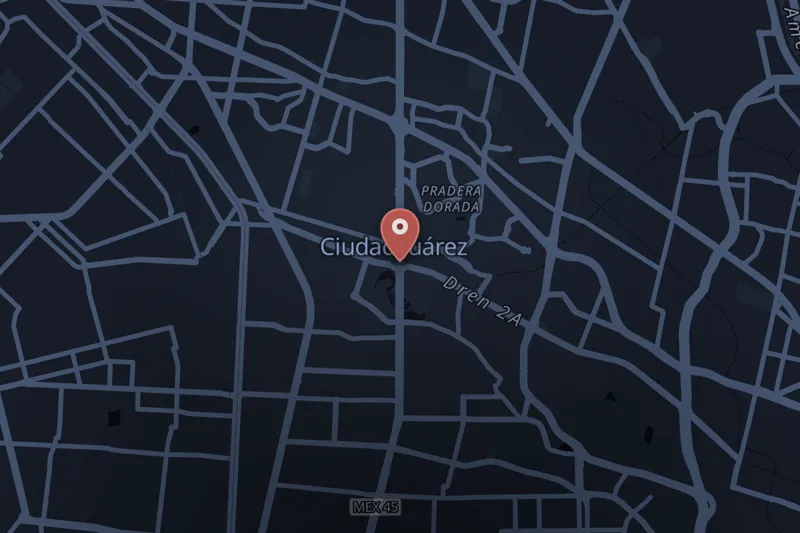
Femicide in Ciudad Juárez

UNSOLVED1993Ciudad Juárez, Chihuahua, Mexico3 SOURCESUPDATED JUL 2026
Cruces Lomas del Poleo
Cruces Lomas del Poleo — Credit: iose · Public domain

Between 1993 and 2011, more than 500 women and girls were murdered in Ciudad Juárez, a city in northern Mexico. The killings drew sustained international attention, largely because of allegations that police and government authorities responded with indifference and negligence rather than pursuing effective investigations and prosecutions. In December 2016, a mass grave (narcofosa) attributed to organized crime and containing the remains of women killed in 2011 and 2012 was discovered in Madera Municipality, Chihuahua.

Researchers have identified two recurring patterns in the killings: intimate femicide, in which men killed women close to them, and systemic sexual femicide, involving kidnapping, sexual violence, torture, and body abandonment in areas such as the desert and sewage ditches. A 2008 study using the Femicide Database 1993–2007 found intimate femicide accounted for 30.4% of the murders of women and girls in Juárez during that period, while 9.1% were attributed to organized crime and drug trafficking activity. Other researchers, including Molly Molloy, have noted that female victims have historically comprised less than 18% of overall Juárez murder victims, and comparative statistical analysis found femicide rates in Juárez similar to those in Chihuahua City and Ensenada, and lower as a share of overall homicide rates than in most cities evaluated. Contributing factors identified in the sourced literature include the growth of the maquiladora industry and associated labor migration, the implementation of NAFTA in 1994, and sociocultural gender dynamics tied to machismo and marianismo.

Government and police response has been widely criticized. A 1998 report by Mexico's National Commission for Human Rights cited gross irregularities and general negligence in state investigations, including misidentified corpses and failures to conduct proper forensic testing. Convictions have been limited and often contested. In 1996, Abdul Latif Sharif was convicted of three murders and sentenced to 30 years; authorities alleged he directed a gang, "Los Rebeldes," to continue killings from prison, and gang members were subsequently convicted, though they claimed they had been tortured into confessing. In 2004, Victor Garcia Uribe was convicted of eight 2001 murders after confessing, but said he had been tortured; he was released in July 2005 for lack of evidence. Gustavo Gonzalez Meza, apprehended alongside Uribe, died under disputed circumstances in police custody. In a separate case, Sergio Barraza Bocanegra was acquitted at a first trial in the killing of 16-year-old Ruby Frayre Escobedo but convicted at a retrial after activism by her mother, Marisela Escobedo Ortiz, who was killed in 2010 while protesting for justice outside the Chihuahua Governor's Palace.

International bodies have also ruled against Mexico. In 2004, a CEDAW inquiry found the government's response to the killings "few and ineffective." In 2009, the Inter-American Court of Human Rights ruled in the "Campo Algodonero" case that Mexico was guilty of discrimination and had failed to protect three women murdered in 2001, ordering a new investigation, a national memorial, and reparations. Local activism, including groups such as Casa Amiga, Ni Una Más, and Nuestras Hijas de Regreso a Casa, has sought to raise awareness and press for accountability.

Key facts

Victims
Marisela Escobedo Ortiz, Ruby Frayre Escobedo
Date
1993
Location
Ciudad Juárez, Chihuahua, Mexico
Case status
unsolved

Case timeline

  1. 1993

    Killings of women and girls in Ciudad Juárez begin to be documented, later encompassing more than 500 deaths through 2011.

  2. 1996

    Abdul Latif Sharif is convicted of three murders and sentenced to 30 years in prison.

  3. 1998

    Mexico's National Commission for Human Rights issues a report citing gross irregularities and negligence in state investigations into the murders.

  4. 2001

    Victor Garcia Uribe and Gustavo Gonzalez Meza are apprehended in connection with eight murders; Gonzalez Meza later dies in police custody.

  5. 2004

    Victor Garcia Uribe is convicted of eight murders after confessing, which he says was obtained through torture; CEDAW concludes an inquiry into Mexico's response to the killings.

  6. 2005-07-15

    Victor Garcia Uribe is freed due to lack of evidence.

  7. 2008

    16-year-old Ruby Frayre Escobedo is murdered; Sergio Barraza Bocanegra is later acquitted at his first trial for lack of evidence.

  8. 2009

    The Inter-American Court of Human Rights rules against Mexico in the 'Campo Algodonero' case over the 2001 murders of three young women.

  9. 2010

    Marisela Escobedo Ortiz, mother of Ruby Frayre Escobedo, is killed by a shot to the head while protesting outside the Governor's Palace in Chihuahua; a retrial convicts Sergio Barraza Bocanegra, who remains at large.

  10. 2011-08

    130 killings are reported to have occurred in Ciudad Juárez since January of that year.

  11. 2016-12

    A mass grave (narcofosa) attributed to organized crime, containing remains of women killed in 2011 and 2012, is found in Madera Municipality, Chihuahua.

Best coverage

No approved coverage links are attached yet.

People

  • Victor Garcia Uribe

    EXONERATED

    Convicted in 2004 of eight murders after a confession he said was coerced through torture; released in July 2005 due to lack of evidence.

  • Sergio Barraza Bocanegra

    CONVICTED

    Acquitted at first trial for the 2008 murder of Ruby Frayre Escobedo for lack of evidence, then convicted at retrial following activism; remained at large as a fugitive.

  • Marisela Escobedo Ortiz

    VICTIM

    Mother of Ruby Frayre Escobedo; killed by a shot to the head in 2010 while demonstrating for justice outside the Governor's Palace in Chihuahua.

  • Abdul Latif Sharif

    CONVICTED

    Convicted in 1996 of three murders and sentenced to 30 years in prison; authorities alleged he directed further killings from prison.

  • Gustavo Gonzalez Meza

    CHARGED

    Apprehended in 2001 in connection with eight murders; died in police custody under disputed circumstances before trial conclusion.

  • Ruby Frayre Escobedo

    VICTIM

    16-year-old murdered in 2008 in Ciudad Juárez.

Roles reflect public records and court outcomes at the time of writing — supporting citations are on file under Sources.

Archival records

  • Cruces Lomas del Poleo

    archival location

    Cruces Lomas del Poleo

    Credit: iose · Public domain · Source

Places

Common questions

What happened to the victim?
More than 500 women and girls were killed in Ciudad Juárez, Mexico, between 1993 and 2011, drawing international attention over allegations of government inaction, inadequate investigations, and impunity for perpetrators.
Where did the crime happen?
Ciudad Juárez, Chihuahua, Mexico.
Who was convicted?
Sergio Barraza Bocanegra (Acquitted at first trial for the 2008 murder of Ruby Frayre Escobedo for lack of evidence, then convicted at retrial following activism; remained at large as a fugitive.) and Abdul Latif Sharif (Convicted in 1996 of three murders and sentenced to 30 years in prison; authorities alleged he directed further killings from prison.).
What is the current status of the case?
Status: unsolved.

Sources

  1. ENCYCLOPEDICFemicide in Ciudad JuárezWikipedia · 2026-07-10
  2. PRESSContemporaneous coverage — NPRNPR · 2026-07-10
  3. OFFICIAL / AGENCYContemporaneous coverage — pubmed.ncbi.nlm.nih.govpubmed.ncbi.nlm.nih.gov · 2026-07-10

Record history

First published
JUL 11, 2026