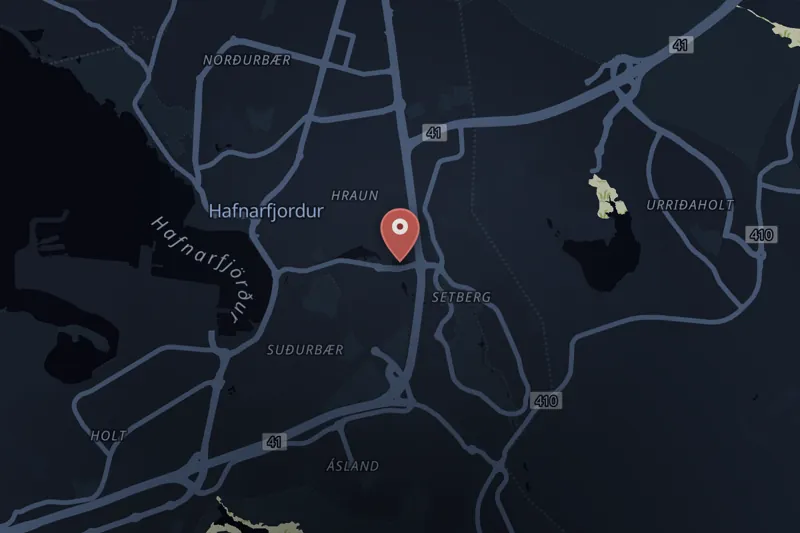
On the night of 26 January 1974, 18-year-old labourer Guðmundur Einarsson disappeared while walking home from a community hall in Hafnarfjörður, part of Iceland's Greater Reykjavík area. A motorist reported that he nearly fell in front of their vehicle shortly before he vanished; he was never seen again. Ten months later, on 19 November 1974, 32-year-old construction worker Geirfinnur Einarsson — unrelated to Guðmundur despite sharing a surname — received a phone call at home and drove to a harbour cafe in Keflavík, leaving his car keys in the ignition. He did not return. Extensive searches turned up no bodies, witnesses, or forensic evidence in either case.
Under intense public and media pressure, Icelandic police opened inquiries treating both disappearances as homicides. Six people — Sævar Ciesielski, Kristján Viðar Viðarsson, Tryggvi Rúnar Leifsson, Albert Klahn Skaftason, Guðjón Skarphéðinsson, and Erla Bolladóttir — eventually signed confessions after being held in isolation and interrogated at length with limited access to lawyers. They were given sedative drugs and subjected to sleep deprivation; Sævar, who had a fear of water, was also subjected to water torture. The confinement was extreme: Erla was held in solitary confinement for 242 days, two others for more than 600 days, and Tryggvi for 655 days — described in source reporting as the longest solitary confinement outside the Guantánamo Bay detention camp. Sævar remained in custody for 1,533 days total. In 1976, four more men were separately held in solitary confinement for 105 days after other suspects implicated them; none was convicted.
Sævar, Kristján, and Tryggvi were convicted of killing Guðmundur, and Albert was convicted of helping conceal his body. Sævar, Kristján, and Guðjón were later convicted of killing Geirfinnur. Erla was convicted of perjury for implicating her half-brother and others during the investigation.
The case was reexamined decades later. A police investigation report reached Iceland's State Prosecutor in 2013, and in February 2017 the Interior Ministry's Rehearing Committee recommended that the Supreme Court rehear the convictions of Sævar, Kristján, Tryggvi, Albert, and Guðjón, though not Erla's perjury case. The committee's review drew on research by psychiatrist Gísli Guðjónsson into "Memory Distrust Syndrome," in which extreme psychological pressure can lead a person to distrust their own memory and offer a false confession. New witness accounts surfaced in 2015 and 2016, casting further doubt on the original investigation. In February 2018, the State Prosecutor asked the Supreme Court to overturn all six convictions, and on 27 September 2018 — 44 years after the disappearances — the court acquitted the five men while leaving Erla's perjury conviction in place. The government apologized and later paid roughly 815 million krónur (about 6 million euros) in compensation to the acquitted men and the families of those who had died; Erla was separately awarded further damages and an apology in 2022 over her own solitary confinement.
Tryggvi Rúnar Leifsson died of cancer in 2009 and Sævar Ciesielski died after an accident in Denmark in 2011, both before the acquittals; Kristján Viðar Viðarsson died in March 2021. Síðumúli Prison, where the group was held in isolation, was later closed and was criticized by the Council of Europe's anti-torture committee over conditions there. Iceland continues to use pretrial solitary confinement, which Amnesty International has said still causes harm to detainees. In October 2019, Iceland's Attorney General opened a new investigation into the original disappearances, focusing on the 2015 and 2016 witness accounts. Source reporting has described the case as one of the most significant miscarriages of justice in Europe.


 SOLVEDListen
