
Start here
THE HIGHWAY OF TEARS | MIDWEEK MYSTERY

Georgia Marie's 27-minute breakdown, the fullest single telling on file.
Watch on YouTubeBefore you continue
This case involves crimes against children. Casepin presents the record in neutral, non-graphic language. Choose whether to continue.
Ongoing case · 1970s
Also known as Highway 16 murders · Highway of Tears cases
Ongoing case: this file carries charge-sheet facts only. Anyone charged is presumed innocent unless convicted.
 Dead trees at Mammoth Hot SpringsCredit: Brocken Inaglory·CC BY-SA 3.0·Source
The short answer
A 719-kilometre stretch of Highway 16 between Prince George and Prince Rupert, British Columbia, has been linked to the disappearances, murders, and unexplained deaths of numerous women and girls since at least 1970, with Indigenous women disproportionately represented among the victims.
Start hereTHE HIGHWAY OF TEARS | MIDWEEK MYSTERYGeorgia Marie · 27 minThe coverage index
1 piece from 1 creator: ranked, with duplicates removed and short clips set aside.
Start here
Video · YouTube · 27 min · 2019
Georgia Marie's 27-minute breakdown, the fullest single telling on file.
Watch on YouTubeTitles and descriptions are the creators’ own and may not reflect current legal status. The sourced facts are in the file below. Players load only when you press play. Suggest coverage we’re missing.
The case file
The Highway of Tears refers to a 719-kilometre (447 mi) corridor of Highway 16 between Prince George and Prince Rupert, British Columbia, associated with crimes against many women since the highway's completion in 1969. The name was coined in 1998 during a vigil in Terrace, B.C., by Florence Naziel, referring to the grief of victims' families. A disproportionate number of the victims are Indigenous women, linking the cases to the broader Missing and Murdered Indigenous Women (MMIW) movement. Proposed factors contributing to the toleration of these crimes and the limited progress in solving them include poverty, drug abuse, domestic violence, disruption of family and cultural ties through the foster care system and residential schools, lack of public transportation leading to reliance on hitchhiking, and the remote, isolated character of the region.
Accounts of the number of victims vary. The RCMP's Project E-Pana lists fewer than 18 cases meeting its criteria, while Indigenous organizations estimate the number of missing and murdered women along the highway to be higher than 40. The first RCMP investigation attempting to link cases along the highway began in December 1998; that early list also included three male victims. A number of people have since been convicted in cases connected to the Highway of Tears, including three men identified as serial killers: Brian Peter Arp, Edward Dennis Isaac, and Cody Legebokoff. Bobby Jack Fowler, an American man implicated in other E-Pana cases outside the Highway of Tears, was never charged in connection with any Highway of Tears victim and died in prison; a former Vancouver police geographic profiler stated his opinion that Fowler was not responsible for crimes along Highway 16 between 1989 and 2006.
Project E-Pana, launched by the RCMP in 2005, examined unsolved murders and disappearances of women and girls along Highway 16 and connecting highways to determine whether a single serial killer or multiple offenders were responsible. Its caseload and funding fluctuated over time, and by 2014 the number of officers assigned had dropped sharply from previous years. In 2014, murder charges were brought against a man for the 1978 death of 12-year-old Monica Jack; he was later found guilty by a jury and sentenced to life in prison in early 2019, marking the first E-Pana file to be resolved through a full court process.
A separate controversy emerged concerning government records: in October 2015, British Columbia's Information and Privacy Commissioner published a report finding that a ministerial assistant had "triple deleted" emails relating to the Highway of Tears in response to a freedom-of-information request, in breach of provincial privacy law. The ministerial assistant resigned and was later convicted of lying to the privacy commissioner, receiving a fine.
Critics, including Indigenous activists, have argued that systemic racism contributed to limited media coverage and slower investigative response for Indigenous victims compared to non-Indigenous victims such as Nicole Hoar, whose 2002 disappearance received comparatively significant media attention. Recommendation reports arising from a 2006 symposium and a 2012 government inquiry called for improved public transportation and other measures; a subsidized bus service began operating along part of the highway in 2017, and expanded cellular coverage was installed along a remaining stretch in December 2024.
17 dated entries · 1969–2024
Highway 16 between Prince George and Prince Rupert is completed.
Disappearances along the corridor later associated with the Highway of Tears are documented as far back as this year.
Colleen MacMillen is killed; the case is later linked by Project E-Pana to Bobby Jack Fowler.
12-year-old Monica Jack is killed; the case later results in a murder charge.
Florence Naziel coins the phrase 'Highway of Tears' during a vigil in Terrace, B.C.; RCMP opens the first investigation attempting to link cases along the highway.
Nicole Hoar disappears while hitchhiking on Highway 16.
RCMP launches Project E-Pana, initially covering three cases.
A two-day Highway of Tears symposium is held in Prince George, leading to a recommendation report.
Police search a rural Prince George property for the remains of Nicole Hoar and other missing women.
B.C. inquiry commissioner Wally Oppal endorses the Highway of Tears Symposium Recommendation Report in his Missing Women Commission of Inquiry recommendations.
Murder charges are brought against a suspect in the 1978 death of Monica Jack; a freedom-of-information request reveals the E-Pana task force has shrunk from 70 to 12 officers since 2010.
B.C.'s Information and Privacy Commissioner publishes a report on the 'triple deletion' of government emails related to the Highway of Tears.
A special prosecutor is appointed within the RCMP investigation into the email deletion.
B.C. Transportation Minister Todd Stone announces a new bus service for Highway 16.
A subsidized transit service begins operating between Prince George and Burns Lake.
A jury finds the accused in the Monica Jack case guilty; he is sentenced to life in prison, marking the first E-Pana file resolved through full court proceedings.
Rogers installs five 5G cell towers to close a cellular service gap along a 166-kilometre stretch of the highway.
14 named in this file
Victims first. Every legal label is set from public records and court outcomes, not from the prose.
Went missing in 2010 at age 20; featured in a television documentary about missing women.[3]
16-year-old killed in 1974; case linked by Project E-Pana to Bobby Jack Fowler.[3]
Victim killed in the 1970s; considered by E-Pana in connection with suspect Bobby Jack Fowler.[3]
12-year-old victim killed in 1978; her case became the first Project E-Pana file resolved through full court proceedings.[3]
Tree planter who went missing on Highway 16 on 21 June 2002; her disappearance received significant media coverage.[3]
Victim killed in the 1970s; considered by E-Pana in connection with suspect Bobby Jack Fowler.[3]
16-year-old victim found alongside the highway, subject of the documentary Finding Dawn.[3]
Victim referenced in connection with a memorial totem pole raised by her family and comments by her aunt, activist Gladys Radek.[3]
Identified as a serial killer convicted in a case related to the Highway of Tears.[3]
Identified as a serial killer convicted in a case related to the Highway of Tears.[3]
Identified as a serial killer convicted in a case related to the Highway of Tears.[3]
Charged in 2014 and later found guilty by jury and sentenced to life in prison in early 2019 for the 1978 killing of 12-year-old Monica Jack.[3]
Former ministerial assistant convicted of lying to the B.C. Information and Privacy Commissioner and fined $2,500 in connection with the 'triple deletion' of Highway of Tears-related emails; resigned in October 2015.[2]
RCMP sergeant who stated police may never solve all the cases and that communities would help solve the crimes.[3]
From the record
3 cited
Coverage is not a source: every fact in this file rests on the records below.
PressCBC NewsAccessed Jul 5, 2026
PressThe Globe and MailAccessed Jul 5, 2026
EncyclopedicWikipediaAccessed Jul 5, 2026
Trust
Are you family of someone named in this file? Corrections and removal requests from victims’ families are prioritized.
Near this case
 Credit: Santa Barbara County Sheriff’s Office·Public domain·SourceSOLVEDListen
Sacramento, California (crimes spanned multiple California counties) · 1970s
Across California between 1974 and 1986, at least 13 people were murdered in a crime series that also included more than 50 rapes, burglaries, kidnappings, and assaults. Forensic genetic genealogy identified former police officer Joseph James DeAngelo in 2018; he pleaded guilty in 2020 to murder and kidnapping charges.
 Credit: United States Air Force·Public domain·SourceSOLVEDListen
Wichita and Park City, Kansas · 1974
Dennis Rader, a Wichita-area man who worked as an ADT security installer and later a Park City compliance officer, murdered at least ten people in Wichita and Park City, Kansas, between 1974 and 1991, taunting police and media with letters as "BTK." He was identified through DNA and computer metadata and arrested in February 2005, later pleading guilty to ten counts of first-degree murder.
 Credit: Unknown author·Public domain·SourceSOLVEDListen
Hollywood, Florida (abduction site: Sears, Hollywood Mall) · 1981
Adam Walsh, a six-year-old boy, was abducted from a Hollywood, Florida department store in July 1981 and found killed weeks later; police named drifter Ottis Toole as the perpetrator and closed the case in 2008, though he died in prison in 1996 without ever being tried or convicted for it.
 UNSOLVEDListen
Saanich, British Columbia, Canada · 2008
A 24-year-old Victoria, British Columbia, real estate agent was fatally stabbed in February 2008 during a staged home showing, and the killing remains unsolved.
 SOLVEDListen
Woodstock, Ontario, Canada (abduction site) · 2009
Eight-year-old Victoria "Tori" Stafford of Woodstock, Ontario was abducted and killed in April 2009; Terri-Lynne McClintic and Michael Rafferty were both convicted of first-degree murder.
 Credit: Indrid__Cold·CC BY-SA 2.0·SourceSOLVEDListen
Portapique, Nova Scotia, Canada · 2020
Over April 18–19, 2020, Gabriel Wortman shot and killed 22 people and set fires at 16 locations across rural Nova Scotia before being shot dead by RCMP officers in Enfield, in the deadliest shooting rampage in Canadian history.
Also covered by
 Credit: Family handout via Suffolk News·Editorial use·SourceCOLDListen
Bury St Edmunds, Suffolk, England · 2016
Royal Air Force gunner Corrie McKeague disappeared after a night out in Bury St Edmunds in September 2016, and a 2022 inquest concluded he died after climbing into a waste bin that was tipped into a bin lorry, though his remains were never found.
El Pianista trail, near Boquete, Panama · 2014
Two Dutch students, Kris Kremers and Lisanne Froon, disappeared while hiking a jungle trail in Panama in April 2014, and their remains were recovered along a riverbank months later, but no official cause of death has ever been established.
 Credit: Argonne National Laboratory / Wikimedia Commons, c.1922–23·Public domain·SourceSOLVEDListen
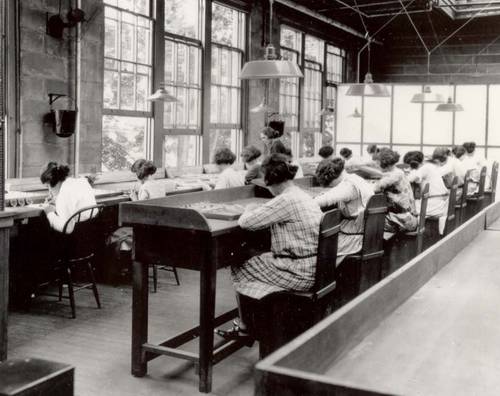
Orange, New Jersey · 1917
Beginning in 1917, factory workers who came to be known as the Radium Girls were poisoned after being instructed to shape radium-paint brushes with their lips; the resulting illnesses, deaths, and lawsuits against the United States Radium Corporation and the Radium Dial Company reshaped U.S. occupational health and labor law.
