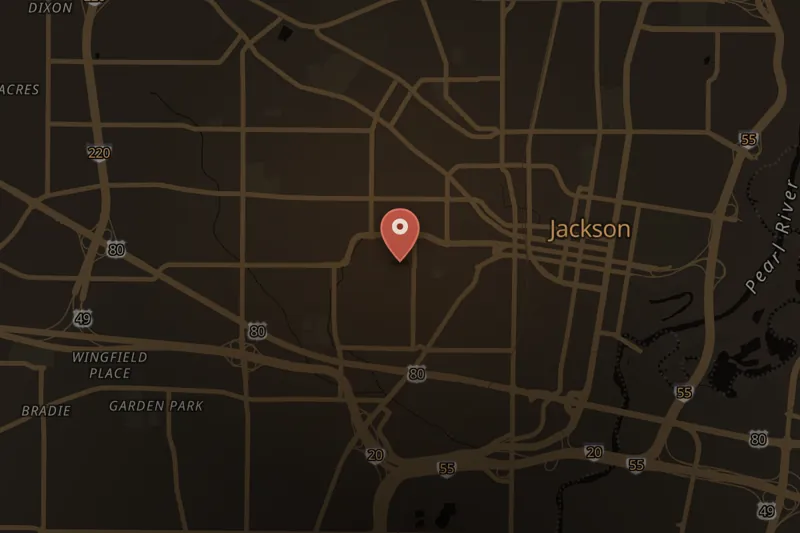
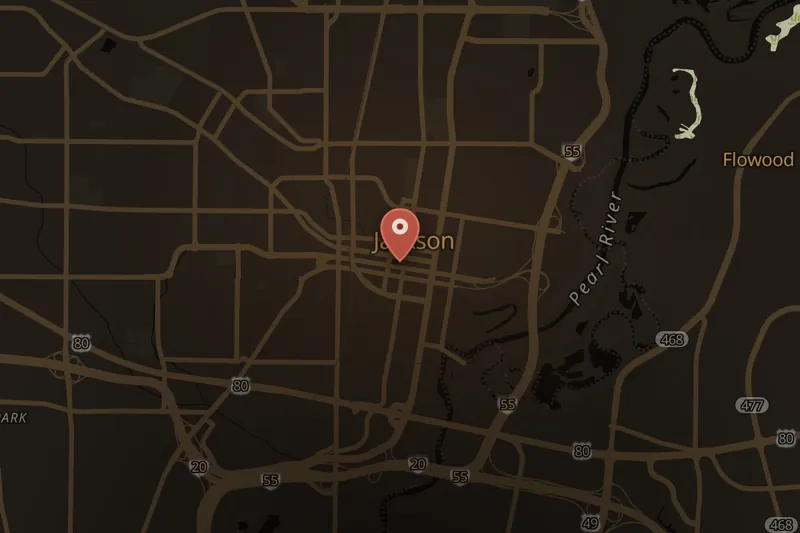
On the evening of Thursday, May 14, 1970, roughly 100 Black students gathered on Lynch Street, a road bisecting the campus of Jackson State College in Jackson, Mississippi. Tensions in the area had a history: the street was frequently the site of confrontations between white and Black Jackson residents, and youths were reportedly throwing rocks at white motorists. A rumor spread that civil rights leader Charles Evers and his wife had been killed, and a non-Jackson State student set a dump truck on fire, further escalating the situation.
City police and Mississippi Highway Patrol officers, numbering at least 75, responded to control the crowd while firefighters extinguished the blaze. After firefighters left the scene shortly before midnight, police moved to disperse the crowd gathered in front of Alexander Hall, a women's dormitory. Advancing to within 50 to 100 feet of the crowd, officers opened fire on the dormitory at roughly 12:05 a.m. on May 15.
The exact cause of the shooting remains unclear. Authorities said they believed they saw a sniper on an upper floor of the building and reported being shot at from multiple directions; three officers reported minor injuries from flying glass. However, an FBI search for evidence of sniper fire found none, and students maintained they had not provoked the officers. The gunfire lasted approximately 30 seconds, with more than 460 shots fired by a reported 40 state highway patrolmen using shotguns from a distance of 30 to 50 feet. Every window on the side of the building facing Lynch Street was shattered.
Phillip Lafayette Gibbs, 21, a Jackson State junior, and James Earl Green, 17, a senior and miler at nearby Jim Hill High School, were killed. Gibbs was fatally shot near Alexander Hall by buckshot; Green was killed behind the police line in front of B. F. Roberts Hall, also by shotgun. Twelve others were wounded, and a number of people in the scattering crowd were trampled or cut by falling glass.
President Richard Nixon established the President's Commission on Campus Unrest to investigate the Jackson State shootings alongside the Kent State shootings, which had occurred 11 days earlier. The Commission held public hearings and concluded that the gunfire was "an unreasonable, unjustified overreaction," stating that a broad barrage of gunfire in response to reported and unconfirmed sniper fire was never warranted. No arrests were made. In December 1970, a federal grand jury that had summoned about 40 state patrolmen and 26 city police officers was discharged after failing to produce an indictment or written findings following a five-month recess.
Jackson State University later memorialized the victims by naming the site the Gibbs-Green Plaza and erecting a stone monument near Alexander Hall, where bullet damage remains visible. At the university's 2021 commencement, local and state leaders issued a formal public apology, and Gibbs and Green were posthumously awarded honorary doctorate degrees, accepted by family members.

 SOLVEDListen