
Start here
Jim Jones and The Jonestown Massacre

Kendall Rae's 31-minute breakdown of the whole case.
Watch on YouTubeBefore you continue
This case involves crimes against children. Casepin presents the record in neutral, non-graphic language. Choose whether to continue.
Solved case · 1978
Also known as Peoples Temple Agricultural Project
 Jonestown HousesCredit: Fielding McGehee and Rebecca Moore·CC BY-SA 3.0·Source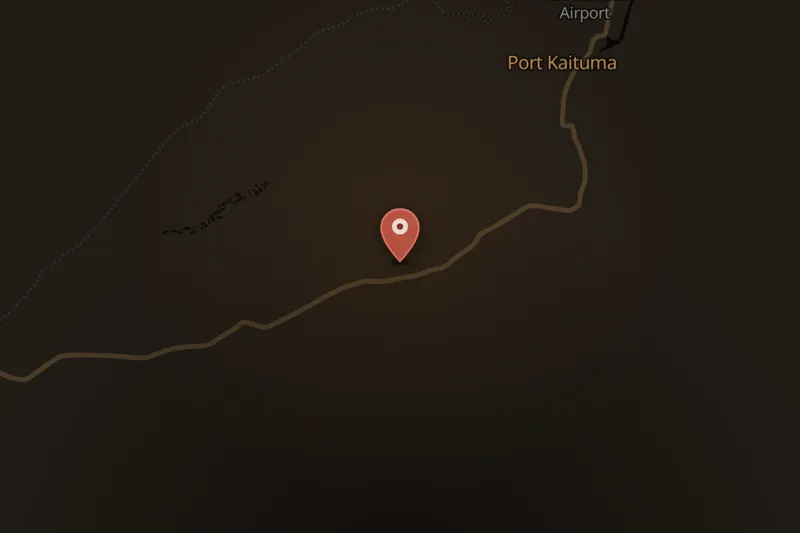
The short answer
On November 18, 1978, 918 people died at the Peoples Temple's Jonestown settlement in Guyana, the nearby Port Kaituma airstrip, and a Temple building in Georgetown, in a mass murder-suicide that also killed U. S. Congressman Leo Ryan and four members of his delegation.
Start hereJim Jones and The Jonestown MassacreKendall Rae · 31 minThe coverage index
4 pieces from 3 creators: ranked, with duplicates removed and short clips set aside.
Start here
Video · YouTube · 31 min · 2018
Kendall Rae's 31-minute breakdown of the whole case.
Watch on YouTubeJonestown Massacre [ Apocalyptic Cult ] Who Was Jim Jones ? |Mystery & Makeup - GRWM| Bailey Sarian
 Bailey SarianVideo · YouTube · 52 min · 2020
Jonestown: Where Are They Now? | Dateline NBC
 Dateline NBCVideo · YouTube · 6 min · 2018
Dateline Episode Trailer: Jonestown: An American Tragedy
Dateline NBCVideo · YouTube · 1 min · 2018Titles and descriptions are the creators’ own and may not reflect current legal status. The sourced facts are in the file below. Players load only when you press play. Suggest coverage we’re missing.
The case file
Jonestown, formally the Peoples Temple Agricultural Project, was a remote agricultural settlement in Guyana built by the Peoples Temple, an American religious movement. On November 18, 1978, 918 people died across three connected locations: the settlement itself, the airstrip at nearby Port Kaituma, and a Temple-run building in Georgetown, Guyana's capital. In Jonestown, 909 people died, nearly all from cyanide poisoning; many were injected against their will, and roughly a third of those who died were minors, including infants who were reportedly among the first given the poison. Contemporary media accounts often described the Jonestown deaths as a mass suicide, while later assessments have used terms such as mass murder-suicide or massacre.
The Peoples Temple was founded in Indianapolis, Indiana, in 1955 and described its ideology as apostolic socialism. Facing criticism in Indiana over its integrationist views, the group relocated to Redwood Valley, California, in 1965, later expanding to Los Angeles and San Francisco, where its leadership built close relationships with city and state officials. After further press criticism and the defection of eight Temple members in 1973, Temple leadership chose Guyana, an English-speaking, socialist-governed country, as a relocation site, citing the group's own socialist politics and concerns about racism and corporate influence in the United States. Temple leadership negotiated a lease of more than 3,800 acres of remote land in 1974; Guyana formally approved the lease in 1976, retroactive to April 1974, and Temple members built Jonestown roughly 150 miles west of Georgetown, on land with poor soil and no nearby water source.
After press investigations intensified in San Francisco, several hundred Temple members relocated to Jonestown in 1977, and the settlement's population grew toward nearly 900 by 1978. Members reportedly worked long hours in the fields under broadcast lectures and monitored media, and reported discipline measures included physical confinement and beatings; members who tried to escape were reportedly given sedatives, and armed guards patrolled the community. About 70% of residents were Black, and 45% were Black women. In 1978, U.S. embassy officials interviewed 75 Social Security recipients at Jonestown; none said they were held against their will, forced to sign over benefit checks, or wanted to leave.
Former Temple members and relatives, organizing as Concerned Relatives, lobbied U.S. and Guyanese officials starting in late 1977. In January 1978, a written complaint prompted ninety-one members of Congress, including Leo Ryan, to write to Guyana urging scrutiny of the Temple. On November 14, 1978, Ryan flew to Georgetown with a delegation of congressional staff, journalists, and relatives of Temple members to investigate conditions at Jonestown. During the delegation's overnight stay at Jonestown on November 17, two Temple members passed a note to a reporter asking for help leaving the settlement.
On November 18, 1978, as the delegation and a group of defecting Temple members prepared to depart from the Port Kaituma airstrip, Temple members, acting on the settlement leadership's instructions, opened fire on them. Ryan, NBC reporter Don Harris, NBC cameraman Bob Brown, Examiner photographer Greg Robinson, and Temple defector Patricia Parks were killed; several other members of the delegation were wounded. Hours later, Jonestown's leadership gathered the settlement over its loudspeaker system and directed members to drink a poison mixture prepared in a large tub, an event partly captured on an audio recording. Most of the 909 people who died in Jonestown that day were poisoned with cyanide, some injected against their will, while armed guards stood at the gathering. Separately, in Georgetown, four more Temple members died in a murder-suicide carried out on the settlement leadership's orders.
10 dated entries · 1955–1978
The Peoples Temple was founded in Indianapolis, Indiana, describing its ideology as apostolic socialism.
Facing criticism over its integrationist views, the Temple relocated to Redwood Valley, California.
Temple leadership negotiated a lease of more than 3,800 acres of remote land in Guyana, near the country's disputed border with Venezuela.
Guyana formally approved the Temple's land lease, retroactive to April 1974.
Several hundred Temple members relocated to Jonestown amid intensifying press scrutiny in San Francisco; the settlement's population grew toward nearly 900 residents.
A written complaint detailing grievances against the Temple prompted ninety-one members of the U.S. Congress, including Leo Ryan, to press Guyanese officials for information.
Medical problems including severe diarrhea and high fevers affected roughly half of the Jonestown community.
U.S. Congressman Leo Ryan flew to Georgetown, Guyana, with a delegation of congressional staff, journalists, and relatives of Temple members to investigate conditions at Jonestown.
The Ryan delegation visited Jonestown and stayed overnight; two Temple members passed a note asking for help leaving the settlement.
Temple members shot and killed Leo Ryan, NBC reporter Don Harris, NBC cameraman Bob Brown, photographer Greg Robinson, and Temple defector Patricia Parks at the Port Kaituma airstrip; hours later 909 people died in Jonestown, most from cyanide poisoning, and four more Temple members died in a murder-suicide in Georgetown.
5 named in this file
Victims first. Every legal label is set from public records and court outcomes, not from the prose.
NBC camera operator; killed in the Port Kaituma airstrip shooting on November 18, 1978.[3]
NBC reporter; killed in the Port Kaituma airstrip shooting on November 18, 1978.[3]
San Francisco Examiner photographer; killed in the Port Kaituma airstrip shooting on November 18, 1978.[3]
U.S. Congressman for California's 11th district; shot and killed at the Port Kaituma airstrip on November 18, 1978 while investigating conditions at Jonestown.[3]
Peoples Temple defector; killed in the Port Kaituma airstrip shooting on November 18, 1978.[3]
3 cited
Coverage is not a source: every fact in this file rests on the records below.
PressCNNAccessed Jul 6, 2026
PressTIMEAccessed Jul 6, 2026
EncyclopedicWikipediaAccessed Jul 6, 2026
Trust
Are you family of someone named in this file? Corrections and removal requests from victims’ families are prioritized.
Near this case
 Credit: English Wikipedia·Editorial use·SourceSOLVEDListen
Westdale Mall parking lot, Cedar Rapids, Iowa · 1979
Michelle Martinko, an 18-year-old Cedar Rapids, Iowa high school senior, was stabbed to death in her family's car in a mall parking lot on December 19, 1979. The case went cold for nearly 39 years until familial DNA analysis and genealogy database matching identified Jerry Lynn Burns, who was arrested in 2018 and convicted of first-degree murder in 2020.
 Credit: State of California.·Public domain·SourceSOLVEDListen
Redondo Beach, California · 1979
Lawrence Bittaker and Roy Norris were convicted of kidnapping, raping, torturing, and murdering five teenage girls in Southern California between June and October 1979.
 Credit: Mendocino County Police Department·Public domain·SourceUNSOLVEDListen
Highway 20 near Willits, Mendocino County, California (remains recovery site) · 1970
Two teenage best friends from Forestville, California, vanished on December 16, 1978, after reportedly setting out to hitchhike to a party in Santa Rosa. Their duct-taped, buried remains were found in July 1979 off Highway 20 near Willits, but the bodies went unidentified for 36 years—partly because one victim's skeleton was mistakenly classified as male—until DNA confirmed their identities in 2015. The case remains unsolved.
Also covered by
 Credit: English Wikipedia·Editorial use·SourceSOLVEDListen
Modesto, California · 2002
Laci Peterson, 27 and eight months pregnant, disappeared from her Modesto, California home on December 24, 2002; her body and that of her unborn son Conner were found in San Francisco Bay in April 2003, and her husband Scott Peterson was convicted in 2004 of murdering both.
 Credit: Family/Instagram photograph, widely distributed in press coverage·Editorial use·SourceSOLVEDListen
Moscow, Idaho · 2022
Four University of Idaho students—Madison Mogen, Kaylee Goncalves, Ethan Chapin, and Xana Kernodle—were fatally stabbed inside an off-campus house in Moscow, Idaho, in the early morning hours of November 13, 2022. Bryan Kohberger, a criminology PhD student at nearby Washington State University, was arrested that December and pleaded guilty in 2025, receiving four consecutive life sentences.
 Credit: English Wikipedia·Editorial use·SourceSOLVEDListen
Delta, Fulton County, Ohio · 2016
Sierah Joughin, a 20-year-old Ohio college student, was abducted while bicycling home in Fulton County on July 19, 2016, and found dead three days later. James Dean Worley, a neighbor with a 1990 abduction conviction who was not listed in any offender database, was convicted of her murder in 2018 and sentenced to death, prompting Ohio's Sierah's Law, which created a searchable violent-offender registry.
 Credit: CBS News / Travis Alexander (personal photo)·Editorial use·SourceSOLVEDListen
Mesa, Arizona, United States · 2000s
Travis Alexander, 30, was stabbed, slashed, and shot to death in his Mesa, Arizona home on June 4, 2008. His ex-girlfriend, Jodi Arias, was convicted of first-degree murder in 2013 and sentenced to life without parole in 2015 after two juries deadlocked on the death penalty.
 Image record·Editorial use·SourceSOLVEDListen
Austin, Texas · 2022
Moriah Wilson, a 25-year-old professional cyclist, was shot and killed at a friend's residence in Austin, Texas, on May 11, 2022, and Kaitlin Armstrong was later convicted and sentenced to 90 years in prison for the killing.
 Credit: Instagram/@gabspetito, widely distributed in press coverage·Editorial use·SourceSOLVEDListen
Bridger–Teton National Forest, Wyoming · 2021
Gabby Petito, a 22-year-old travel vlogger, was killed by strangulation and blunt-force trauma in August 2021 while on a cross-country van trip with her fiancé, Brian Laundrie. Laundrie returned to Florida alone, was named a person of interest, and later died by suicide, leaving a note admitting he had killed her.