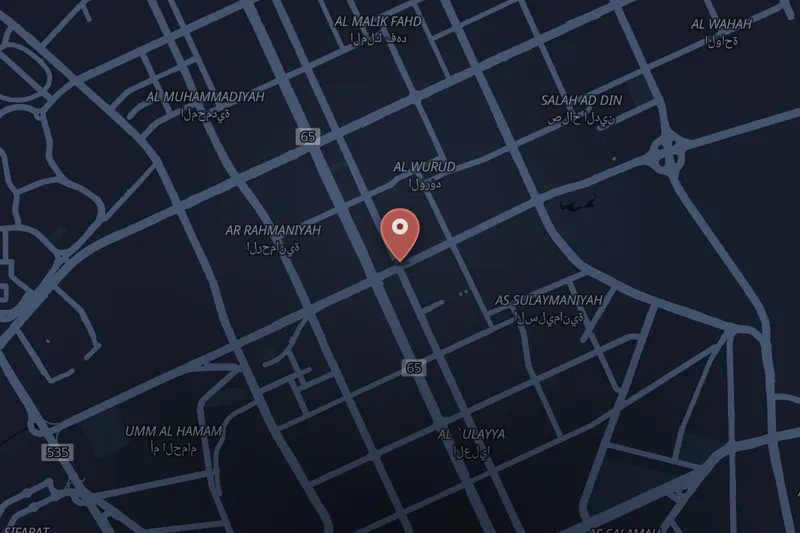
On 25 June 1996, a truck bomb was detonated adjacent to Building #131 of the Khobar Towers housing complex in Khobar, Saudi Arabia, which was being used as living quarters for coalition forces supporting Operation Southern Watch, the no-fly zone operation over southern Iraq. The building primarily housed members of the U.S. Air Force's 4404th Wing (Provisional). The attack killed 19 U.S. Air Force personnel and wounded 498 people of many nationalities. The official U.S. statement issued the same day named Hezbollah Al-Hejaz ("Party of God in the Hijaz") as responsible.
Attackers smuggled explosives into Saudi Arabia from Lebanon and, in early June 1996, purchased a large latrine service tanker truck that they converted into a truck bomb over roughly two weeks, assembling approximately 5,000 pounds of plastic explosives. After being denied entry at the main checkpoint, the attackers drove the bomb truck and accompanying vehicles into a parking lot adjacent to Building #131 around 9:43 p.m. local time; the bomb exploded roughly three to four minutes later, at approximately 10:20 p.m. Staff Sergeant Alfredo R. Guerrero, a U.S. Air Force security policeman atop the building, spotted the vehicles as a threat and began evacuating floors before the blast; his actions are credited with saving lives, and he received the Airman's Medal. The explosion left a crater 85 feet wide and 35 feet deep, heavily damaged or destroyed six high-rise buildings, and shattered windows up to a mile away.
The bombing prompted criticism of U.S. military and intelligence preparedness. Per the New York Times, "significant shortcomings in planning, intelligence, and basic security left American forces in Saudi Arabia vulnerable." Numerous surveillance incidents near the compound had been reported in the months before the attack, and Clinton administration officials acknowledged receiving a wave of threats beforehand without adequately preparing for a bomb of this magnitude. As a result, U.S. and coalition operations relocated from Khobar and Dhahran to Prince Sultan Air Base near Al-Kharj.
In June 2001, a U.S. federal grand jury in the Eastern District of Virginia indicted thirteen named individuals plus an unidentified "John Doe" described as Lebanese, on charges including murder and conspiracy in connection with the bombing. Saudi Arabia stated in July 2001 that eleven of those indicted were in Saudi custody but declined to extradite them, and the outcome of any Saudi trial has not been made public. In August 2015, an Arab newspaper reported that Ahmed Ibrahim Al-Mughassil, described as a leader of Hezbollah Al-Hejaz, had been arrested in Beirut and transferred to Saudi custody; U.S. intelligence reportedly believed the report accurate, though Saudi authorities had not confirmed it.
Attribution for the bombing has remained contested. Some accounts, including statements attributed to Osama bin Laden and to former U.S. Secretary of Defense William Perry, point to al-Qaeda involvement. U.S. government assessments and a 2006 U.S. federal court default judgment found Iran and Hezbollah directly responsible, though Iran was not represented in that proceeding.


 Credit: Natalia MedvedevaCC BY-SA 3.0SourceSOLVEDListen