
Solved case
Killing of David Morley
David Morley, a London barman and survivor of the 1999 Admiral Duncan nail bombing, was fatally beaten by a group of youths near Waterloo station in the early hours of 30 October 2004 during a spree of "happy slapping" style attacks. Four youths were later convicted of his manslaughter.
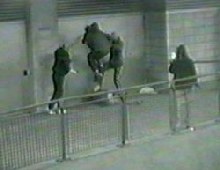
David Roger Morley (3 October 1967 – 30 October 2004) was a barman known in London's gay community as "Cinders." He had worked as assistant manager at the Admiral Duncan pub in Soho when it was bombed by David Copeland in 1999 as part of a series of nail bomb attacks targeting London's minority communities; Morley suffered burns in that attack and, according to friends, spent the following weeks visiting and comforting other victims in hospital. At the time of his death he was working at another gay bar, Bromptons, in Earls Court.
On the night of 29–30 October 2004, a group of youths carried out a series of eight attacks in the area around Waterloo station between 2:30am and 3:20am. A fifteen-year-old associate of the group later told police the plan was to beat up "tramps, druggies or just people on the street." At around 3:10am the group encountered Morley and his friend Alastair Whiteside sitting on a bench near Hungerford Bridge. One member of the group, Chelsea O'Mahoney, told Morley they were making a documentary about "happy slapping" and asked him to "pose for the camera." The group then attacked Morley and Whiteside and stole Whiteside's mobile phone before continuing the assault. According to Whiteside's witness testimony, O'Mahoney finished the attack on Morley by kicking him repeatedly in the head. The group went on to commit three further assaults that night, including one on a homeless man, Wayne Miller, during which CCTV footage appeared to show O'Mahoney filming.
Morley was taken to St Thomas' Hospital in Lambeth, where he underwent surgery but was pronounced dead at 7:40pm on 30 October 2004. A post-mortem examination found 44 injuries, including five fractured ribs, and determined he died from a hemorrhage caused by a ruptured spleen and fractured ribs. The examining pathologist said the injuries were more consistent with a car accident or a fall from a great height than a typical assault. No footage of the attack on Morley was recovered, and an extensive forensic search of the assailants' phones found no images or video of any of the night's attacks.
In December 2005, four defendants — Chelsea O'Mahoney (14 at the time of the attack), Reece Sargeant (21), Darren Case (18), and David Blenman (17), all from Kennington, South London — were found guilty of manslaughter, having originally been prosecuted for murder. On 23 January 2006, Sargeant, Case, and Blenman were each sentenced to twelve years in prison, and O'Mahoney was sentenced to eight years. O'Mahoney was described in court as a "child of heroin addicts" with a "particularly chaotic and fragmented life," while her co-defendants were described as "immature and vulnerable to peer pressure."
More than 1,000 people attended a vigil for Morley at St Anne's Church, Soho, on 5 November 2004, with a speech delivered on behalf of then-Mayor of London Ken Livingstone, who called Morley "well known and well loved in London's lesbian and gay community."
Key facts
- Victims
- David Morley
- Date
- 2004
- Location
- Near Hungerford Bridge, Waterloo, London
- Case status
- solved
Case timeline
1999
David Morley, an assistant manager at the Admiral Duncan pub, suffers burns in a nail bomb attack carried out by David Copeland targeting London's minority communities.
2004-10-29
A group of youths decides to carry out attacks on people in the Waterloo area of London.
2004-10-30
Between approximately 2:30am and 3:20am, the group carries out eight attacks; at around 3:10am they attack David Morley and his friend Alastair Whiteside near Hungerford Bridge.
2004-10-30
Morley is taken to St Thomas' Hospital, operated on, and pronounced dead at 7:40pm.
2004-11-05
Over 1,000 people attend a vigil for Morley at St Anne's Church, Soho.
2005-12
Four defendants are found guilty of Morley's manslaughter, having been prosecuted for murder.
2006-01-23
Reece Sargeant, Darren Case, and David Blenman are each sentenced to 12 years; Chelsea O'Mahoney is sentenced to 8 years.
Best coverage
No coverage has been attached to this file yet.
People
David Morley
VICTIMBarman fatally attacked near Waterloo station on 30 October 2004
Reece Sargeant
CONVICTEDConvicted of manslaughter; sentenced to 12 years
Chelsea O'Mahoney
CONVICTEDConvicted of manslaughter; sentenced to 8 years custody (aged 14 at time of offence, 15 at sentencing)
Darren Case
CONVICTEDConvicted of manslaughter; sentenced to 12 years
David Blenman
CONVICTEDConvicted of manslaughter; sentenced to 12 years
Roles reflect public records and court outcomes at the time of writing — supporting citations are on file under Sources.
Archival records
portrait victim
File:David morley cctv.jpg
Credit: Unknown · Copyrighted — editorial use, owner-approved 2026-07-12 · Source
Places
Common questions
- What happened to the victim?
- David Morley, a London barman and survivor of the 1999 Admiral Duncan nail bombing, was fatally beaten by a group of youths near Waterloo station in the early hours of 30 October 2004 during a spree of "happy slapping" style attacks. Four youths were later convicted of his manslaughter.
- Where did the killing happen?
- Near Hungerford Bridge, Waterloo, London.
- Who was convicted?
- Reece Sargeant (Convicted of manslaughter; sentenced to 12 years), Chelsea O'Mahoney (Convicted of manslaughter; sentenced to 8 years custody (aged 14 at time of offence, 15 at sentencing)), Darren Case (Convicted of manslaughter; sentenced to 12 years), and David Blenman (Convicted of manslaughter; sentenced to 12 years).
- What is the current status of the case?
- Status: solved. Last verified July 2026.
Related cases
View all cases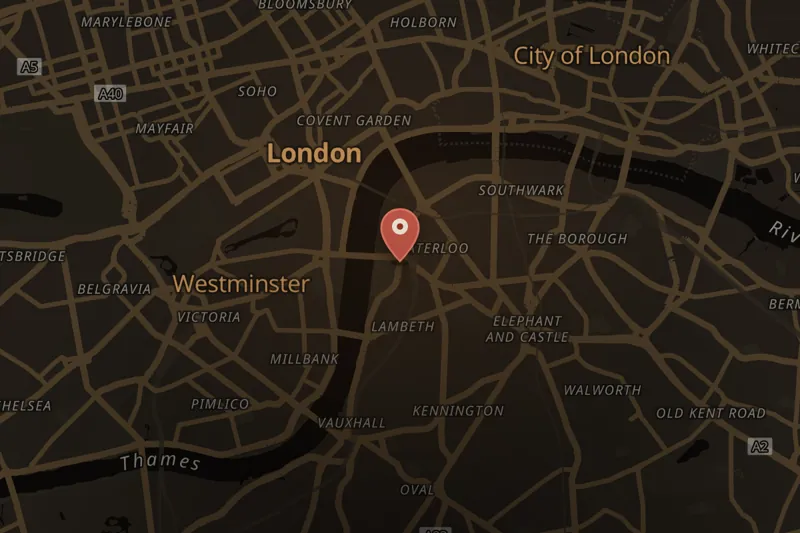
Killing of Peter Connelly
London Borough of Haringey, London, UK

Killings of Eve Stratford and Lynne Weedon
London, England
2017 Westminster attack
Palace of Westminster, London, UK
Death of Michael Jackson
Holmby Hills, Los Angeles, California
Murder of Travis Alexander
Mesa, Arizona, United States

Disappearance of Natalee Holloway
Oranjestad, Aruba
Sources
- ENCYCLOPEDICKilling of David MorleyWikipedia · 2026-07-05
- PRESSContemporaneous coverage — BBC NewsBBC News · 2026-07-05
- PRESSContemporaneous coverage — The GuardianThe Guardian · 2026-07-05
Record history
- First published
- JUL 05, 2026
- Last verified against sources
- JUL 13, 2026
JUL 13, 2026Correction
Catalog QA: Set the exact killing date.
When a file you follow changes — a new development, a correction, fresh coverage — the Dispatch is how you hear about it.
The Casepin Dispatch
A calm weekly briefing from the archive — one case worth understanding, meaningful updates to files you follow, and the best new coverage. You’ll also get the one-time note when the apps land. No gore, no rumor, no drip.