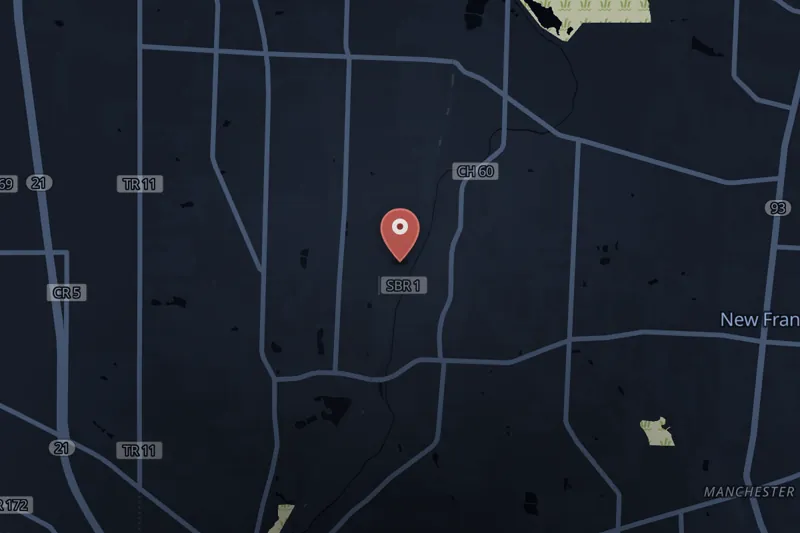
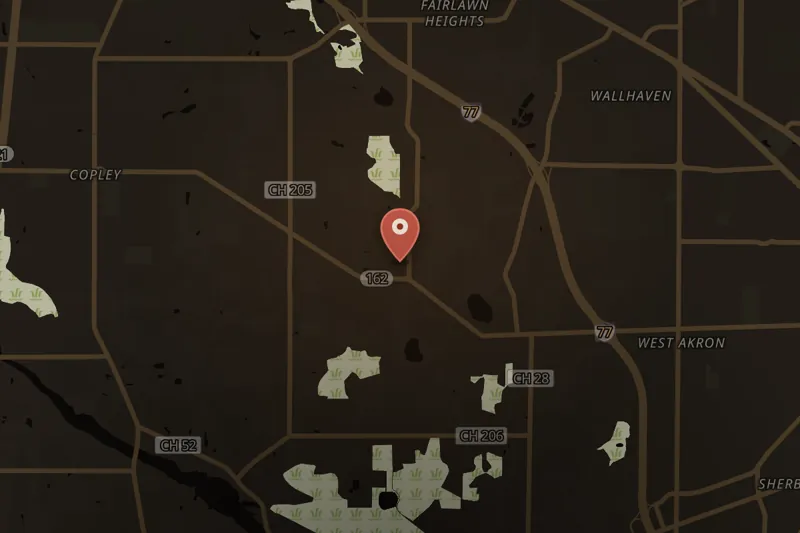
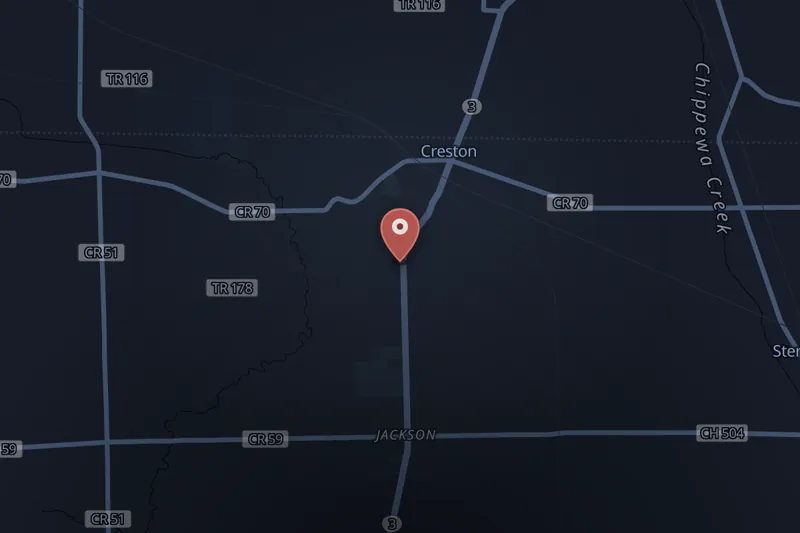
Tina Marie Harmon was a 12-year-old sixth-grader from Creston, a village in Wayne County, Ohio. On October 29, 1981, her father's girlfriend dropped her at a local convenience store, where friends last saw her outside eating a snack she had just bought. She did not come home. About five days later, on November 3, 1981, her body was found on an oil-well access road in Bethlehem Township, in Stark County, roughly 40 miles away. She had been raped and strangled. Investigators recovered dog hairs and distinctively colored carpet fibers from her clothing, evidence that would remain central to the case for decades.
In 1982, Wayne County authorities charged two local men, Ernest Holbrook Jr. and Herman Ray Rucker, and both were convicted of rape and murder, largely on witness testimony rather than physical evidence. The case against them unraveled after 11-year-old Krista Harrison was abducted and killed in 1982 and found with carpet fibers matching those recovered from Harmon. Rucker was acquitted at a 1983 retrial, and the charges against Holbrook were dropped in 1984; their convictions were vacated. Curtis Maynard, a witness whose account had helped convict the two men, was later convicted of perjury after recanting, sentenced to six to 20 years, and paroled after 13 months.
Attention turned to Robert Anthony Buell, a former Akron city employee. In 1984 he was convicted of the 1982 murder of Krista Harrison. Carpet matching the fibers found on both girls was recovered in connection with Buell, a dog whose hairs matched those on Harmon was found buried on his property, and other physical evidence tied him to the Harrison abduction. Buell was never tried for Harmon's death because he was already under a sentence of death; he was executed in 2002.
The Harmon investigation was reopened in 2009. In 2010, DNA recovered from Harmon's clothing was matched to Buell. On March 11, 2010, Ohio Attorney General Richard Cordray and Wayne County officials announced that DNA testing had identified Buell as the man who raped and killed her, formally resolving the case nearly three decades after the crime. Because Buell had already been executed, he was never prosecuted for Harmon's murder, and the resolution rested on the posthumous forensic match rather than a trial.
The case is frequently discussed alongside other Ohio child killings of the era, and journalists have examined the earlier wrongful convictions and the handling of physical evidence. Its central threads — convictions built on contested testimony without physical corroboration, and the role that preserved forensic evidence and later DNA testing can play in correcting the record — have kept it a reference point in accounts of wrongful conviction and cold-case resolution.

 Credit: FBIPublic domainSourceSOLVEDListen