Skip to content
Casepin

Overturned conviction · 1975

Liland affair

Also known as Per Liland case · Liland-saken

OVERTURNEDEXONERATED
Updated
Updated Jul 7, 2026
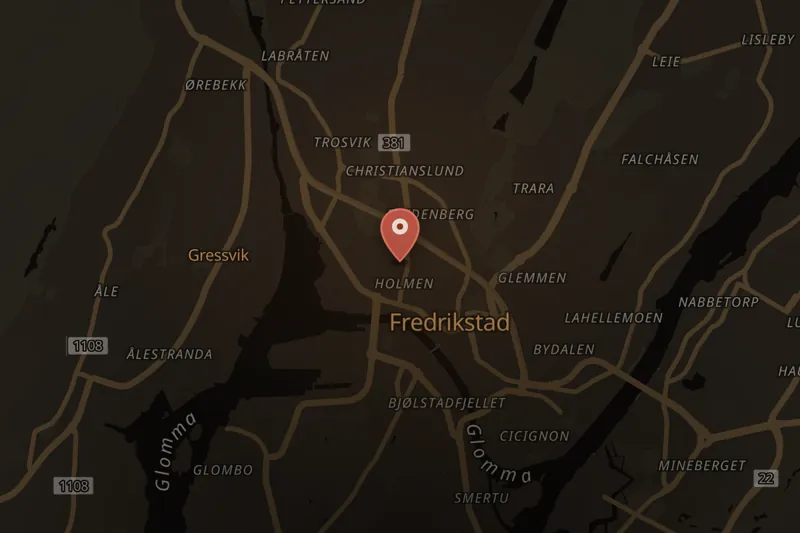
Glemmengata 73, Fredrikstad, NorwayView on the map

The short answer

Liland affair in brief

Per Kristian Liland was wrongfully convicted in 1970 of a double axe murder in Fredrikstad, Norway, and imprisoned for over two decades before being acquitted in 1994 in one of Norway's most notable miscarriages of justice.

Key facts

Year
1975
Place
Glemmengata 73, Fredrikstad, Norway
Status
OVERTURNEDOverturned conviction
Victims
Håkon Edvard Johansen and John Olav Larsen
Outcome
Exonerated: Per Kristian Liland

The coverage index

Where to watch & listen

No one's coverage is attached to this file yet.

Know great coverage of this case?

A documentary, a podcast episode, a careful long-form video. Suggest it and an editor will review it before it appears here.

Suggest coverage for Liland affair

The case file

What happened

On 24 December 1969, two men, John Olav Larsen and Håkon Edvard Johansen, were found murdered with severe head injuries at Glemmengata 73 in Fredrikstad, Norway, an address known locally as a gathering place for people with substance abuse problems. An axe was assumed to be the murder weapon. Three substance abusers were arrested near the scene; two were released, while the third, Per Kristian Liland, was imprisoned and, in July 1970, convicted by the Eidsivating Court of Appeal of the premeditated murder of Larsen and the murder of Johansen in an attempt to conceal a punishable offence. He was sentenced to life imprisonment, which at the time meant 12 years, with a possible extension of up to 10 years if deemed a continued danger due to mental disorder.

The conviction rested heavily on the determination that the murders occurred on 22 December, the only date on which Liland could be placed at the scene. A local doctor who examined the bodies had entered ambiguous and later dates on the death certificates, and court-appointed medical experts nonetheless concluded the deaths could have occurred on 22 December. Several witnesses testified to having seen the victims alive after that date, but the court disregarded this testimony. Liland's lawyer, Alf Nordhus, appealed to the Supreme Court, which rejected the appeal in November 1970. Subsequent applications to reopen the case, supported by extensive documentation gathered by Sten and Vibeke Ekroth, including recordings of witnesses, were rejected by the Eidsivating Court of Appeal in 1975 and by the Supreme Court's Appeal Committee in 1976.

Liland served his sentence and had it extended to the maximum permitted ten years as a preventive measure, remaining imprisoned until 22 June 1993. The day after his release, he began a further attempt to have the case reopened, advanced by lawyers Ole Jakob Bae and Cato Schiøtz. New medical experts disputed the original prosecution experts' theory about how long one victim had survived after injury, and it emerged that the original experts had privately disagreed without this being disclosed at trial. It also came to light that a food coupon found in Larsen's pocket, dated 23 December, had not been presented to the original court and that related police report details had apparently been altered; the coupon itself later went missing.

On 29 April 1994, the Eidsivating Court of Appeal ruled the case should be reviewed, a decision upheld by the Supreme Court in September 1994. The prosecution subsequently dropped its objection to a full acquittal, and on 21 November 1994, without further evidence being presented, the court acquitted Liland. He was awarded 13,740,000 kroner in compensation for lost income and non-economic losses. Liland died in 1996. The murders of Larsen and Johansen remain unsolved and are now subject to Norway's statute of limitations.

14 dated entries · 1969–1996

Timeline

  1. John Olav Larsen and Håkon Edvard Johansen found murdered at Glemmengata 73, Fredrikstad; Per Kristian Liland arrested near the scene.

  2. Liland charged with the murders and remanded in custody.

  3. Liland convicted at Eidsivating Court of Appeal and sentenced to life imprisonment.

  4. Supreme Court rejects appeal against conviction and sentencing.

  5. Liland's lawyer applies to have the case reviewed, citing new witness documentation.

  6. Eidsivating Court of Appeal rejects application to reopen the case.

  7. Supreme Court's Appeal Committee rejects further appeal to reopen the case.

  8. Liland's original sentence term ends; sentence extended to the maximum additional ten years.

  9. Liland's extended sentence ends and he is released.

  10. Liland begins new attempt to have the case reopened.

  11. Eidsivating Court of Appeal rules the case should be reviewed.

  12. Supreme Court rejects prosecution's appeal against reopening the case.

  13. Court acquits Per Kristian Liland without further evidence being presented.

  14. Per Liland dies as a free man.

3 named in this file

People

Victims first. Every legal label is set from public records and court outcomes, not from the prose.

  • Håkon Edvard Johansen

    VICTIM

    Found murdered on 24 December 1969 at Glemmengata 73, Fredrikstad; case remains unsolved.[3]

  • John Olav Larsen

    VICTIM

    Found murdered on 24 December 1969 at Glemmengata 73, Fredrikstad; case remains unsolved.[3]

  • Per Kristian Liland

    EXONERATED

    Convicted in 1970 of the murders, imprisoned until 1993, and acquitted in 1994 after the case was reopened and reviewed as a miscarriage of justice.[3]

3 cited

Sources

Coverage is not a source: every fact in this file rests on the records below.

  • 2 Press
  • 1 Encyclopedic
  1. Contemporaneous coverage — regjeringen.no

    Pressregjeringen.noAccessed Jul 7, 2026

  2. Contemporaneous coverage — deepl.com

    Pressdeepl.comAccessed Jul 7, 2026

  3. Liland affair

    EncyclopedicWikipediaAccessed Jul 7, 2026

Trust

Record history

First published
Jul 7, 2026
Corrections
None

Are you family of someone named in this file? Corrections and removal requests from victims’ families are prioritized.