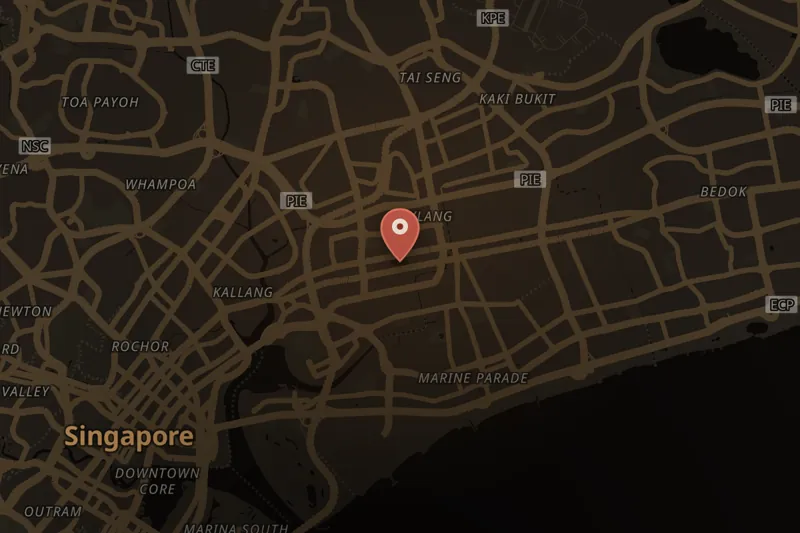
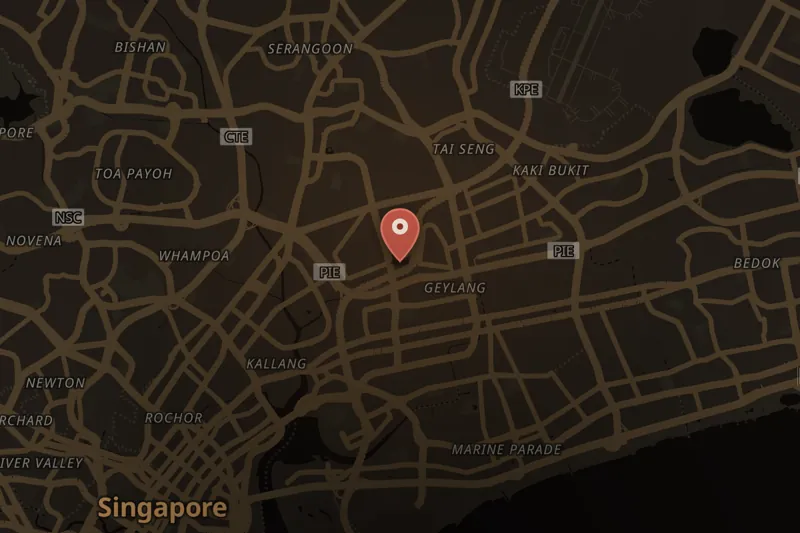
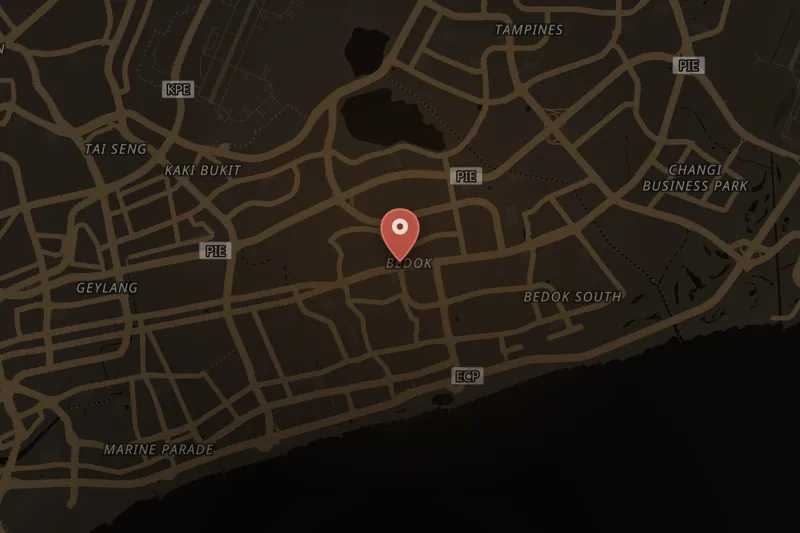
On the morning of 25 November 1977, ten-year-old Cheng Geok Ha, a Primary Three student at Opera Estate School and the youngest of twelve children, was last seen playing with two young neighbours at a carpark and playground below her family's flat in Chai Chee, Singapore. She told the siblings she was going elsewhere and never returned home. Her family searched through the night and reported her missing the following day. Days later, her father contacted newspapers to publish a missing-person appeal. Cheng's mother subsequently received phone calls from a man claiming to hold the girl captive, who arranged meetings that he did not attend; a second call demanded that Cheng's sister meet him at a Geylang theatre, which she was too frightened to do. Other calls received by the family were determined to be prank calls.
On 7 December 1977, two weeks after Cheng vanished, teenagers playing nearby discovered a gunny sack hidden below a manhole at the void deck of her flat. Inside were Cheng's decomposing body and a rusty chopper. Her father identified her by her clothing. Forensic pathologist Chao Tzee Cheng determined that Cheng had died from asphyxia due to strangulation, with fractures to her first through eighth ribs, and that she had been sexually assaulted based on injuries to her vulva. Chao estimated she had been dead for ten to fourteen days.
Police investigation led to the arrest of Quek Kee Siong, a 41-year-old labourer and neighbour who had been a friend of Cheng's father for twenty years. Quek confessed to strangling Cheng but claimed the killing was accidental during a rape attempt. He was charged with murder on 8 December 1977, and the case was transferred to the High Court in April 1978.
At trial, which began 27 February 1979 before Justices T. S. Sinnathuray and T. Kulasekaram, prosecutors presented evidence that Quek made the harassing phone calls to Cheng's family, that he pawned earrings belonging to Cheng, and that a 13-year-old neighbour testified Quek had asked him to buy the gunny sack used to contain the body. Pathologist Chao's evidence about the severity of Cheng's injuries was used to rebut Quek's claim of an accidental killing. Quek also alleged he had been abused by interrogating officers into making incriminating statements, an allegation the judges dismissed.
On 6 March 1979, after a seven-day trial, the court found Quek guilty of murder under Section 300 of the Penal Code and sentenced him to death under the then-mandatory Section 302. Quek's appeal was rejected by the Court of Appeal on 17 November 1980, with Chief Justice Wee Chong Jin calling it one of the "clearest cases" of murder.
The case, along with the roughly contemporaneous killing of seven-year-old Usharani Ganaison, drew significant public attention in Singapore in 1977. Cheng's family, particularly her mother, continued to grieve; her mother died approximately fifteen years after Cheng's death. Her fourth sister, Cheng Siok Ngee, later spoke publicly about eventually forgiving Quek, partly out of sympathy for his surviving children.

 SOLVEDListen